
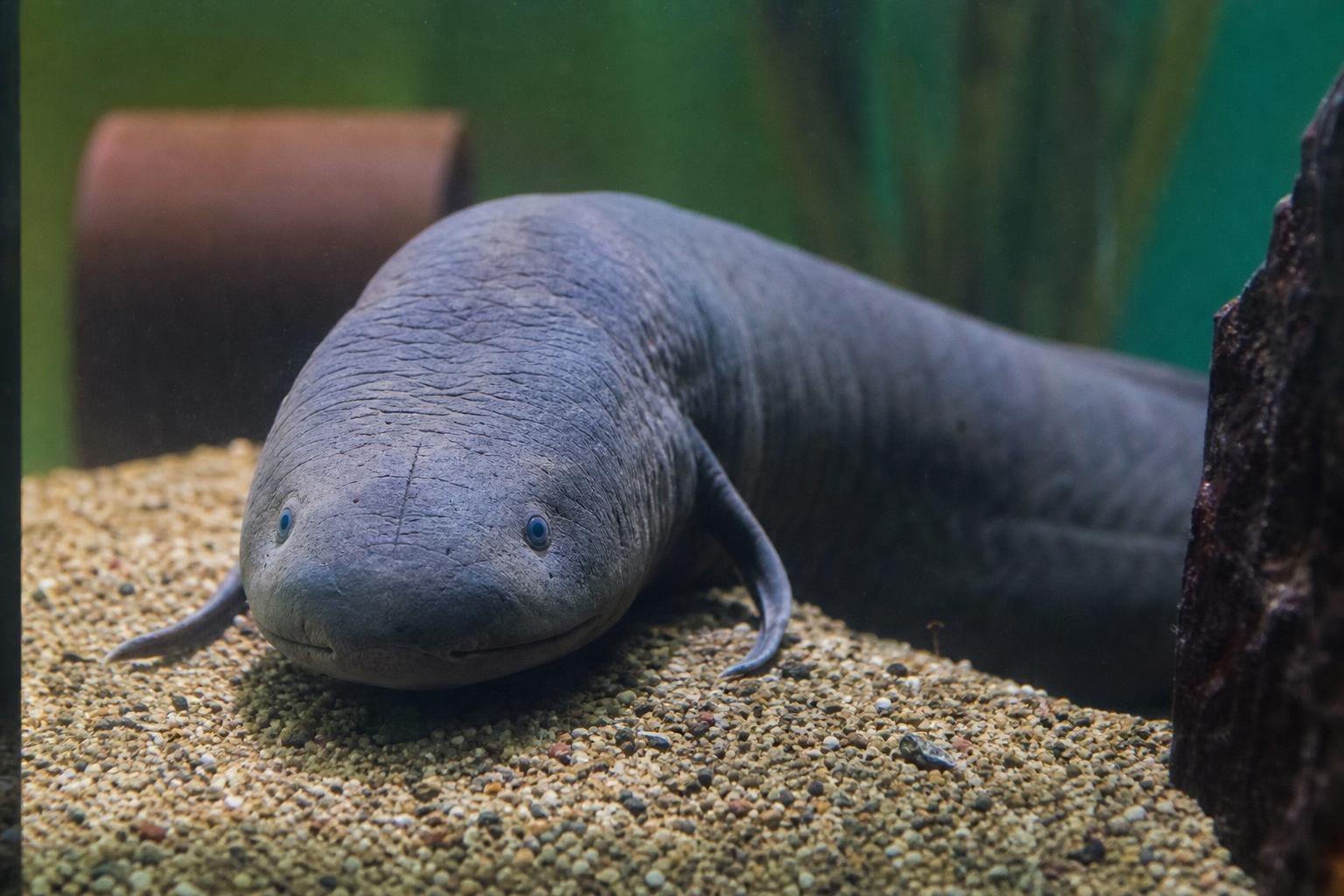
He arrived as a quiet curiosity and became a fixture of Chicago life. In an era when aquariums prized spectacle, one unassuming fish taught audiences something slower, gentler, and more enduring. Year after year, he drew crowds not with stunts but with the simple miracle of being. And for all that time, one question remained open, uncounted, and somehow even more beautiful for its mystery.
The long voyage to a new home
He crossed oceans in an age of steamships, packed with care and caution for a journey that could easily have gone wrong. From Australian rivers to the edge of Lake Michigan, his passage stitched together two very different worlds—a southern backwater and a northern metropolis.
By the time he reached the city’s gleaming aquarium, the country was deep in the Depression, and Chicago was busy reinventing its public museums as places of hope. He was already an adult when he arrived, a slow-moving survivor with eyes that seemed ancient, as if time flowed at a different speed through him.
An animal that breathes air
He was a lungfish—part time-capsule, part fish, part revelation. With a modified swim bladder that functions as a lung, he rose to the surface for an occasional sip of air, then settled back into his sandy corner. “Watching him was like listening to a very old story,” one keeper said, “the kind that asks you to sit still and actually pay attention.”
Lungfish sit near a branching point in the tree of vertebrates, close to the line that led from fins to feet. When visitors leaned close, they weren’t just seeing an exhibit; they were meeting a living bridge across evolutionary time—a creature built to wait, endure, and outlast.
A celebrity who never tried
He did not flash colors, leap for meals, or dance for the glass. He lounged. He napped. He accepted leafy greens and bits of seafood with dignified patience. “He had the most unhurried appetite,” a staffer recalled, “and yet he was our biggest star.”
Over the decades, millions stopped to visit. Field-trip kids compared him to an ancient log. Grandparents remembered him from their own childhoods. Staff grew up, retired, returned with their children, and still found him in his familiar corner—a steady presence in a city built on change.
The age nobody could pin down
Here’s the riddle: how do you count the years of a creature that refuses to show them? Common fish can be aged by the rings in their otoliths (ear stones), much like reading a tree. But lungfish don’t leave such tidy signatures, and scale rings can blur with time. He arrived as an adult, already beyond the easy tells of youth.
Scientists have tried a patchwork of methods: reading growth layers in scales, comparing size to historical records, even peeking at chemical “time stamps” left by mid-century radiocarbon pulses. None could deliver the neat, courtroom-ready number the public craved. As one researcher joked, “He kept his birthday to himself.”
What we do know is plenty:
- Lungfish can live for many decades, with credible reports crossing the century mark.
The keepers’ best estimates placed him in his nineties, give or take a human presidency. It may be the most lungfish thing about him: to let time pass, but never let it be fully counted.
Lessons from a slow life
He taught patience, not by performance, but by presence. He showed that a public aquarium can be more than a spectacle—it can be a place to change your breathing, to match the rhythm of an animal that measures days in silence, not seconds in sparks.
Care, too, became an art. Keepers tuned the water and the diet with precision, studying subtle shifts in behavior the way a pianist hears a slightly flat note. “He made us better at noticing,” one aquarist said. “You had to earn his trust, and that meant earning your own patience.”
A final act of kindness
Late in life, his health began to fade, the way old libraries lose their ink one letter at a time. Staff chose a compassionate farewell, a decision grounded in daily observation, veterinary care, and the quiet dignity he had always kept. Fans wrote notes, posted old photos, and remembered their first gaze into those calm, prehistoric eyes.
“Some animals feel like meteors—brilliant and brief,” a longtime keeper said. “He felt like a continent—immense, stable, and ancient.” In a building famous for coral cathedrals and open-ocean thrills, he turned out to be the exhibit that refused to hurry, and in not hurrying, outlasted nearly everything.
He left behind a blueprint for how institutions can care: deliberately, humbly, and with respect for mysteries that never need neat answers. Sometimes the most honest story a museum can tell is the one it shares with a living question—a quiet creature breathing air, reminding us that life can be both utterly ordinary and impossibly old at the very same time.
