
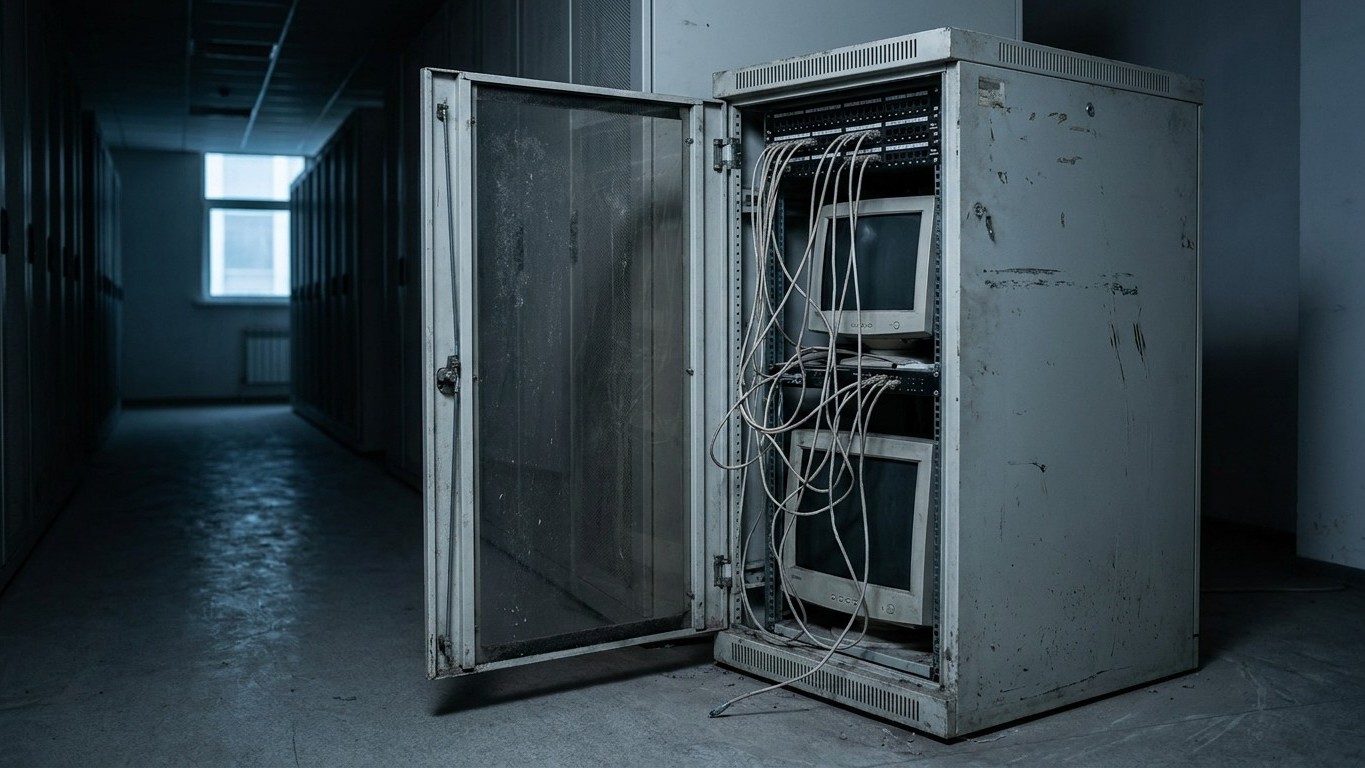
Two companies, the same amount, the same shipwreck. In 2012, the French state paid 75 million euros to Cloudwatt and 75 million euros to Numergy to build a sovereign cloud capable of competing with the American giants. Eight years later, on February 1, 2020, “the Cloudwatt platform will be deactivated and without any action on your part your data will be permanently erased and unrecoverable,” the company warned in a message to its last customers. The die had long since been cast for this project named Andromeda.
Key takeaways
- Why did the State fund two identical and competing clouds instead of a single one?
- How did two companies expected to generate billions end up with only a few million in turnover?
- What were the real obstacles that paralyzed these French tech giants?
150 million euros for two competing clones
The story begins in 2009, when the State envisioned a single national cloud champion, equipped with a budget of 285 million euros. But industrial egos and the commercial rivalry among telecom operators undermined the façade of unity, as the chosen French tech groups failed to reach an agreement, with Orange and SFR unwilling to walk hand in hand. Rather than decide, the State opted for the costlier solution: duplicating the project. Orange teamed up with Thales to create Cloudwatt, and SFR formed a partnership with Bull to create Numergy, each company launched in September 2012 with a capital of 225 million euros.
The ownership structure was an almost perfect carbon copy. Orange held 44.4% of Cloudwatt and SFR 47% of Numergy; the Caisse des Dépôts was the second-largest shareholder with 33.3% and 33%, with Thales for Cloudwatt and Bull for Numergy. Two identical entities, two teams of about a hundred employees each, selling the same service to the same potential customers. Some observers had warned from the start: the project was denounced as “unfair competition,” a venture deemed “without a future,” a “waste of public money.”
A laughably small revenue compared with the promised 500 million
The initial ambitions were dizzying compared to what followed. Cloudwatt aimed for 500 million euros in revenue by 2017, and Numergy 400 million. Two years after their launch, reality looked very different: their combined revenues hovered at 6 million euros for Numergy and 2 million euros for Cloudwatt. A gap of several dozen times between promise and execution.
Numergy was not even commercially autonomous at this stage: the company posted revenue of barely 6 million euros that year, its CEO acknowledging that it remained largely dependent on a contract with SFR that generated nearly 80% of turnover. Numergy’s main client… was its own shareholder. Confronted with this, the Ministry of the Economy decided in 2015 to stop the bleeding, after having spent, at a loss, 75 million euros on each company. Orange bought the stakes of Thales and the State, and SFR those of Bull and the State, and the two ventures gained their independence.
Technological delay, lack of market, industrial egos
The reasons for the failure piled up like the layers of a failed mille-feuille. On the commercial side first: the lack of a market, development delays, and underinvestment quickly turned the venture into a major flop. The French cloud market, still in its infancy in 2012, simply wasn’t ready to absorb two competing and costly offerings, led by players without a culture of self-service software.
Structurally, governance also weighed down the two firms from their inception. These two companies drew on the flaws of French-driven innovation steered by large corporations and the State, notably a shareholding and governance structure that clashed with the market-seeking spirit they needed. A cloud, to exist against Amazon Web Services or Microsoft Azure, must continuously invest in data centers, in technical teams, and in an aggressive pricing policy. Two shareholder committees with sometimes conflicting interests is hardly the recipe for a startup that moves quickly.
Numergy quietly faded away as early as 2016, when SFR completed the purchase of the 33% held by the Caisse des Dépôts and the 20% held by Atos, becoming its sole shareholder, before the platform disappeared during SFR’s cloud activities overhaul in 2017. Cloudwatt, for its part, lasted a bit longer on life support from Orange, which even attempted a revival in 2018 by betting on the GDPR coming into force. But the rebound was short-lived: Orange announced in August 2019 that Cloudwatt would permanently close on February 1, 2020, bringing to an end seven and a half years of chaotic existence.
What has taken over since
The idea of a sovereign cloud did not disappear with Cloudwatt and Numergy; it simply changed shape. As early as 2019, Bruno Le Maire sought to revive the idea of a sovereign cloud called a “strategic” cloud. This new doctrine eventually gave rise, years later, to a more structured ecosystem centered around the SecNumCloud label issued by the National Agency for the Security of Information Systems (ANSSI).
By the end of 2025, a key milestone marked this new chapter: the PREMI3NS offering from S3NS, 95% owned by Thales and 5% by Google and operating on Google Cloud Platform technology, obtained SecNumCloud qualification, expanding the functional scope of the trusted cloud. Other players are following suit, with new offerings now undertaking qualification processes, among those of Bleu, Scaleway, OVHcloud and NumSpot. The ANSSI’s official catalog already lists qualified players such as Cegedim, Cloud Temple, Index Education, OVHcloud, Oodrive, Orange Business, Outscale, S3NS, Whaller and Worldline.
The lesson from Cloudwatt and Numergy seems to have been learned on one point: to lean on the technology of the American giants rather than reinventing everything from scratch, while ensuring hosting and operation on French soil. Yet the financial volumes remain modest compared to the political ambitions stated: among the sector’s major players, commercial opportunities remain limited, SecNumCloud-certified services showing end-of-2025 annual revenue far below the standards of American hyperscalers. Thirteen years after the launch of Andromeda, France is still seeking the formula that will turn sovereign ambition into durable commercial success.
Sources: usine-digitale.fr | numerique.gouv.fr | journaldunet.com
