
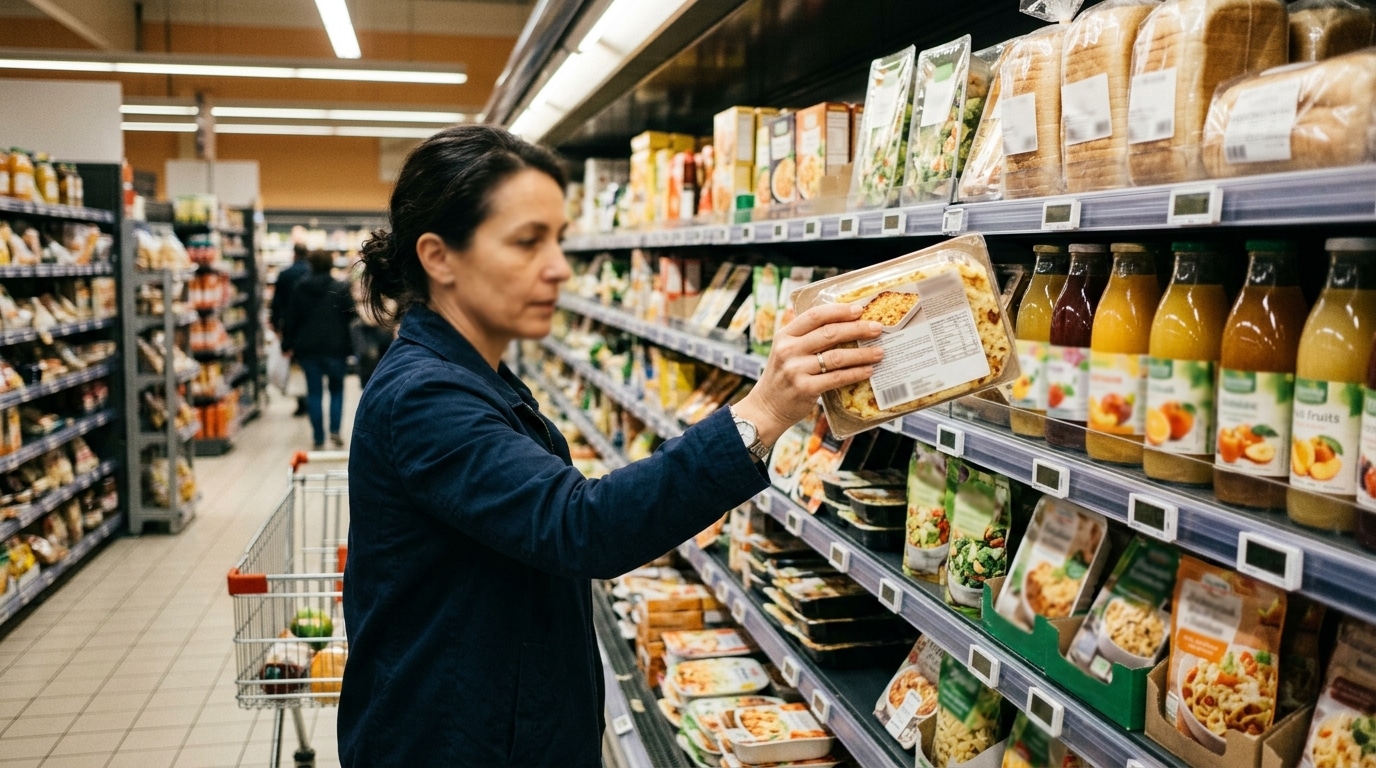
On one side, sugar in granules, long blamed as the public enemy number one of diabetes. On the other, far more discreet products tucked among everyday shelves, which almost always escape suspicion. And if the real culprit wasn’t the one pointed to for years? A packet of white rice, a carton of industrial soup, or a candy bar are by no means harmless for blood glucose. For the 4.5 million French people affected by diabetes, it is often these everyday foods, poorly identified yet omnipresent in cupboards, that quietly sustain the condition. The question then becomes precisely which ones to avoid, and why they weigh so heavily on glycemic balance.
- Sugar in granules accounts for only a tiny portion of sugars consumed; the real culprits are refined flours, hidden fructose syrups, and industrial fruit juices
- Ultra-processed products, pastries, fried foods, refined starches and fatty deli meats quietly sustain diabetes for more than 4.5 million French people
- Reading labels, favouring whole foods and the complete versions of starchy staples, and cooking at home help stabilise glycemia
- The real culprit isn’t who we think
- The food families that quietly sabotage glycemia
- Practical steps to halt the progression
The real culprit isn’t who we think
Sugar in granules is easy to blame. For years, it has shouldered all suspicions, as if simply not adding it to coffee would keep diabetes at bay. In reality, it accounts for only a tiny portion of the sugars actually ingested over a day. The bigger problem hides elsewhere, often behind packaging that looks innocuous at first glance. Ultra-refined flours, fructose syrups tucked into numerous ready-made dishes, and industrial fruit juices marketed as healthy weigh far more on glycemia than the sugar bowl left on the table. Diabetes concerns more than 4.5 million people in France, of whom about 90% have type 2 diabetes, a form closely linked to lifestyle and capable of evolving silently for a long time before diagnosis. Once the diagnosis is set, the priority becomes clear: stabilize glycemia, and that starts primarily with diet. It’s precisely here that the trouble lies, because these hidden sugars and transformed flours often escape vigilance, for they are not clearly identified as threats.
The food families that quietly sabotage glycemia
Certain categories of foods repeatedly appear on French plates, yet their real impact on glycemia isn’t always measured. Sugary drinks, whether sodas, industrial fruit juices, iced teas, or energy drinks, trigger rapid glycemic spikes due to their sugars; sugar-free versions can reduce sugar intake, but their effects on craving for sweetness and satiety remain uncertain. Ultra-processed products, from ready meals to cookies to breakfast cereals, energy bars, and brick soups, are rich in hidden sugars, saturated fats, additives, and salt— a cocktail that promotes weight gain and inflammation, two factors that worsen insulin resistance. In the realm of pastries and viennoiseries, croissants, brioches, doughnuts, and pies combine refined flours, fast-acting sugars, and saturated fats; a single pastry can contain several servings of sugar and up to half of the daily recommended intake of saturated fats. Frying, such as French fries, nuggets, or breaded fish, stacks fast carbohydrates with bad fats, raising glycemia while promoting fatty liver disease. Refined starchy foods, including white rice, white pasta, and white bread, are typically lower in fiber and can be absorbed more rapidly, leading to quicker glycemic rises and lesser satiety, without exhausting the pancreas or triggering repeated cravings. Lastly, processed meats and fatty charcuteries, from sausages to rillettes to bacon, are rich in saturated fats and salt, increasing cardiovascular risk that is already higher in people with diabetes.
Practical steps to halt the progression
Good news amid this somewhat anxiety-inducing tableau: simple actions can take back control. Reducing ultra-refined flours, industrial fruit juices, and ready-made dishes containing hidden fructose syrups can help slow the worsening of insulin resistance and stabilise glycemia. Practically, it begins with reading labels, a habit to adopt systematically to spot added sugars concealed behind unfamiliar names. Then, favor raw foods and, as much as possible, return to home cooking, where every ingredient is chosen and controlled rather than imposed. When it comes to starches, it’s better to swap white rice for whole-grain rice, white pasta for semi-complete or whole-grain varieties, and white bread for a whole-wheat version: fiber slows the absorption of carbohydrates and avoids those infamous glycemic roller coasters. For frying, oven-baking or air-frying offers a much gentler alternative for glycemia, without sacrificing pleasure. These aren’t dramatic revolutions, but small daily adjustments made consistently, which weigh far more than any brutal, hard-to-keep deprivation.
Facing a diabetes condition that often advances quietly, pointing to the true culprits changes the game. Refined flours, hidden sugars, and ultra-processed meals deserve far more attention than the single granule of sugar long deemed the sole culprit. By progressively adjusting daily choices, everyone can take concrete steps to slow the evolution of the disease and regain a more balanced glycemic state, one small action at a time.
