
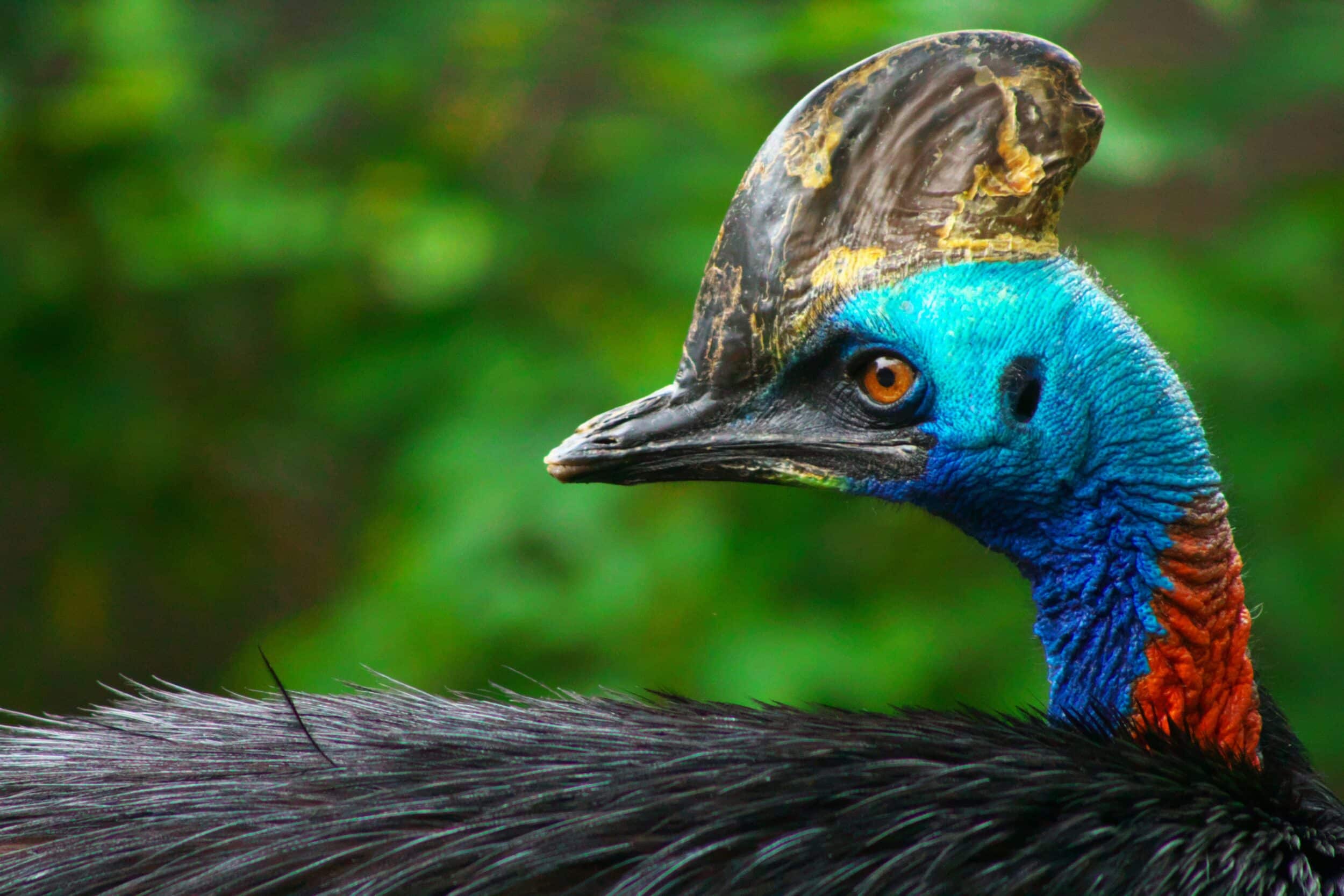
Cassowaries, these modern dinosaurs nicknamed “killer birds,” have just revealed an unsuspected secret: their bony casque emits a bright glow under ultraviolet light. This discovery, as striking as it is aesthetic, raises fascinating questions about animal communication in dense forest environments. While these birds are already famous for their formidable claws and vibrant plumage, this fluorescence, invisible to the human eye under natural conditions, could indeed be a crucial signal we knew nothing about until now.
What You Will Learn
Why the cassowary’s casque glows under ultraviolet light.
How this discovery changes our understanding of these birds’ sensory abilities.
Why the exact biological role of this luminescence remains a mystery to be solved.
A Mysterious Crest That Glows
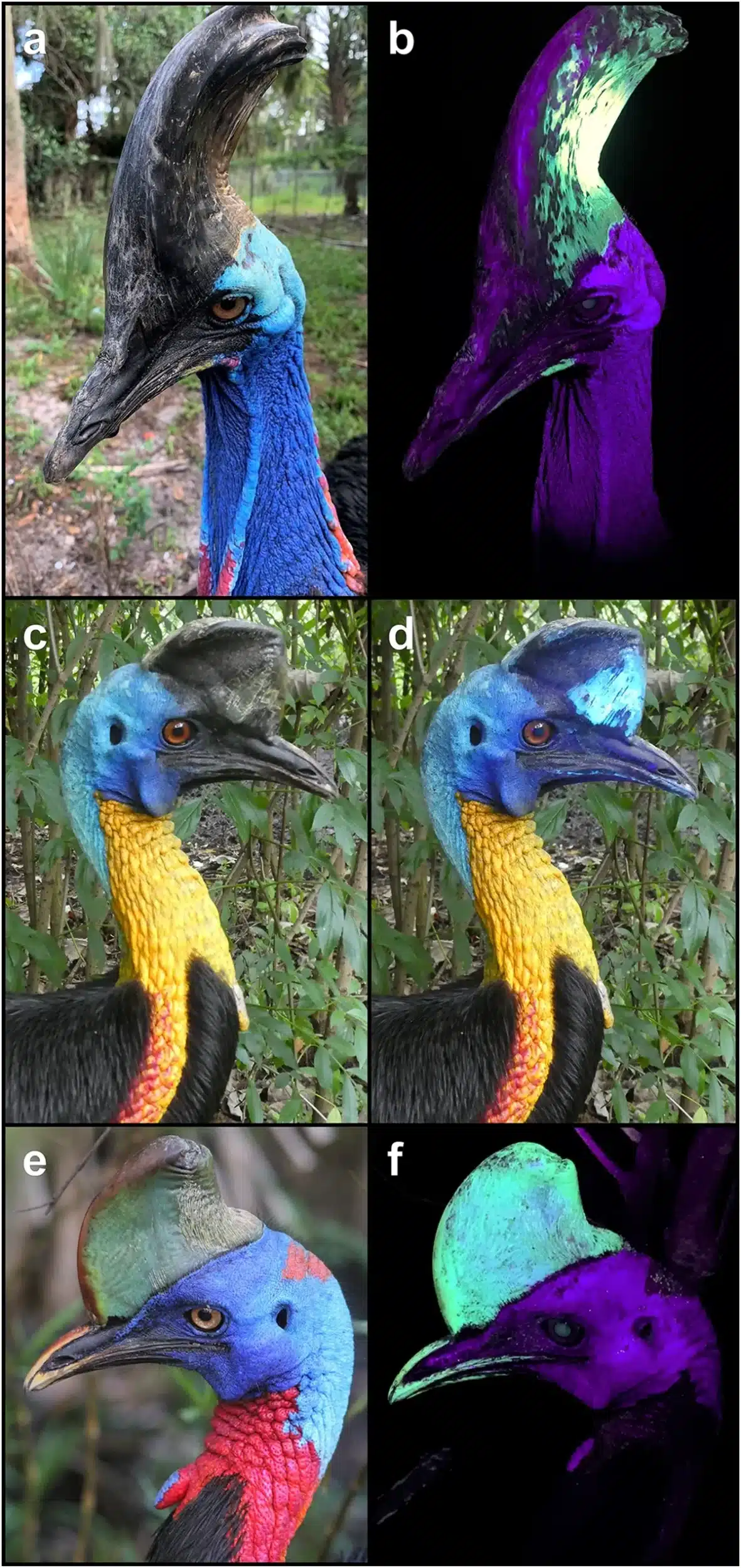
Cassowaries continue to astonish biologists. In addition to their blue skin and extraordinary physical power, the bird sports a keratin casque, the same protein that makes up our nails. If this bony structure had seemed dull and inert, the use of UV lamps revealed a very different reality. During the study, the intensity of the observed fluorescence took the researchers by surprise, with some likening the finding to a dazzling glimpse deep in the rainforest.
The team examined 95 specimens, including individuals from museum collections and living specimens. The results show that the three cassowary species (Northern, Southern, and the dwarf) all exhibit some form of fluorescence. For the dwarf cassowary, it is intense and covers a broad area, while the other two species display a more localized glow. This phenomenon does not appear to vary with sex, which at the moment rules out an explanation tied to the classic mating display.
An Invisible Language for Humans
The burning question on scientists’ lips is simple: what is the purpose of this light? These birds inhabit dense forests where natural light is filtered, creating a complex environment. The fluorescence emitted sits squarely within the spectrum visible to the cassowaries’ own eyes. It is therefore highly likely that they perceive these glows as visual signals, even though to us these birds appear merely to carry an ordinary bone structure.
They thus join a very selective club of species with hidden abilities, alongside sharks, puffins, and certain bats. This fluorescence could serve social recognition, territory delineation, or communication in the shade of the understory. For now, researchers do not know whether this phenomenon is perceived continuously or if it activates under specific conditions we have not yet identified.
The Gaps in Research
Despite this discovery published in Scientific Reports, the casque’s mystery remains. Is it a simple biological reflection or an evolved survival tool? Previous hypotheses—defense, sound production, or display—have not yet been validated by this new data. The cassowary, this direct heir of the dinosaurs, guards its secrets at the heart of tropical forests.
This advance once again underscores how our understanding of the animal world is limited by our own sensory abilities. If we cannot see ultraviolet light, cassowaries may have been communicating through this luminous prism for millennia. The study now opens a royal path to understanding how these “killer birds” actually interact within their ecosystem.
