
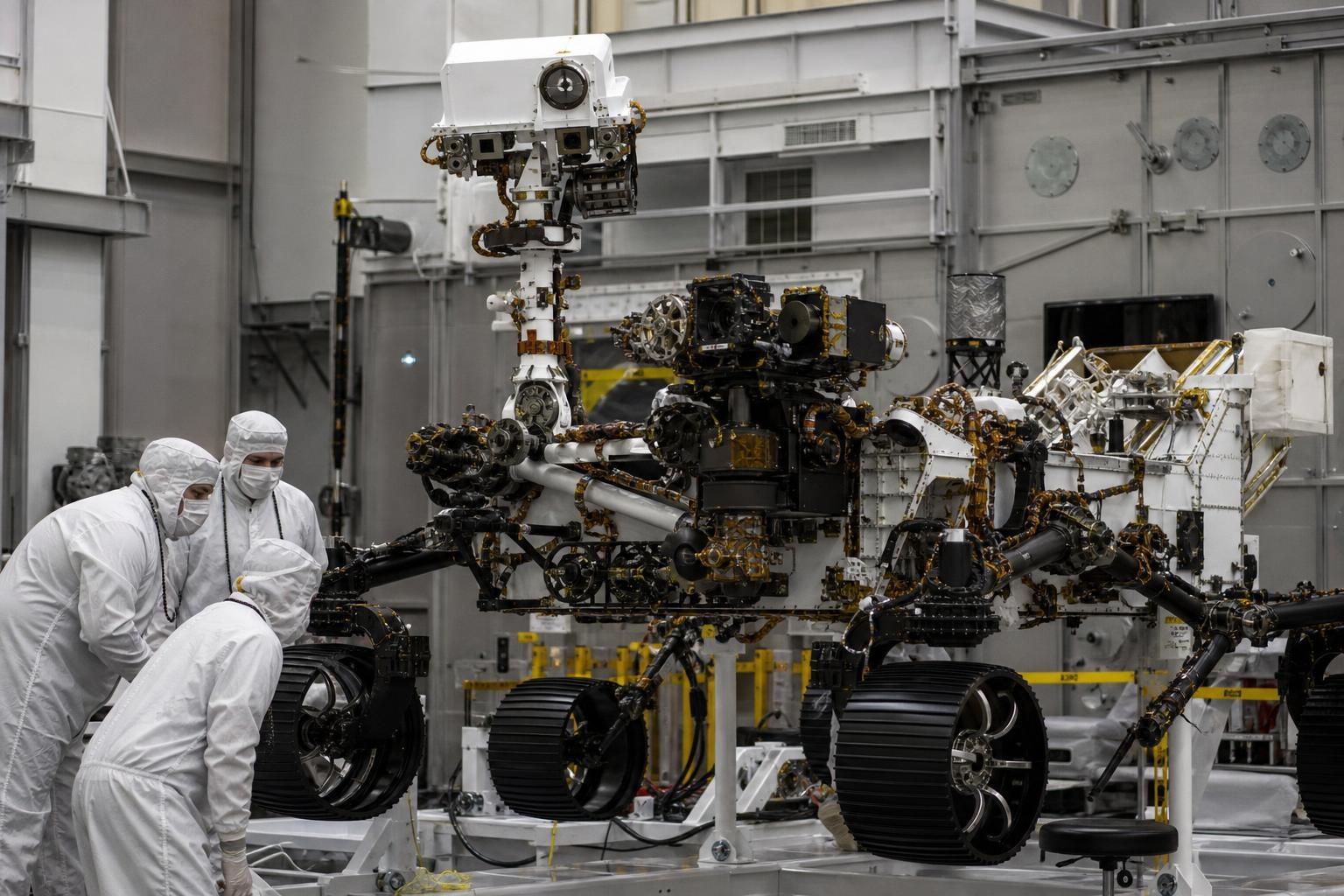
The space agency is putting cash on the table for a solution it can’t quite nail down in-house. That’s not a sign of weakness—it’s a sign of evolution.
Open calls for innovation let outsiders bring strange, brilliant angles to stubborn problems. As one program lead put it, “We need ideas we haven’t tried yet, from people we haven’t heard from yet.”
It’s an old playbook, refined for a new era: define an impossible-seeming challenge, invite the world, and reward the most elegant fix.
Why a public agency turns to the crowd
There’s a myth that progress is strictly an internal affair. In reality, big breakthroughs often come from adjacencies—people trained in one domain who apply it unexpectedly in another.
NASA has used prizes and “open innovation” for years, tapping software tinkerers, materials geeks, and hobbyist astronomers for fresh perspectives. The philosophy is simple and radical: widen the aperture, sharpen the solution.
“Constraints don’t make us smaller,” said one engineer during a previous challenge. “They make us inventive.”
The anatomy of a prize challenge
A well-built challenge is a product in itself. It starts with a clear problem statement—tight enough to be testable, broad enough to invite surprise.
There’s a scoring rubric and a transparent timeline. There are rules for data use, intellectual property, and verification of results. And there’s a jury that blends domain experts with methods thinkers who can spot novelty.
The money matters—but so do the bragging rights. “You don’t just win funds,” said another organizer. “You win a footnote in spaceflight.”
What kind of issue needs outsiders?
Some problems are cross-disciplinary puzzles that resist a single lens. Others are edge cases where traditional methods hit diminishing returns, and the best move is to till the field for unexpected approaches.
- Think data algorithms that must find needles in cosmic haystacks
- Think durable materials that laugh at thermal stress
- Think novel power management for ruthlessly efficient systems
- Think autonomous navigation in environments that fight sensors
Each example hides a knot of tradeoffs: mass vs. strength, speed vs. signal, precision vs. power. Outside minds often reweave those tradeoffs from unusual threads.
The upside—and the risk
The upside is speed. An open call parallelizes effort, letting ten thousand minds test paths in days that would take one team months.
The upside is also diversity. A mycologist sees biofilms; a statistician sees priors; a game developer sees physics engines tuned for play. That cognitive jumble is a feature, not a bug.
There are risks, of course. Public calls can invite noise, duplicated work, or clever-but-fragile hacks that wilt under mission conditions. That’s why the test harness matters as much as the cash prize.
“Show me it works when the lights go out,” one judge once quipped. “Then I’ll call it a solution.”
How to read between the lines
Every challenge brief hides a story. The scoring weights tell you what really matters—robustness over speed, or power thrift over fidelity.
If the constraints feel oddly specific, they probably mirror flight realities: limited compute, harsh temperatures, relentless vibration. Designing within those fences is the art of aerospace creativity.
And if the data pack is bare-bones, assume part of the skill is building your own tooling, your own validation loops, your own test fixtures that won’t lie when the model says yes.
How to take part without flaming out
Start with the goal, not your favorite tool. Tools are loyal to habits; goals are loyal to truth.
Prototype embarrassingly early. If something’s going to break, let it break before you convince yourself it can’t.
Beware “clever” that costs reliability. Elegant ideas are only elegant if they survive contact with weird edge cases and rough operational realities.
And write like your future teammate depends on it. Judges can love your math and still dock you if your reporting is muddy. Clarity is an underrated technology.
What success looks like
Sometimes the winner is a workaround that seems almost obvious in hindsight. Sometimes it’s a total reframe: a new coordinate system, a different loss function, a trick from a neighboring discipline.
“Great answers feel inevitable, then impossible you didn’t see before,” a mentor once said. That’s the paradox of problem solving.
And yes, someone outside the original circle can beat the best insiders—not because they’re smarter, but because they’re orthogonal. They come from a different angle, and the lock finally meets the right key.
Why it matters beyond space
When a public institution invites everyone, it extends a quiet promise: the future is a team sport. The same approach that guides rovers across alien terrain can guide policy, climate models, or health systems toward better answers.
Today, the challenge is a stubborn technical hurdle. Tomorrow, the pattern becomes a civic habit: define the problem, open the doors, reward the work, and publish the playbook so others can iterate.
Somewhere, someone already has the idea. This is how you make it findable.
