
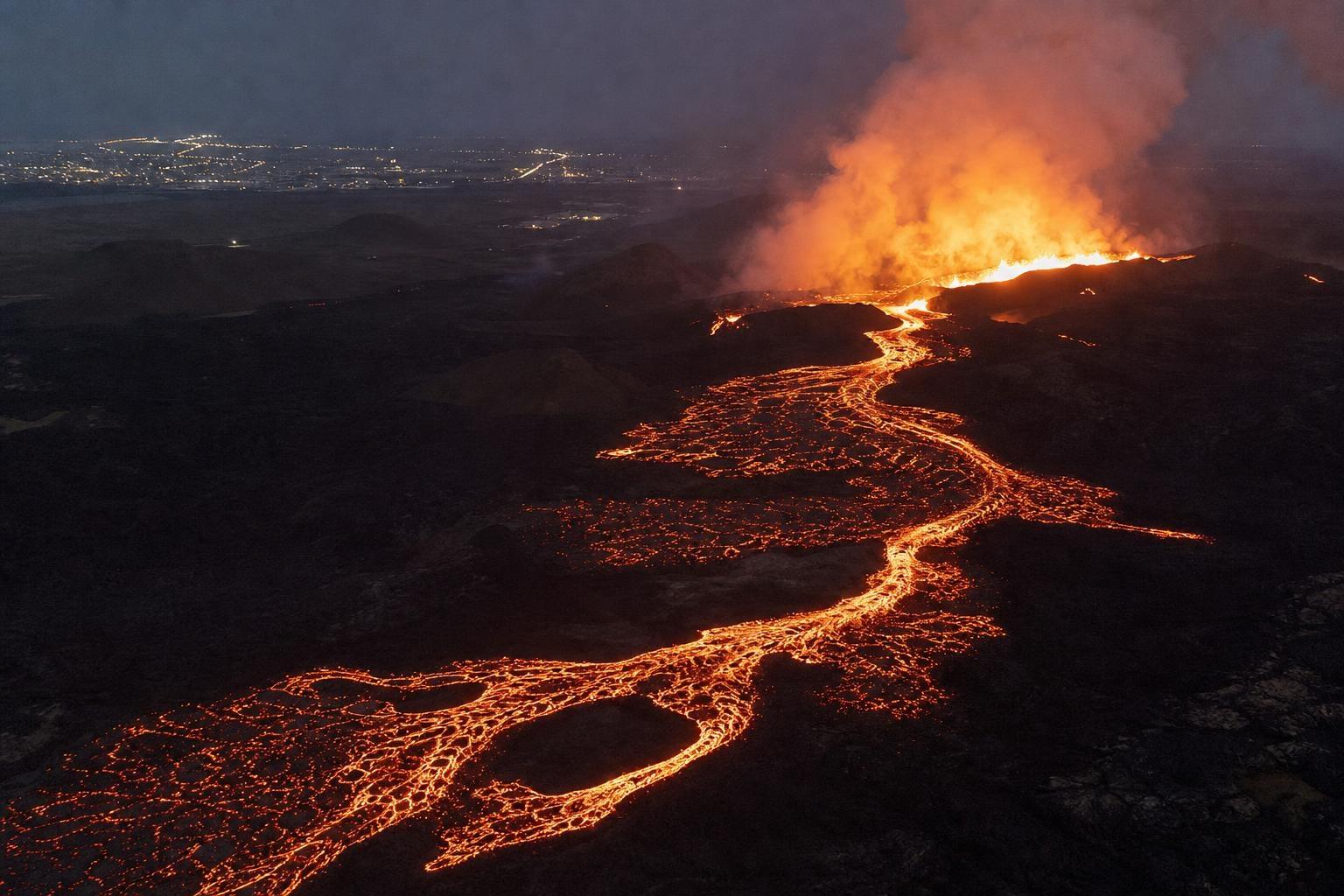
The ground southwest of Reykjavik is restless, and it’s not a short-lived spasm. As a field volcanologist, I’ve watched the Reykjanes Peninsula shift from centuries of quiet to a pattern of stop‑and‑go eruptions that can persist for a generation or more. This is how rift zones behave when they wake, and the evidence suggests we’ve entered a long chapter, not a single episode.
Why this corner of Iceland is waking up
Iceland sits where the Mid‑Atlantic Ridge meets a powerful hotspot, a place built for magma to rise and faults to open. The Reykjanes Peninsula has a history of centuries‑long lulls, punctuated by half‑century bursts of activity roughly every 800–1,000 years. The last active period ended in the medieval era, and the current cycle likely began with the 2021 eruption near Fagradalsfjall.
Satellite InSAR shows repeated ground inflation, while dense swarms of small quakes trace the paths of underground dikes. When a dike reaches shallow depths, pressure finds a crack, and a new fissure tears open—often with only hours to spare. “This is not one volcano having a tantrum,” I tell my students. “It’s a rift zone reorganizing how it moves magma.”
What “decades” really means
Decades doesn’t imply a single continuous fountain. Think of episodic pulses separated by quiet pauses—weeks to months long, sometimes a year. North Iceland saw this with the Krafla Fires (1975–1984), a stop‑start series of intrusions and eruptions that rewired the crust over nearly a decade.
The Reykjanes sequence is similar but closer to the country’s capital. Most events are low‑explosivity basaltic fissures that send lava into valleys, across roads, and occasionally toward towns. Hazards spike rapidly, then ease, only to return when another dike finds a new weakness. “The lull between eruptions is part of the eruptions,” as one veteran colleague likes to say.
What to expect during this new era
- Repeated magma intrusions and short‑notice fissure openings along several parallel systems (e.g., Svartsengi–Sundhnúkur, Krýsuvík, Brennisteinsfjöll), occasionally migrating by a few kilometers.
The real risks—and the limits
Despite the dramatic images, this is not a doomsday scenario. Far‑ranging ash like 2010’s Eyjafjallajökull is unlikely here; the magma is hotter, drier, and generally more fluid. The pressing threats are lava inundation, road and utility damage, and volcanic gas—especially SO₂—pooling in low areas under calm winds.
Communities like Grindavík have faced repeated evacuations, and the Svartsengi power plant has been encircled by earthworks. Barriers can slow or steer flows, buying time for responders to protect infrastructure. Keflavík International Airport is robustly monitored; closures would more likely stem from gas or logistics than widespread ash clouds.
How we forecast the next fissure
Forecasting fissure eruptions is a game of minutes to days, not months. We watch swarms of high‑frequency quakes that zip along a propagating dike, abrupt ground uplift from continuous GPS, and subtle changes in gas at steaming vents. Thermal satellites and radar track fresh lava within hours, even through cloud and night.
The warning window can be painfully short. “When the intrusion turns, the clock starts,” field teams often remind each other. We can flag heightened likelihood, we can draw probable paths, but the exact vent location often reveals itself only at the last moment.
Living with lava, not just fearing it
Decades of activity demand endurance, flexibility, and clear public communication. Icelanders are practiced in this resilience. Evacuation routes are pre‑planned, gas alerts are pushed to phones, and heavy equipment sits staged to raise new berms in hours. Visitors can help by heeding closures, checking official alerts, and treating new flows with sober respect—fresh lava fields stay hot and unstable for months.
Mental fatigue is a real hazard. Each swarm rekindles uncertainty and stress. Regular briefings, honest maps of risk, and visible mitigations help communities convert anxiety into practical action. “Clarity is a safety tool,” a civil‑defense lead told me after a long night on the line.
What would finally quiet things down
This cycle will ebb when magma supply drops, tectonic stress relaxes, or the rift finds more efficient pathways to move without breaking the surface. That transition can take years, even after the last spectacular fountain. The land will keep adjusting long after news cameras move on.
None of this makes the situation benign, but it frames it as a manageable, trackable process. With smart barriers, real‑time data, and disciplined coordination, losses can be limited even while the rift breathes.
The truth is both bracing and practical: this is a long conversation between magma and rock, and we’re early in the dialogue. If we respect the pace, invest in layered defenses, and keep listening to the signals the crust sends, Iceland can live with this awakening—safely, and for as long as it lasts.
