
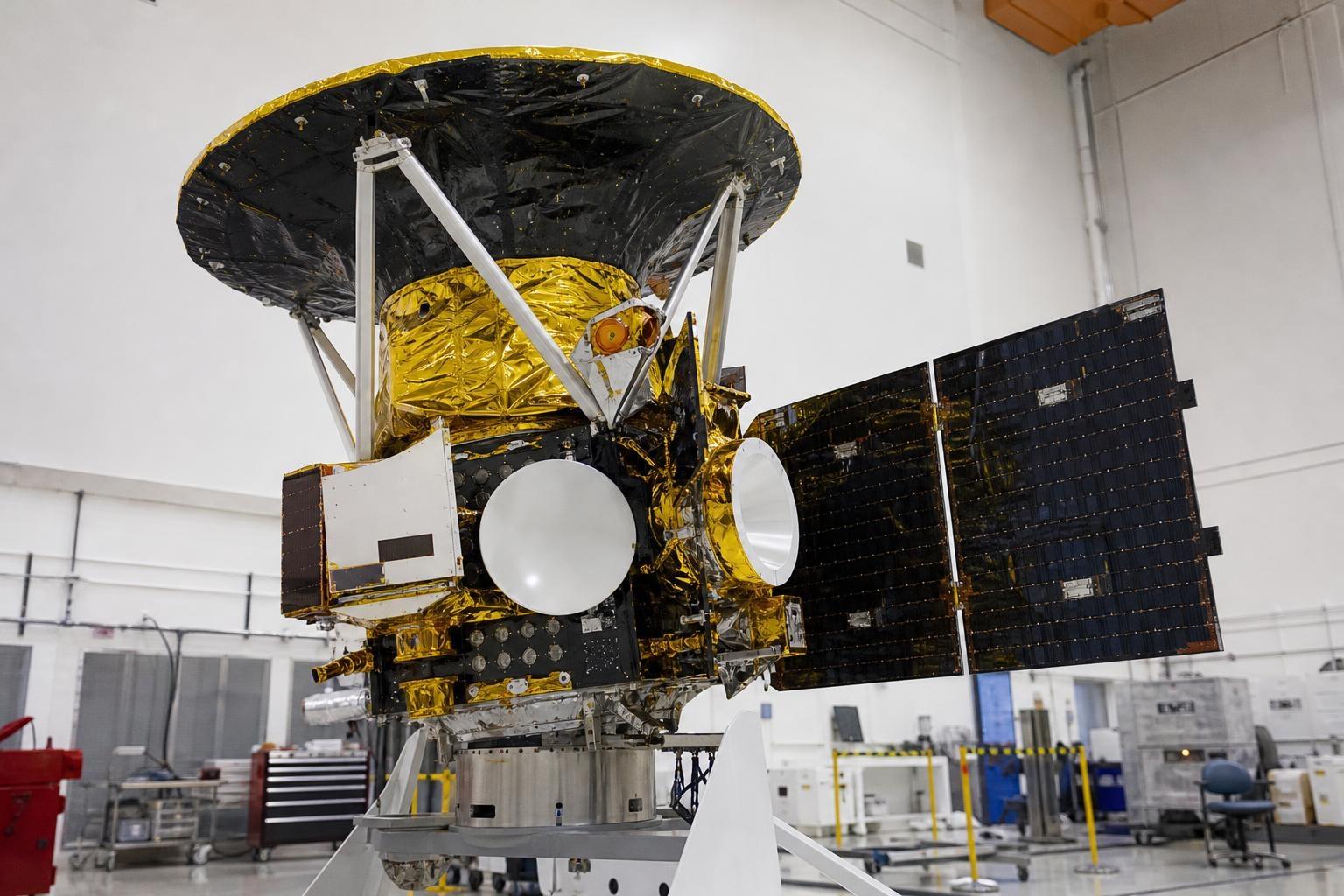
For decades, astronomers have peered at our star from the equator, building tidy diagrams of loops, plumes, and belts that felt reassuringly orderly. Now, a bold spacecraft has swung its lens toward the solar south, and the view is startlingly raw. The polar cap is a cauldron, a place where tidy lines dissolve into fury, and where the Sun’s magnetism behaves like a restless living thing. “It’s more wild than we imagined,” say mission scientists, “and it’s rewriting long‑held assumptions.”
What the camera saw at the edge of the solar cap
The footage reveals a jagged frontier: a dark coronal hole gnawing into bright terrain, filaments snaking like rivers, and plume “forests” that braid and buckle in slow, mesmerizing surges. Where textbooks drew clean loops, the images show tattered ribbons, fractured arcs, and flashes that spark without warning. “It looks alive,” one researcher marveled, “as if the field is breathing in quick, uneven gasps.” Fine‑scale jets stitch the boundary, while patchy brightenings—the so‑called “campfires”—flicker like embers in a solar wind. Each detail hints at hidden engines that churn beneath the polar veil.
A tangled engine for the fast solar wind
The polar coronal holes are the launchpads of the Sun’s fast solar wind, yet their internal plumbing has stayed stubbornly mysterious. In these new scenes, slender jets and kinked plumes repeatedly snap, hinting at relentless magnetic reconnection that hurls particles into deep space. The wind, once sketched as a steady breeze, looks more like a storm of intermittent gusts, sculpted by bursts that zigzag through the crown of the polar cap. “If you want to forecast space weather,” says one analyst, “you need to map this stop‑and‑go machinery.” What looked simple turns out to be a ballet of sudden releases, braided currents, and waves rippling up magnetic highways.
Why the textbooks missed it
Most of our solar missions have hugged the ecliptic, giving us a side‑on view that flattens the poles into afterthoughts. From that vantage, complex polar terrain dissolves into smooth averages, and reality becomes a neat classroom diagram. Add the limits of older detectors, and the smallest flickers were easy to ignore, buried beneath glare and instrumental noise. “We weren’t wrong so much as under‑sampled,” notes a mission scientist, “like listening to a symphony through a keyhole.” With sharper optics and a better angle, the polar page finally fills with ink.
How theory bends to a messier star
The images demand bolder models, ones that embrace asymmetry, intermittency, and rugged boundaries. Instead of static loops, think percolating magnetism, where flux patches collide, reconnect, and rewire the landscape minute by minute. Supergranular cells near the pole appear elongated, steering flux into corridors that feed plume forests and jet‑like fountains. The result is a fast wind that’s speckled with switchbacks, sharp kinks in the field that carry both energy and clues. “The Sun isn’t tidy,” says the team, “and our math shouldn’t be either.”
What the footage highlights most clearly
- Frayed plume edges that twist, merge, and abruptly fade
- Needle‑thin jets erupting from tiny magnetic knots
- Patchy, ember‑like brightenings carpeting the polar floor
- Jagged coronal‑hole boundaries that pulse and crawl
- Wavefronts that ripple through the high‑latitude atmosphere
A better handle on solar risk
Earth’s technology depends on forecasts that work, from satellite uptime to grid stability and aviation safety. Polar dynamics help set the tempo of high‑speed streams, which can buffet our planet days after they leave the Sun’s rim. With clearer polar movies, forecasters can connect small‑scale triggers to large‑scale stream structure, refining arrival times and impact strength. “When you see the plumbing, you can fix the leaks,” quips one forecaster, pointing to more actionable alerts for operators and mission planners. Better pole‑to‑Earth links mean fewer surprises in the space‑weather pipeline.
The road to a truer polar perspective
This milestone is not an endpoint, but the start of higher‑latitude seasons, deeper passes, and coordinated multi‑wavelength campaigns. Pairing ultraviolet imaging with magnetic maps and in‑situ particles will reveal how jets seed the wind we measure far from the Sun’s surface. Future orbits will push to steeper inclinations, turning oblique hints into head‑on views of polar turbulence. “Every degree of tilt is a scientific windfall,” says a systems engineer, celebrating the long game of trajectory and timing. The closer we get to the poles, the more the Sun’s grammar reveals its hidden verbs.
Textbooks will change, curiosity won’t
Pages that once showed serene loops will soon feature tangled threads, patchy holes, and restless plumes that breathe in fits and starts. None of this diminishes the Sun’s elegant physics; it simply nudges us toward models that honor its restless character. “Reality is always more textured than our first good guess,” as one veteran observer said, “and that’s the thrill of looking again.” With each polar frame, we trade comfort for clarity, and diagrams for living, flickering truth. The star that anchors our days is less like a chart and more like a story, still being written at the edge of its southern sky.
