
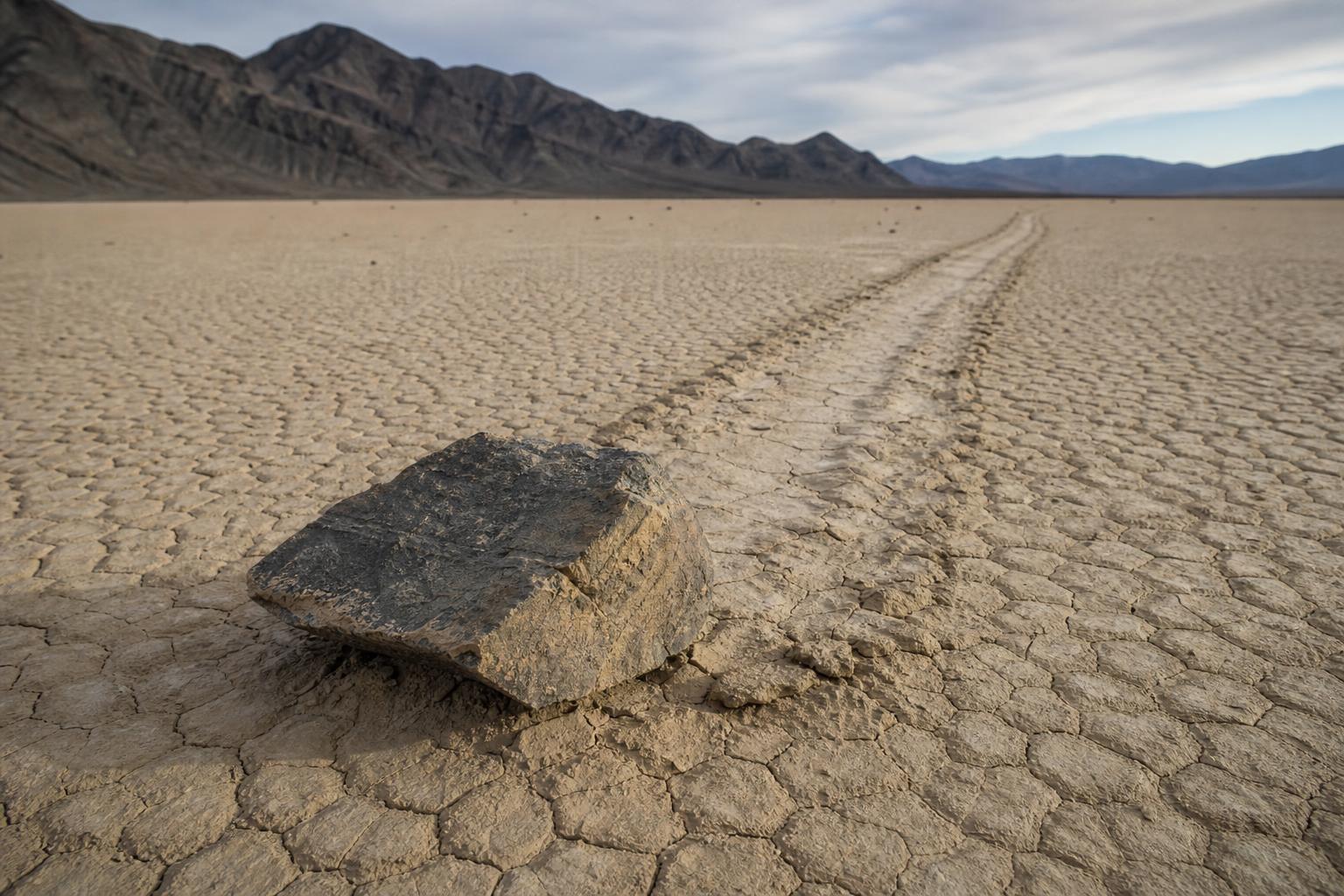
Under a brazen desert sky, long furrows slice across a dry lakebed, as if heavy stones decided to wander on their own. For years the lines were clean, the agents behind them stubbornly silent. People came to witness the tracks, then left with theories, because the rocks refused to move when anyone was looking.
The mystery, freshly told
The stage is a playa so flat, a spirit-level would call it home. When rare storms spread shallow water, the surface turns mirror-smooth. Then the heat returns, the water vanishes, and only strange runways of mud remain.
“Out here, patience is the only currency,” one researcher once quipped. For decades, the best explanation was a collage of wind, ice, and chance, yet no one had seen the dance unfold in real time.
From rumor to measured motion
A small team finally mixed ingenuity with stubborn waiting. They planted GPS-equipped rocks, set time-lapse cameras, and logged the playa’s whisper-quiet weather. The result was a subtle revelation: stones can lurch forward in slow, eerie glides, covering meters in a handful of minutes.
“It’s the marriage of thin ice, shallow water, and a light breeze,” one observer said. No hidden magnets, no mischievous pranksters, just gentle forces lining up at the right moment.
The engine under the silence
First comes a skim of water, barely a few centimeters deep. A clear, “windowpane” sheet of ice then forms overnight—brittle, thin, and almost invisible. Morning sun fractures that sheet into wide panels, which float like slow-moving rafts. When a modest wind begins to push, those panels press against embedded rocks, coaxing them to slide across lubricated mud.
The stones don’t race; they creep, often a few meters per minute, leaving filigreed grooves in their wake. “It’s quiet motion, the kind that feels almost imaginary until the track tells the truth,” a field note once remarked.
What must align
Three conditions recur whenever tracks are born, and they are surprisingly fragile:
- Shallow, standing water to float thin, breakable ice
- Overnight freezing to forge transparent sheets
- Gentle winds to nudge ice-panels and reduce friction under the rocks
Miss any one piece, and the playa stays mute, its stones stubbornly still.
Why paths wander and split
Not all tracks aim the same way, and not all carve the same depth. Rock shape matters: a sharp edge cuts a crisp furrow, while a rounder face skates with a faint, braided line. When ice floes collide or shatter, a single stone can zig, zag, or briefly stop, turning a simple streak into calligraphed geometry.
Subtle slopes tug the flow, yet the surface is so level that even whispers of wind can redirect the entire ballet. That is why two neighboring rocks may diverge, sketching parallel lives that suddenly fork.
What earlier guesses got right—and wrong
For years, people suspected wind, and they weren’t entirely wrong. But wind alone lacks the gentle grip that thin ice offers. The ice spreads the force over a larger face, helping heavy stones overcome sticky mud without digging themselves a grave.
The mystery was never magic, only timing—rare weather stringing together a precise sequence. “The desert loves paradoxes,” as one geologist mused, “and this one was hiding in plain sight.”
The science in the footprints
The playa is a notebook written in silt, preserving data you can walk beside. Track width hints at rock geometry; curve radii suggest wind shifts; cross-cut grooves imply changing ice-rafts. Each fresh trail becomes a diagram, and each rain resets the page.
When teams returned after a freeze, they sometimes found dozens of new lines, born in a single brief event. Hours later the water was gone, but the story sat sun-baked into the ground.
A fragile stage worth protecting
Those elegant grooves are heartbreakingly delicate, and a single bootprint can last for years. Vehicles scar the surface with wounds that never quite heal. If you visit, step lightly on the edge, respect closures after rains, and let the playa keep its clean, cryptic face.
In a warming world, such ice-assisted wonders may grow rarer or shift in season, changing the cadence of this patient drift. The lesson is quietly grand: even massive stones can be steered by subtle forces, provided the pieces fall into perfect, fleeting place.
