
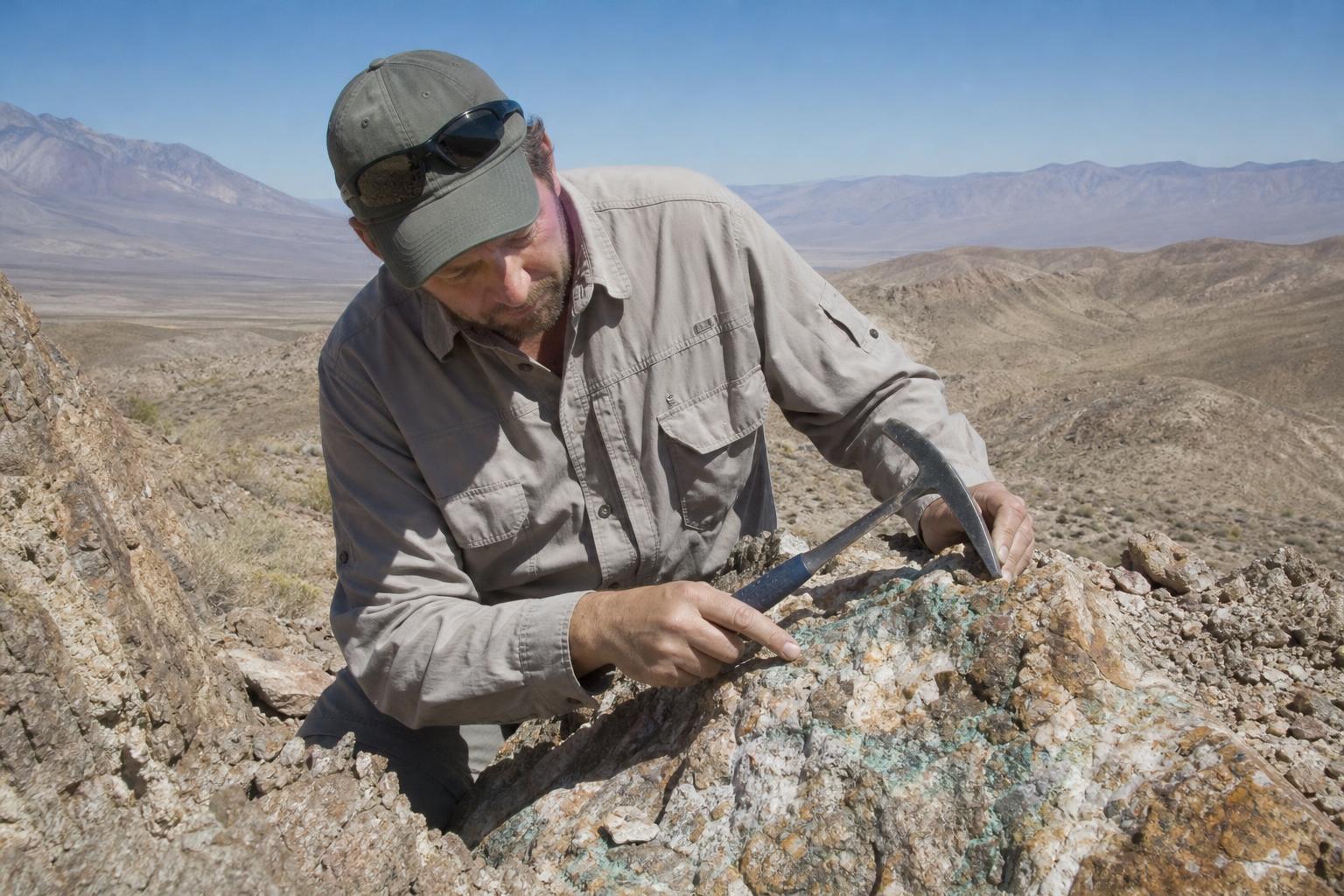
Dawn broke over the sagebrush flats as a small convoy of trucks rolled to a stop. What scientists had quietly mapped for years was finally confirmed: a vast body of metal-rich rock, buried deep below a landscape better known for sun-bleached playas and distant ranges.
The ground here looks empty, almost silent. Yet instruments whisper a different story, one of heat, pressure, and time carving a treasure zone beneath the sand.
Years of Patience, One Big Break
The find did not happen overnight, nor by sudden luck. It grew from reprocessed satellite data, re-read field notes, and a stubborn question: What else lies under the overlooked basins?
“We had to let the data breathe,” said Dr. Lena Ortiz, a lead geologist on the team. “When we stopped forcing a model, the pattern finally spoke.”
What followed were months of drilling, lab assays, and an arms-length chain of verifications. Each new core came up denser, more complex, and richer than anyone dared to predict.
Geology with High Stakes
Beneath layered tuffs and weathered gravels sits a sprawling system of porphyry intrusions—hot, mineral-charged fluids that once webbed fractures with microscopic veins. The result is a hybrid deposit: copper as the sturdy backbone, gold as the glittering bonus.
Preliminary models point to extensive tonnage with grades that excite engineers as much as they calm financiers. “It’s the scale that’s stunning,” said Eric Mason, a mine-planning consultant. “Not the highest grades, but the kind of continuous volume that underwrites decades of operations.”
The ore sits at mineable depths, close enough for open-pit designs to pencil out, yet deep enough to keep the early footprint contained. For copper-hungry industries, this is a timely signal.
Why Copper, Why Now
Copper is the quiet wire behind the global transition—grids, electric vehicles, advanced motors, and data-center backbones all run on conductivity. Every gigawatt of renewables eats copper; every new battery plant demands it. Gold, meanwhile, serves as hedge and cushion, smoothing the economics of ramp-up years.
“Markets love certainty,” said mineral economist Mark Holloway. “A domestic, long-life asset like this lowers risk across the entire supply chain.”
Billions in the Balance
Early valuations—necessarily tentative—point to a multi-billion-dollar resource when measured against long-cycle prices. Infrastructure would be massive: roads, processing mills, water treatment systems, and a fleet of heavy machines built to endure desert extremes.
Local businesses are already speculating. “You can feel the pulse picking up,” said Carla Nunez, who runs a regional logistics firm. “If this proceeds, we’re hiring and training fast.”
Land, Water, and the Human Factor
Nevada’s beauty is spare, but not empty. It holds migratory routes, fragile springs, and cultural places of meaning. Any development will face scrutiny, as it should.
“We want responsible process, not speed at any cost,” said Dana Lopez, a local environmental advocate. “Show the water plan, show the mitigation, and keep the community at the table.”
Modern projects live or die by permitting, community trust, and transparent monitoring. Smart operators front-load baselines, design for water recycling, and restore disturbed land in parallel with active mining.
- Key focus areas ahead: water sourcing and recycling, habitat mitigation, cultural site protection, and dust/noise controls
Technology at the Edge
Next-generation ore sorting, precision blasting, and AI-guided dispatch could cut waste and improve recoveries. In-plant heat reclamation and renewable power purchase agreements can shrink the carbon profile without waiting for distant grids to catch up.
“We can mine with fewer truck hours if we get the geology right,” said Tom Reyes, an equipment manager on the scouting crew. “Every accurate model is a gallon of diesel we don’t burn.”
Ripples Beyond the Pit
A project this size reshapes towns, school districts, and county budgets. Wages rise, service sectors expand, and infrastructure sees long-delayed upgrades. But it can also strain housing, spike rents, and stretch rural healthcare.
Stable growth means planning now: workforce housing, vocational training, broadband expansion, and local vendor programs that keep more dollars circulating nearby.
What Comes Next
Expect a cascade of studies: resource updates, engineering tradeoffs, hydrology models, and cultural-resource surveys. Each will tighten the picture, de-risk the plan, and test the project’s social license.
If the numbers hold, partners will chase offtake agreements, hedge some exposure, and line up construction capital. If they don’t, the drills will keep turning, because uncertainty is geology’s constant companion.
For now, the desert holds its secrets a little less tightly. A deeper layer of the American West is coming into view—not just as a cache of commodities, but as a test of how we balance need with care, and promise with proof.
