
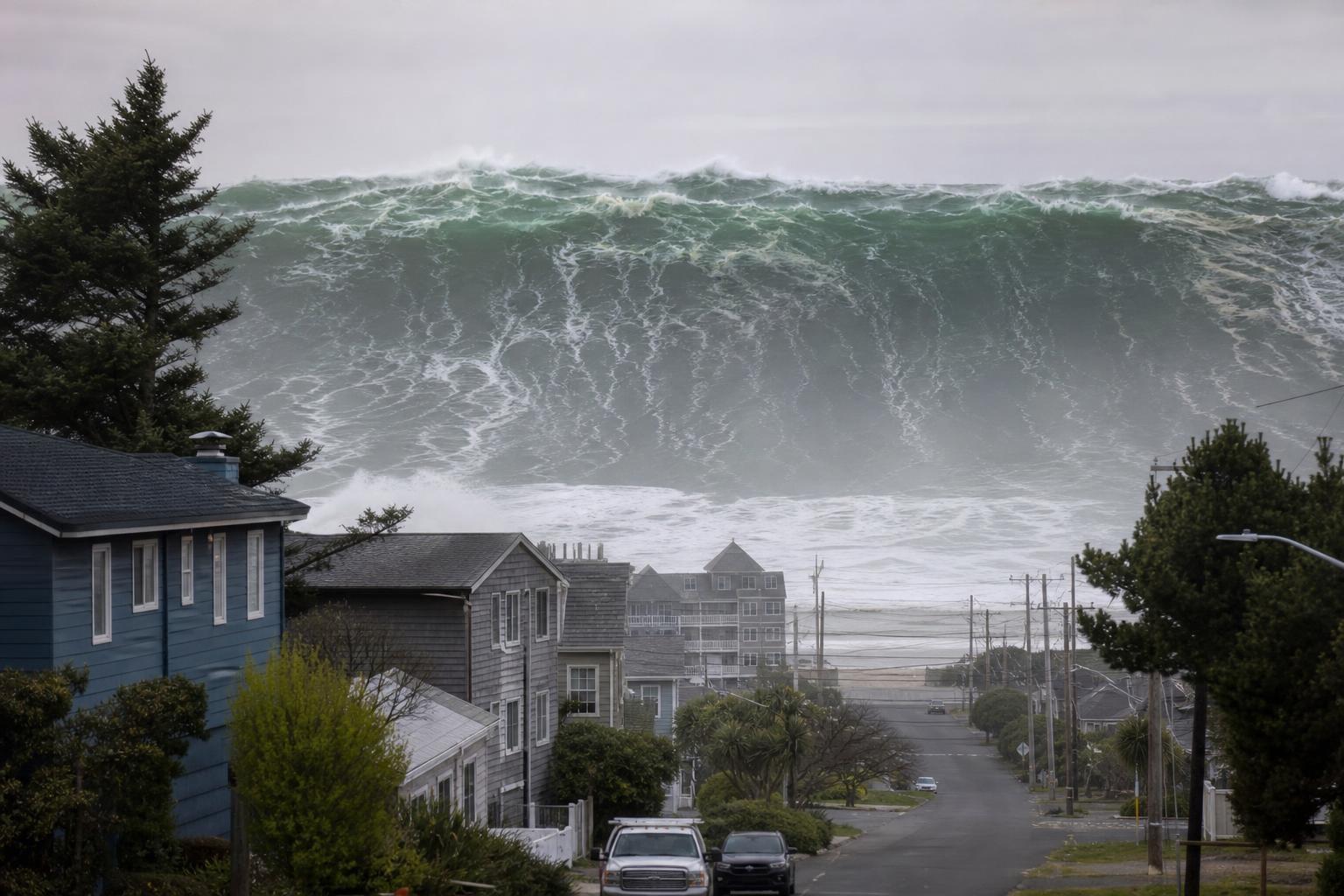
Fifteen minutes is a thin slice of time when the ocean decides to change the story. Along the Pacific Northwest, that sliver can mean the span between ordinary life and a fast, uphill escape. People imagine distant alarms or heroic rescues, but reality favors feet on pavement. “When the ground shakes hard and long, that’s your siren,” emergency planners like to say.
The Fault That Holds Its Breath
Beneath the Pacific’s gray surface, one tectonic plate dives under another. This collision, quiet for centuries, stores colossal energy. When it lets go, the rupture can run for hundreds of miles in a brutal rush. Seismologists warn of shaking that lasts minutes, not seconds. Think of furniture walking across floors, bridges swaying like jump ropes.
This isn’t a movie quake, it’s a system-level event. The seafloor can jolt upward, pushing an immense volume of water outward in stacked pulses. Coastal residents will have only minutes before the first surge barrels ashore. “Fifteen minutes is not a plan; it’s a sprint,” as one coastal trainer likes to remind.
The First Clue Is Under Your Feet
If you feel strong shaking, there’s your warning. Don’t wait for a siren, a text, or official words. The network may be down, and the best clock is your own instinct. Drop, Cover, and Hold until the violent motion eases. Then move with purpose toward high ground, and do it on foot.
Debris will choke roads, and bridges may be compromised. Sticking around to gather things could cost precious minutes. Leave the car, leave the view, and go toward pre-identified routes. “If you’re within the tsunami zone, you’re already late,” goes the brutal truth.
What “High Enough” Looks Like
Maps carve blue swaths across beach towns and bays. Those show where water is likely to go, and how far inland it might climb. Elevation matters more than distance, and vertical gains beat long detours. Aim for 50–100 feet of elevation, more if it’s quickly reachable.
A first wave can be the lowest, not the highest. Hours of oscillating water can follow in sets. Picture a roiling wall the height of a mid-rise building, packed with trees, cars, and broken homes. It’s not a surfing wave, it’s a moving shoreline with the weight of a valley behind it.
What Breaks Before The Water Arrives
Shaking will do its own damage. Downtowns built on fill can slump or liquefy. Docks shear from their pilings, and boats pack into tangled rafts. Fires may spark from ruptured lines, and water mains could fail. Communications get spotty, sirens fall silent, and rumor fills the void.
Cliffs can crack, sending rocks across highways and backroads alike. Power will likely be gone, along with routine medical access. In the midst of all that, the best move is still the simplest: turn uphill and keep going until the ground stays dry.
Your Fifteen-Minute Playbook
When the trembling stops, act like the ocean is already on its way. The following moves save seconds, which can save lives:
- Go immediately to preplanned high ground, on foot, via the shortest safe route. Take neighbors, kids, and visitors who look lost, and don’t turn back.
“Up is out,” trainers like to repeat. If you can’t reach natural elevation, some communities are building vertical evacuation structures. These towers or berms are meant for speed, not comfort. Know where they are before the ground shakes, not after the seawater rises.
What Practice Looks Like When It Counts
Preparation isn’t just a go-bag, it’s muscle memory. Walk your route on a rainy night with a small light and sturdy shoes. Stash a spare headlamp at work and a pair of old sneakers under your desk. Teach kids the “feel shaking, move up” mantra until it’s almost boring.
Neighborhoods do better when neighbors know each other. Assign a buddy for people who need assistance, and map who has radios or basic first aid. “Don’t be a lone hero; be part of a web,” is solid coastal advice.
The Day After The Longest Night
Help may take days to arrive along severed roads and crippled ports. Expect aftershocks, expect repeated surges, expect long walks for water and news. Community hubs with independent power and stored supplies will become improvised capitals. Paper maps will beat dead batteries, and hand-written notes will carry far.
Recovery begins with what you save in those first minutes. Every practice walk, every cached pair of shoes, every neighbor you’ve met becomes part of a living plan. The ocean rewards urgency, and so does the fault beneath it. When the earth starts to roar, make your world small, pick your line, and climb without hesitation.
