
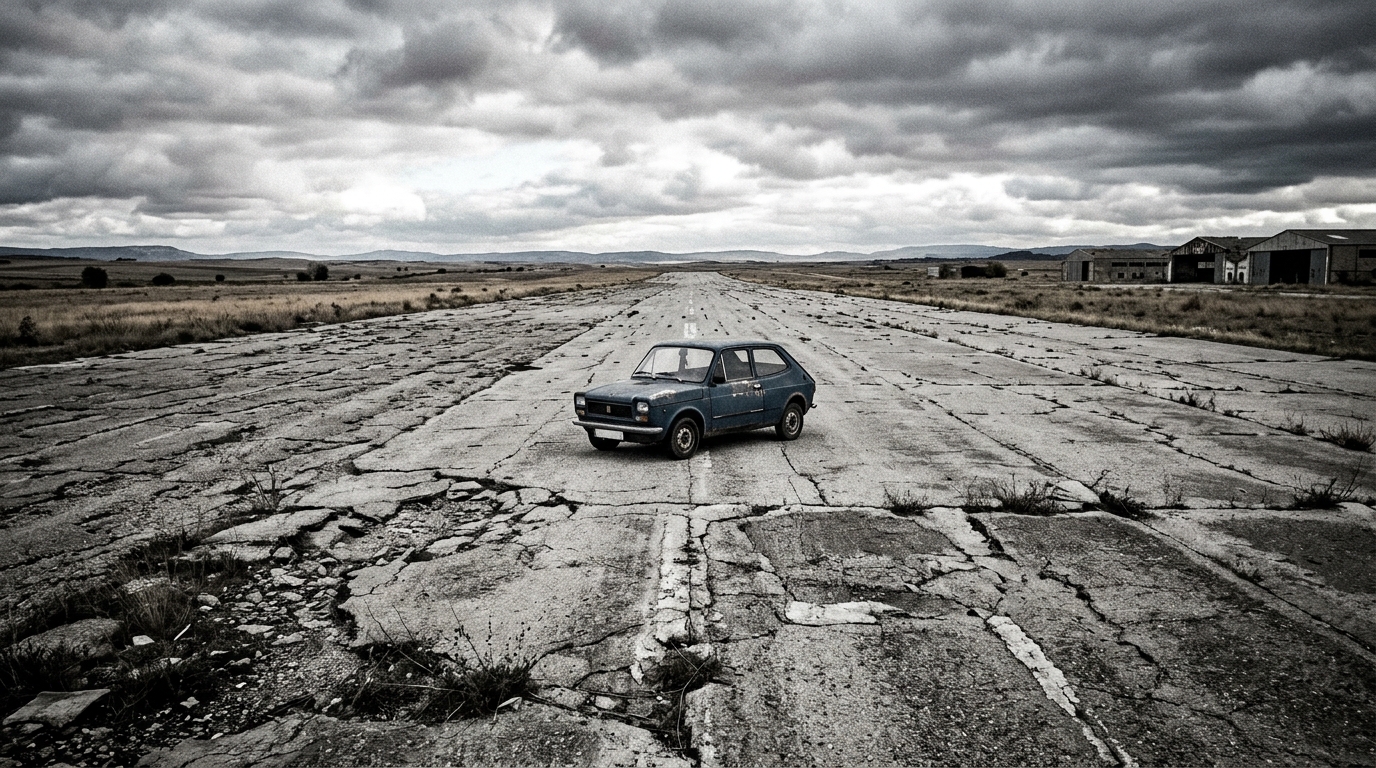
Imagine a brand-new airport, capable of hosting the world’s largest commercial aircraft, that ends up being sold off for a ridiculous price, just a little more than the cost of a used city car. This isn’t a fabrication for the sake of an article; it’s a real story that unfolded in Spain and that continues today to fascinate fans of industrial ruins and curious minds about the global economy. Between dreams of grandeur and total disillusion, the fate of this ghost airport encapsulates the excesses of an era when money seemed to flow freely, before reality stepped in to challenge everything. Sit back and get comfortable, heading to Castile, in the heart of Spain, to discover a story as dizzying as it is instructive.
- Opened in 2008 for around €1.1 billion, Ciudad Real airport boasted a 4,100-meter runway capable of hosting an Airbus A380.
- Neglected by airlines with only 53,000 passengers in its first year, the airport went bankrupt in 2012 before being completely abandoned.
- In July 2015, the Chinese group Tzaneen International won the auctions for a mere €10,000, with plans to convert it into a freight hub.
- A dream of a giant airport lost in the middle of Castile
- A pharaonic bet: building bigger than Barcelona to relieve Madrid
- The brutal fall: when planes desert and debts pile up
- Ten thousand euros for an entire airport: the auction that stunned Europe
- Ciudad Real, a symbol of a Spain that dreamed too big before the crisis
A Dream of a Giant Airport Lost in the Middle of Castile
About two hundred kilometers south of Madrid, in the arid region of Ciudad Real, rises a structure that clashes completely with the surrounding landscape. Fields stretch to the horizon, a few deserted roads, and suddenly, seemingly out of nowhere, a sleek terminal, expansive parking lots, and above all an endless runway that stretches toward the horizon. Nothing suggested that such a project could come to life in a sparsely populated area, far from Spain’s major tourist metropolises. Yet it’s here that local authorities decided, in the early 2000s, to build what was meant to become one of Europe’s most modern airports.
Inaugurated in 2008, amid the feverish height of the Spanish real estate boom, the Central-Ciudad Real airport embodied the hopes of a region dreaming of becoming an essential air hub. The project had cost a staggering sum of around €1.1 billion, a colossal investment for an infrastructure intended to relieve Madrid’s traffic and energize an entire region. But as often happens in stories that go awry, the initial ambition would soon collide with a far more down-to-earth reality.
A Pharaonic Bet: Building Bigger Than Barcelona to Relieve Madrid’s Congestion
What strikes most when examining the airport’s technical features is the sheer scale of the project. Its runway runs about 4,100 meters long, making it one of the longest on the European continent. A length designed to accommodate absolutely all types of commercial aircraft, including the gigantic Airbus A380, the largest passenger airliner ever built. To give a sense of scale, few airports worldwide can boast a runway so generous, typically reserved for the largest international hubs.
The terminal, too, had been conceived on a grand scale. Sized to handle up to two million passengers per year, it even included theoretical headroom allowing for up to ten million travelers in case of future expansion. The architects and investors were thinking big, perhaps too big, imagining that this facility could quickly rival the major airports of Barcelona or even relieve Madrid, which was regularly at capacity. A bold bet, driven by the era’s economic optimism, but one that would quickly turn into a financial abyss.
The Brutal Fall: When Planes Desert and Debts Accumulate
The gap between the declared ambitions and the ground reality quickly widened. In its first year of operation, the airport welcomed only 53,000 passengers, a meager figure compared with the two million expected. Airlines, unconvinced by the economic viability of this isolated destination, gradually deserted the site. Without passengers, it was impossible to generate the revenues needed to repay the colossal loans taken out for the construction.
The situation soon worsened and, in 2012, the airport operator ended up filing for bankruptcy, unable to meet its debts. The runways emptied, planes ceased their rotations, and the site gradually transformed into a vast hollow shell, quiet and deserted. A BBC report later raised troubling suspicions about certain initial investors, who allegedly benefited from construction contracts awarded to their own companies, fueling the idea that this failure could have been, at least in part, premeditated from the start.
Ten Thousand Euros for an Entire Airport: The Auction That Stunned Europe
Facing this intractable situation, authorities attempted to auction the infrastructure starting in December 2013, with a minimum bid set at €100 million. But no buyers stepped forward, no one willing to take the risk of taking on such a financial sinkhole. The minimum bid was then repeatedly lowered, all the way down to €28 million in a renewed attempt in July 2015.
And that is where the story truly took an incredible turn. On July 17, 2015, only one bidder appeared: the Chinese group Tzaneen International. Its offer? A paltry €10,000, barely enough to buy a used small car. An amount that seems almost comical given the billions spent on the initial construction. The buyer, however, stated serious ambitions, planning to invest between €60 and €100 million to bring the airport back to life, notably by converting it into an air freight hub.
Ciudad Real, a Symbol of a Spain That Dreamed Too Big Before the Crisis
Today, the Ciudad Real airport remains a striking symbol of the economic excesses that preceded Spain’s financial crisis. Like many other infrastructures rushed to completion during that boom, often dubbed the peninsula’s “white elephants,” this site perfectly illustrates how financial euphoria can lead to decisions completely detached from on-the-ground reality. Roads that lead nowhere, empty shopping centers, and now this ghost airport complete the sad inventory. Other European countries have faced similar troubles, such as the never-built airport project in the bocage of Nantes, which could cost the state hundreds of millions of euros without a single plane ever landing.
This tale, halfway between an economic fable and a curious news item, continues to prompt reflection far beyond Spanish borders. It forcefully reminds us that no project, however ambitious, is immune to a brutal reality check when speculation overtakes prudence. As new oversized infrastructure projects continue to emerge worldwide, the Ciudad Real story poses a question worth pondering: how far are we willing to dream before reality comes to put everything back into perspective?
