
Sanitizing polluted water or finding another source that is clean from the outset: these are two approaches that are often confused, but they have nothing in common. In the 19th century, faced with an epidemic that was decimating its population, Marseille did not seek to filter or treat the water it was already drinking. It went to find a new one, over 80 kilometers away, in the fresh waters of the Durance. A crazy bet, carried by a visionary mayor, that would permanently transform the hydraulic destiny of the Phocaean city. Nearly two centuries later, the water still flowing from Marseille’s taps largely follows the same path.
- In the face of the cholera epidemic of 1834, the mayor Maximin Consolat launches the construction of a canal of over 80 km to bring water from the Durance to Marseille, inaugurated in 1849
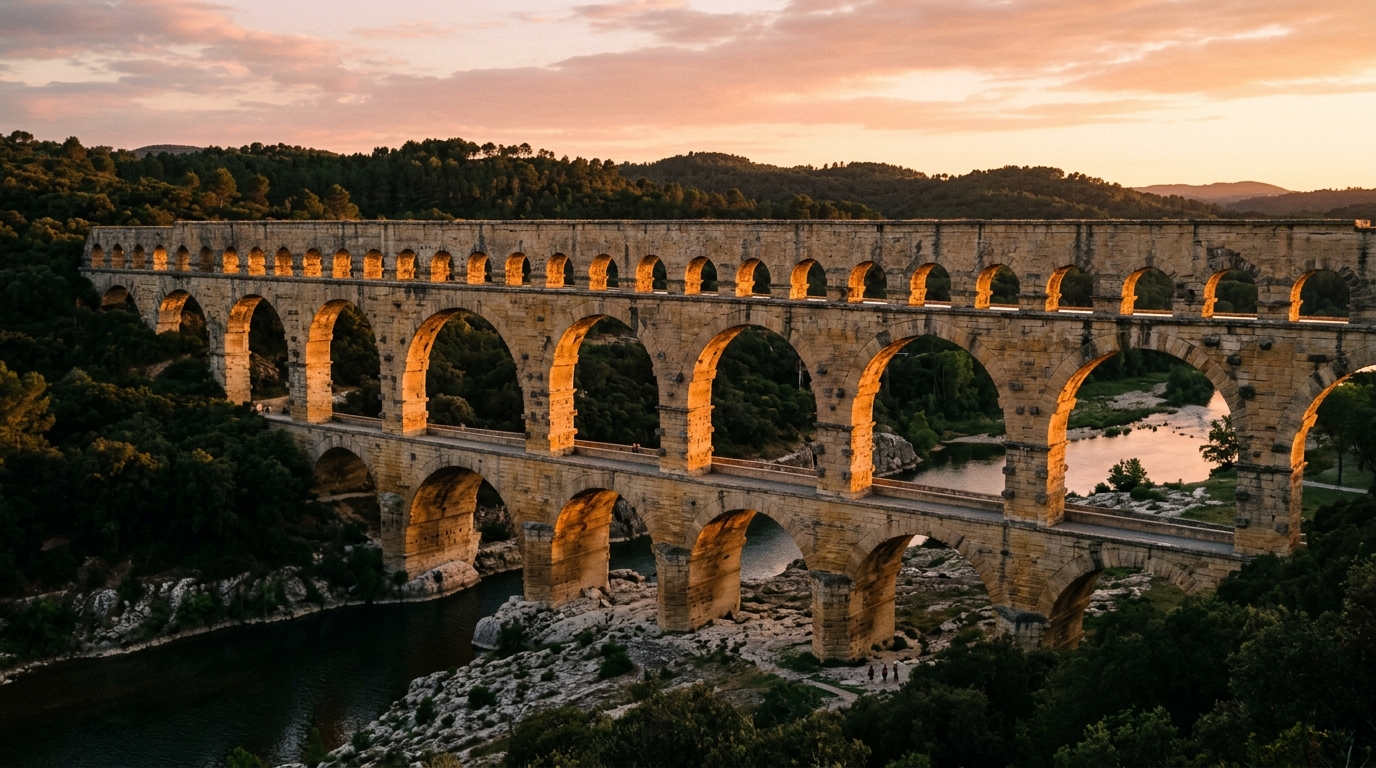
- Designed by engineers François Zola and François de Montricher, the project includes, notably, the Roquefavour aqueduct, built by hand over more than a decade
- Nearly two centuries later, this canal still provides about two-thirds of the potable water for the Marseille metropolitan area, the remainder coming from the Verdon via the Provence Canal
- A Thirsty City Facing an Epidemic Killing Thousands
- 80 Kilometers Dug by Hand Through the Provençal Rock
- The Audacious Gamble of a Mayor Who Engaged the Entire City
- Nearly Two Centuries Later, Water Still Flows Through the Same Canal
A Thirsty City Facing an Epidemic Killing Thousands
In 1834, Marseille did not have a generalized water-supply network. The inhabitants drew from cisterns, wells, and public fountains fed by local sources, often polluted and insufficient for a population that was growing rapidly. In this precarious health context, cholera struck the city with unprecedented violence, taking thousands of lives in a few months. The epidemic laid bare what everyone feared but did not want to admit: without clean water in adequate quantity, no city could hope to withstand the major epidemics that ravaged 19th-century Europe.
In this climate of fear and urgency, the question of water supply became an absolute political priority. It was no longer merely a matter of urban comfort, but literally a question of collective survival. The Marseille authorities understood that they would have to aim high, very high, to end the deadly cycle of droughts and epidemics that had afflicted the city for decades.
80 Kilometers Dug by Hand Through the Provençal Rock
The project chosen matched the scale of the challenge: to capture the waters of the Durance, this powerful river that descends from the Alps, and to transport them to Marseille. The engineer François Zola, father of the famous novelist, initiated the first technical studies of the route, before the project’s leadership passed to François de Montricher. Together, they sketched out a monumental work: a canal of more than 80 kilometers, including diversions, that would cross the reliefs, valleys, and calcareous hills of Provence.
Hundreds of workers were mobilized for more than a decade, at a time when mechanical engines did not yet exist. They dug, cut, and masoned with the strength of their arms and rudimentary tools. The project includes numerous aqueducts and canal-bridges, among them the Roquefavour aqueduct, which would later become one of the most emblematic symbols of the region’s hydraulic heritage. Its massive silhouette, still visible today, bears witness to the overambitious scope of this 19th-century undertaking.
The Audacious Gamble of a Mayor Who Engaged the Entire City
Behind this technical feat lies a courageous political decision, led by Mayor Maximin Consolat. Engaging Marseille in a project of such magnitude represented a significant financial and human risk, at a time when public finances were far from inexhaustible. Yet Consolat chose long-term investment instead of provisional and insufficient solutions that had failed to curb previous health crises.
This gamble belonged to a city that refused to endure indefinitely the whims of the Mediterranean climate and the ravages of epidemics. It would be necessary to wait until 1849 to see the canal officially inaugurated, after more than ten years of monumental work. The water of the Durance finally flowed to Marseille, ending, to a large extent, chronic droughts and the disastrous sanitary conditions that had afflicted the population so many years earlier.
Nearly Two Centuries Later, Water Still Flows Through the Same Canal
Here lies the most astonishing aspect of this story: the Marseille canal is not a museum relic, but a living and functional infrastructure. Today, it still supplies about two-thirds of the potable water consumed by the Marseille metropolitan area, the remainder being provided by waters of the Verdon brought in via the Provence Canal. The management of this 19th-century hydraulic heritage now involves modern operators, such as the Société des Eaux de Marseille and the Société du Canal de Provence.
This longevity is by no means free of challenges. Every autumn, the levels of the Durance remind us how precious and vulnerable this resource remains: climate change entails a recurrent drop in the river’s flow, calling into question the long-term sustainability of a system designed 175 years ago. Modernization and safety work are regularly undertaken to reduce water losses on a route as long as it is ancient, proof that even the most robust pieces of France’s heritage require constant attention.
Thus, the Marseille canal offers a fairly rare example in the history of infrastructure: an emergency response to a 19th-century health crisis that, nearly two centuries later, has become a cornerstone of water supply for a metropolis of one million inhabitants. Behind every glass of water drunk in Marseille lies, to this day, the memory of an epidemic and the audacity of a mayor who knew how to see beyond his era. A lesson in foresight that resonates especially now, when the question of water returns to the forefront as a global concern.
