
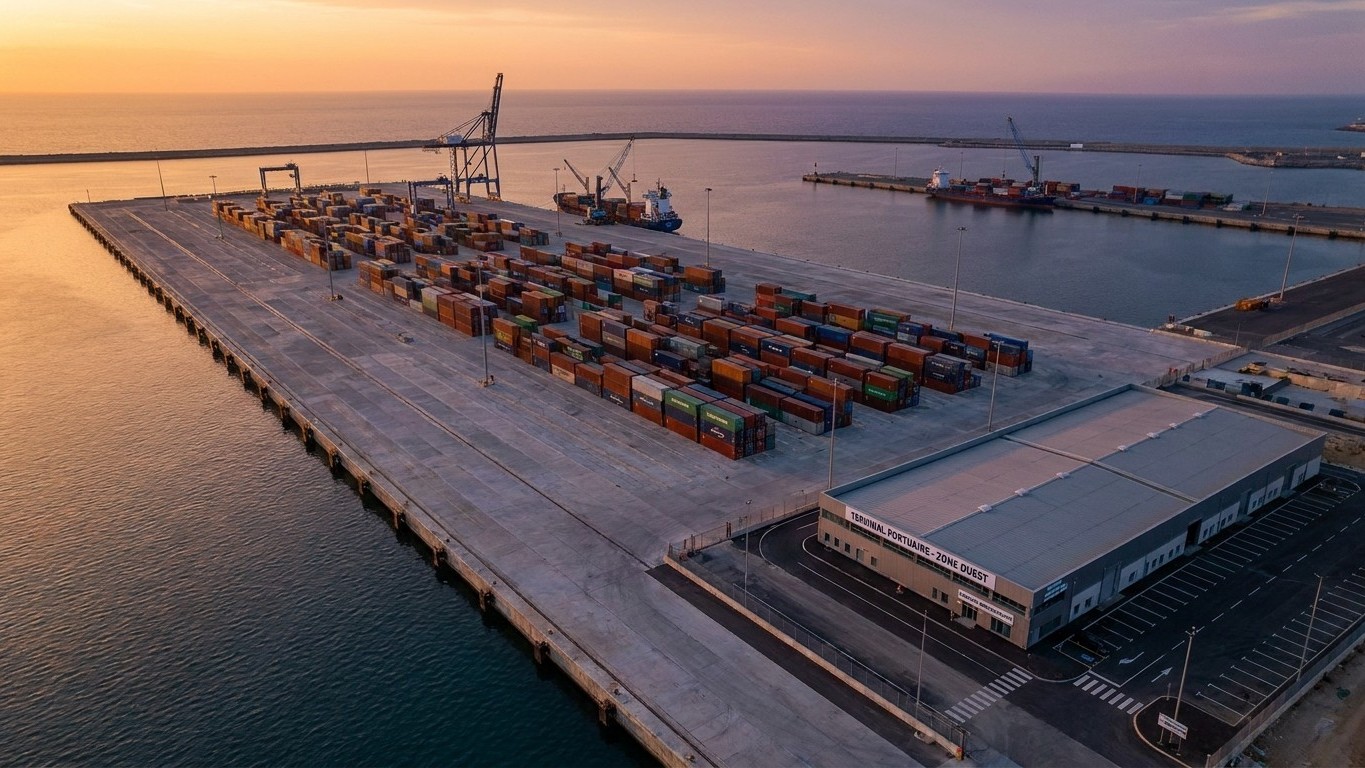
A brand-new port, built with billions of dollars borrowed, that saw almost no ships pass for years. That is the starting point of the Hambantota file, this deep-water port in southern Sri Lanka, delivered in 2010, and ceded seven years later to a foreign operator for ninety-nine years. Neither armed conflict nor a hostile takeover triggered this turn of events. It is the country’s inability to repay a colossal debt, backed by a maritime traffic that never took off, that sealed the fate of the infrastructure.
Key takeaways
- A port built for billions sits idle for years: no ships arrive
- Preliminary studies already warned it wouldn’t work, but they were ignored
- A 99-year lease in exchange for fresh funds, yet the debt remains to be paid: who really lost?
A pharaonic bet on an almost-empty coast
Back in 2002. The government of the time launched the “Regaining Sri Lanka” program and listed Hambantota, a small southern coastal town, among the major development projects. The idea: relieve the congested Colombo port, then saturated, and transform this rural region into a second economic hub for the country. The ruling party had promised to build a seaport at Hambantota after its victory in the 2001 parliamentary elections, and Prime Minister Ranil Wickremesinghe had subsequently identified Hambantota port for development.
The construction actually began in January 2008, under President Mahinda Rajapaksa, a native of the region. The port opened on November 18, 2010, at a cost of $360 million, financed up to 85% by China’s Export-Import Bank. A figure that would quickly swell: Beijing would later unlock additional lines of credit, including one in 2010 conditioned on awarding the works to a Chinese company, then another in 2012 at a clearly higher interest rate. A detail that should have raised alarms from the start: the feasibility studies conducted upstream judged the project to be not very profitable. They were ignored.
The traffic that never arrived
A port without ships is a port without revenue. That is exactly what happened at Hambantota during the first half of the 2010s. The project posted losses as early as 2010, despite a theoretically ideal location, just off a shipping route used every year by tens of thousands of vessels. The gap between promise and reality eventually weighed heavily on the country’s public finances.
Because Hambantota is only a piece of a larger puzzle. In 2015, about 95% of Sri Lanka’s public revenues were already being used to service the debt, a staggering figure that underscores the budgetary deadlock. Official estimates put the country’s debt at $64.9 billion in 2016, about 75% of GDP, with around $8 billion owed to China. The political change in 2015, with Maithripala Sirisena taking office as president, did little to help in the immediate term: the new government reexamined certain agreements and suspended the construction of Hambantota port, delaying the revenues the port could have generated, making debt service even more difficult.
A 99-year lease, neither war nor classic buyout
It is in this context of budgetary crisis, and not following a conflict or a straightforward commercial transaction, that Colombo negotiated the transfer of port operations. On July 29, 2017, Sri Lanka signed an agreement to lease its southern Hambantota port to China, between the Sri Lankan Ports Authority and China Merchants Port Holdings, to manage the port’s commercial operations under a 99-year lease. The Chinese company holds a 70% stake in a joint venture with the port authority, as part of a plan to convert part of Sri Lanka’s six billion dollars in loans from China into equity. The Ports Minister at the time summed up the situation bluntly, thanking China for having “saved” the country from the debt trap.
But reducing the affair to a simple barter “debt-for-port” would be misleading. The Sri Lankan government remains obliged to repay the five loans obtained from China’s Exim Bank to build the port, and the loan agreements were not modified: these loans have never defaulted, so leasing the port cannot be read as a debt-for-capital swap, since there was no debt forgiveness. The money paid by the lessee actually served to bolster the country’s foreign exchange reserves, not to repay China directly. Sri Lanka continues to repay the loans tied to the port’s construction, while having lost operational control of the infrastructure itself. A crucial nuance, often erased in media narratives of the “Chinese debt trap.”
An unexpected second life
The story does not end with the signing of the lease. Despite the losses accumulated throughout the 2010s, and Sri Lanka’s debt default in 2022, the port’s development continued after the lease agreement, and commercial traffic rose markedly in the 2020s. The port that had scarcely served any purpose became, against all odds, an active logistics platform. It transformed into a thriving transshipment hub in the Indian Ocean, notably for vehicles, handling about 700,000 units per month.
Yet sovereignty remains a question that continues to stir Sri Lankan political debate. In 2021, the foreign minister at the time openly described the agreement as a “mistake” made by the preceding government, while revealing that the 99-year lease could be extended to 198 years. A reminder that a port delivered with fifteen years of delay on its traffic promises can still find its audience, but at the price of a real mortgage on the strategic autonomy of the country that built it.
Sources: maritimeindia.org | ege.fr
