
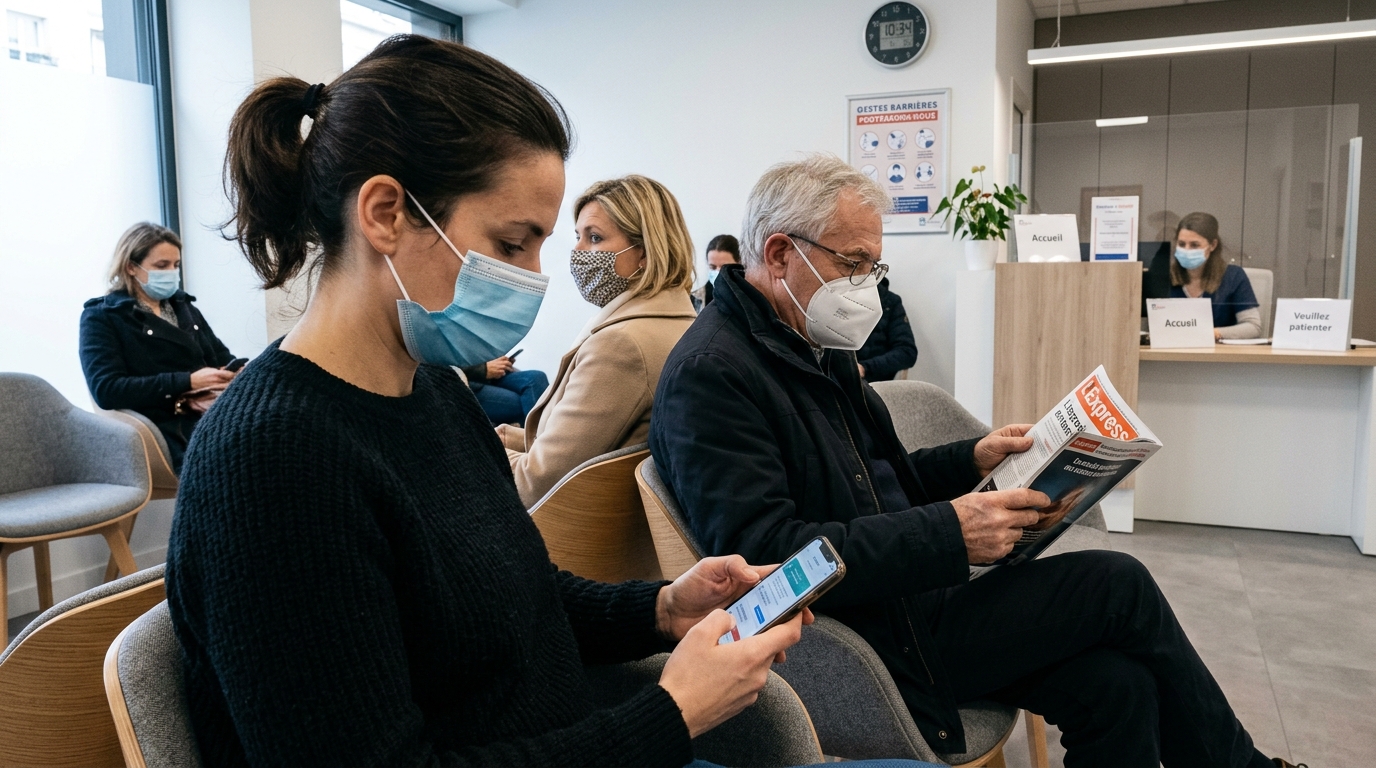
In the waiting room of the general practitioner, the scene has returned to familiarity: tissues piling up, a few dry coughs, and patients waiting a little longer than usual. In pharmacies too, boxes of rapid antigen tests reappear on the shelves after several months of flat calm. These small, everyday signals do not lie: COVID-19 is regaining ground in France. Santé publique France has just confirmed a 19% increase in consultations over one week, a figure that raises questions without triggering panic. The task now is to understand where this progression is concentrated, which areas warrant particular attention, and above all, what response public health authorities intend to implement before winter.
- Consultations for suspected COVID-19 rose by 19% in one week, with an even sharper rise for flu-like syndromes (26%)
- Meuse and Lozère show the highest emergency department visit rates, with a 67% increase among adults and 16% among children
- With no lockdown planned, the government is counting on a joint vaccination campaign against COVID-19 and flu starting October 13
- A 19% increase that confirms a trend begun at the end of August
- Meuse and Lozère, two departments under reinforced surveillance
- Vaccination from October 13: the strategy chosen in the face of a wave without confinement
A 19% increase that confirms a trend begun at the end of August
The numbers speak for themselves: across all age groups, consultations for suspected COVID-19 rose by 19% in a single week, i.e., 173 additional visits recorded by SOS Médecins. On the flu and flu-like syndromes side, the rise is even more pronounced among adults, with 26% more consultations, i.e., 719 additional visits. A back-to-school effect, ultimately quite logical: classrooms, open-plan offices, and public transport are once again true virus crossroads as soon as the sunny days fade. Still good news, however: SOS Médecins indicators remain broadly comparable to those observed in previous years at the same time, which reassures about the real extent of the phenomenon. In other words, the virus is indeed circulating more, but not tipping into an abnormal dynamic.
Meuse and Lozère, two departments under reinforced surveillance
If the national trend sets the tone, certain territories stand out clearly. Meuse and Lozère show the highest rates of emergency department visits for COVID-19 in the country, making them areas under particular scrutiny by health authorities. The latest readings show a 67% increase in adult emergency visits and a 16% increase among children. A week earlier, these same indicators had already jumped 19% among the youngest and 34% among adults, evidence that the dynamic is taking hold gradually rather than erupting all at once. However, it is important to stay level-headed: even with this local acceleration, the levels of care sought remain below those recorded in previous years at the same period. An interesting contrast that reminds us that reinforced surveillance does not necessarily equate to red alert.
Vaccination from October 13: the strategy chosen in the face of a wave without confinement
In response to this surge, no confinement measures are on the agenda. The government is counting on forward planning, opening the vaccination campaign on October 13, organized jointly with the flu vaccination. A strategic choice that allows, in a single visit to the doctor or pharmacist, to protect against the two most active respiratory viruses of the season. This approach makes particular sense given that the current wave could extend into December, according to specialists’ projections.
The coming weeks will reveal whether this vaccination strategy is enough to contain the progression, especially in departments under reinforced surveillance such as Meuse and Lozère. The forthcoming epidemiological updates will determine whether this strategy suffices to contain the wave or if additional measures will need to be considered.
