
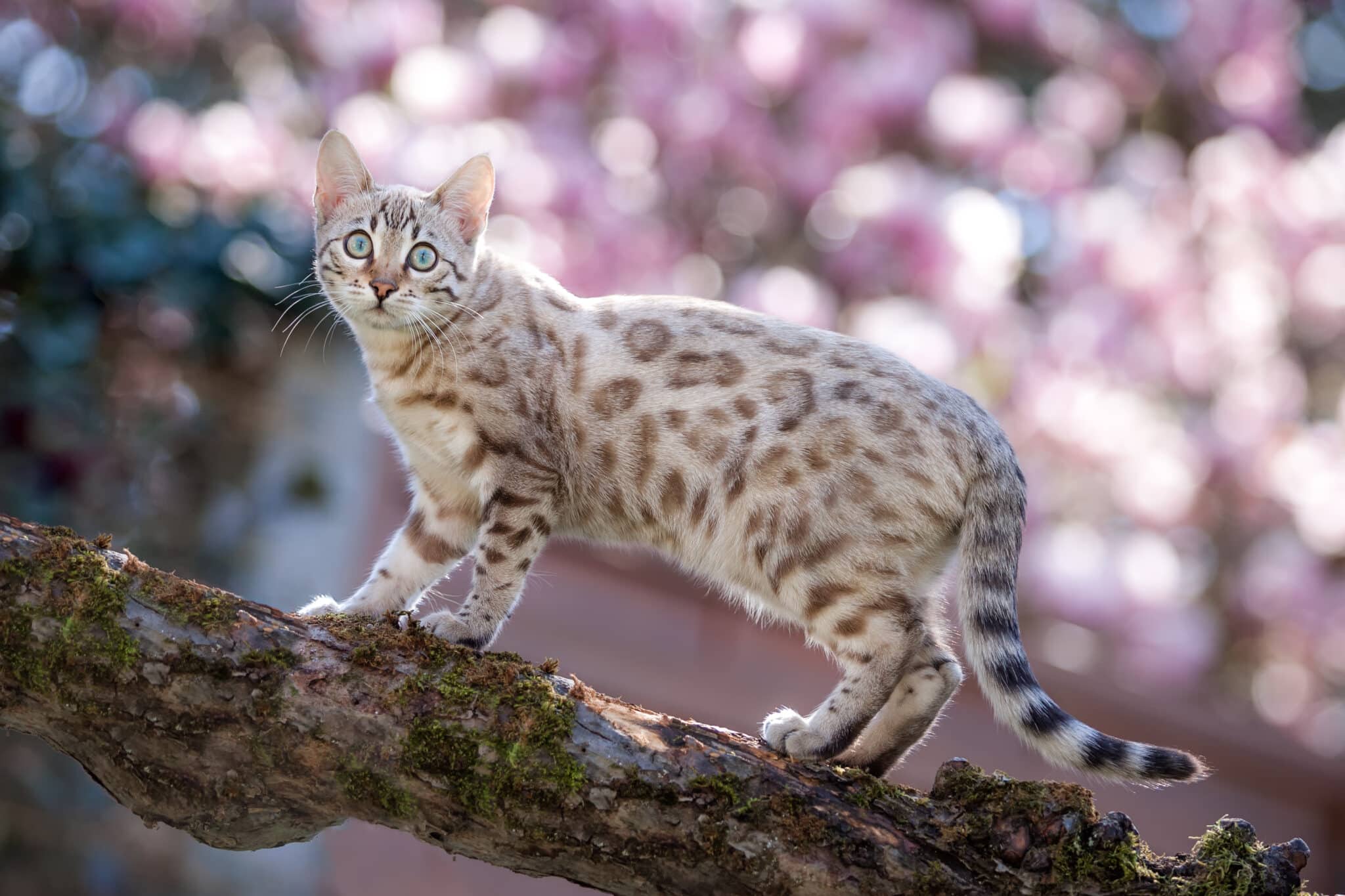
In the hush of the domestic feline world, few breeds attract as much attention as the Bengal. With a spotted coat that evokes the big wild cats, this feline seems to have stepped straight from the jungle. But beyond its spectacular appearance, a recent genetic discovery reveals another facet just as fascinating: some Bengals literally glitter in the light, as if dusted with glitter. This phenomenon, dubbed “glitter,” has intrigued scientists and unveiled a genetic mystery as rare as it is dazzling.
Shimmering Coat
The glittering coat of certain Bengals is not simply an optical effect or an illusion. Under specific lighting, their fur reflects light like diamonds. This phenomenon is not widespread nor originally sought after, but it quickly became a coveted trait among dedicated breeders.
A team of researchers from the HudsonAlpha Institute of Biotechnology studied the DNA of more than 3,000 Bengal cats to identify the genetic factor behind this unusual sheen. Their work, published in Current Biology, revealed that the trait, named “glitter,” is linked to a mutation in the Fgfr2 gene, a receptor involved in fibroblast growth factor signaling.
A Double-Edged Gene
This Fgfr2 gene plays a fundamental role in all mammals, particularly in embryonic development and organ formation. A complete mutation of this gene is typically fatal, but in Bengals it is a milder alteration that changes the fur’s structure without compromising the animal’s health.
“Our results show that a partial reduction of Fgfr2 triggers the expression of a desirable trait, mainly in the fur,” summarizes geneticist Kelly McGowan, co-author of the study. This change makes the fur finer and smoother, which explains the unique way it reflects light.
Fascinatingly, this trait does not come from the Asian leopard, the Bengal’s wild ancestor, but is believed to have arisen spontaneously during breeding. Among the millions of cats analyzed in genetic databases, only 5,513 carry the altered gene. Yet about 60% of Bengals carry it, evidence of its high prevalence within the breed.
A Cat Unlike Any Other
The Bengal was already a breed apart. Created in the 1960s in California, it results from a cross between a domestic cat (Felis catus) and the Asian leopard (Prionailurus bengalensis). Although these two species share a certain physical resemblance, they are genetically quite distant: their last common ancestor dates back six million years, more than the genetic distance between humans and chimpanzees.
This blend grants the Bengal a suite of unique traits. In addition to its striking appearance, this cat is incredibly active, curious, and playful. Unlike most domestic felines, it loves water, which brings it closer to its wild ancestor than to the typical housecat.
But this overflowing energy can pose challenges. Because of their heightened need for mental and physical stimulation, some experts advise against adopting them if you cannot provide ample space or activity. In certain cities like New York, it is even forbidden to adopt a Bengal unless it has been separated from its wild forebearer by at least six generations.
Between Admiration and Responsibility
The glitter of Bengals is not merely a pretty detail: it embodies the complexity of modern feline breeding. On one hand, this rare mutation creates a spectacular effect that fuels our fascination with these cats. On the other hand, it raises questions about the limits of domestication and the ethical responsibility of breeders.
Whether admired for their beauty or questioned for their wilder temperament, Bengals remain a marvel of feline genetics. And now that we know some of them literally shine like diamonds, there is every reason to believe they will continue to make headlines—for a long time to come.
