
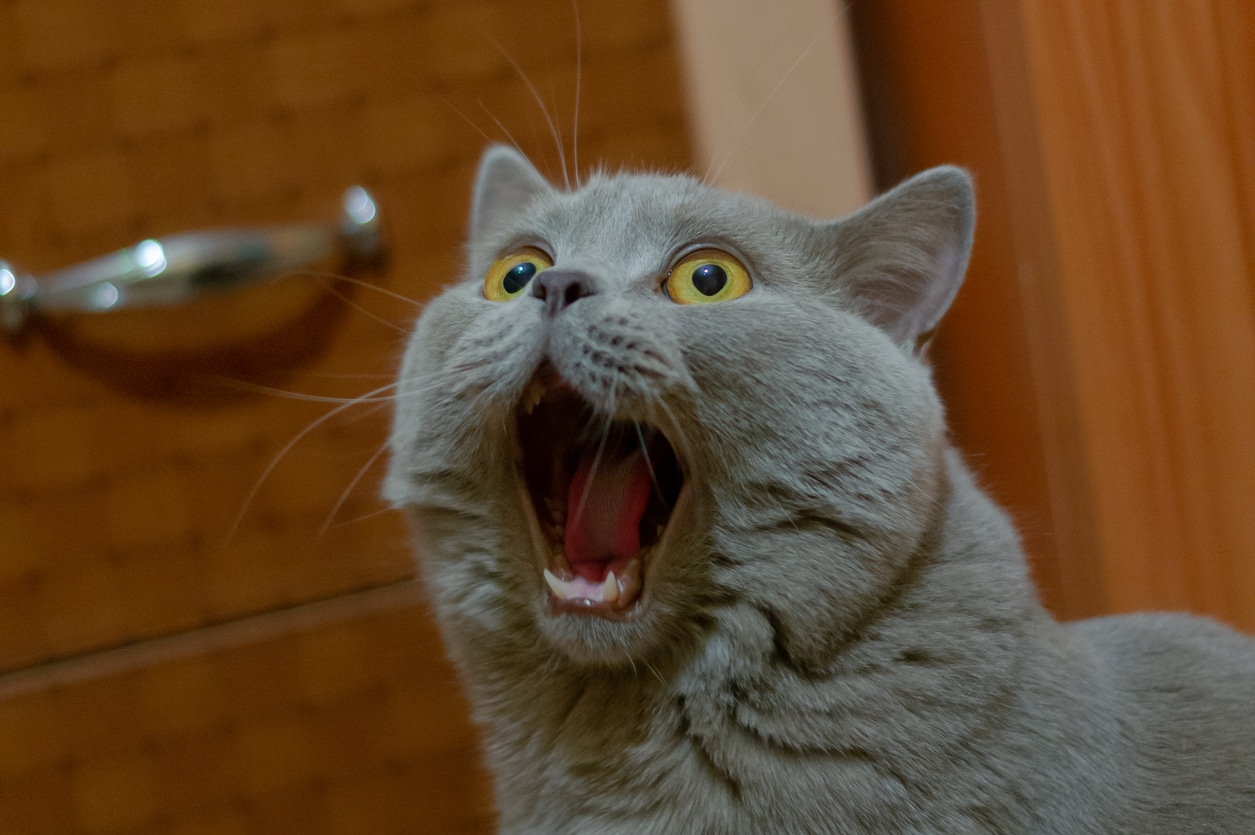
For centuries, cats have fascinated humanity with their independence and often perplexing behaviors. Today, a team of British researchers offers a new perspective for studying the personality of our feline companions. Their study, published in the Journal of Research in Personality, explores the idea that certain traits of their behavior could be analyzed through the lens of human psychopathy. So, is your cat simply mischievous or does it hide a formidable strategist?
Understanding personality traits in cats
What is psychopathy?
Psychopathy, in humans, is described as a personality disorder marked by a lack of empathy, impulsive behaviors, and sometimes manipulative tendencies. These characteristics, while troubling in the human context, can offer keys to decoding animal behavior.
According to the triarchic model of psychopathy, three main dimensions are studied:
- Boldness: a propensity to explore the unknown with courage and a reduced stress response.
- Malevolence: behaviors that may include aggression or manipulation.
- Disinhibition: marked impulsivity and a constant drive for stimulation.
Why apply this model to cats?
Rebecca Evans, a psychologist at the University of Liverpool, explains: « We have been inspired by the diversity of feline behaviors. My own cat, Gumball, displays boundless energy and insatiable curiosity, which perfectly reflects the disinhibition dimension. » This study is not intended to stigmatize cats, but to better understand their complex behaviors.
An innovative test to analyze your cat
The CAT-Tri+ questionnaire
The research team designed a tool named CAT-Tri+, a 46-item questionnaire aimed at evaluating various behavioral traits in cats. Owners are asked to indicate to what extent each statement applies to their animal, on a scale from “not at all” to “completely.”
The questions explore:
- The reaction to dangers (stressful events, imaginary predators).
- Social strategies with humans and other animals.
- Adaptation to domestic rules.
- Management of boredom and mental stimulation.
This test rests on data collected from over 2,000 owners, ensuring a robust and precise analysis.
A scientifically validated tool
The questionnaire-based approach has the advantage of minimizing biases. For example, two different people evaluating the same cat with the CAT-Tri+ tend to obtain similar results. This allows capturing the subtleties of feline behavior with high reliability.
The results: between science and evolution
Adaptive behavioral traits
Traits often associated with psychopathy could have played a crucial role in the evolution of cats. For example:
- Malevolence: useful for defending territory or gaining access to essential resources.
- Disinhibition: essential for exploring new environments and finding food.
- Boldness: an asset for facing dangerous situations.
Understanding current behaviors
A cat that hides its food or attacks your hand when playing may appear malevolent. Yet these behaviors trace back to their solitary hunting past. They reflect an adaptation to a wild environment where competition for resources was vital.
Similarly, a cat that seems indifferent toward its conspecifics might express a survival strategy that helped minimize conflicts in the wild.
What links with the owner?
The results show that:
- A strong disinhibition and low sociability toward other animals may correspond to a harmonious relationship with the owner.
- Conversely, high levels of boldness or malevolence can signal more complex interactions.
Is your cat a strategist or a psychopath?
Despite these fascinating results, it is important to remember that the behaviors observed in cats do not mean they are psychopaths in the clinical sense. These traits rather reflect their evolution and adaptation to their environment.
If you are curious to understand your feline companion from a different angle, the CAT-Tri+ can be an enriching experience. But rest assured: even if your cat watches you with a piercing gaze from the corner of the room, it is not plotting to take over the world… at least, probably not!
