
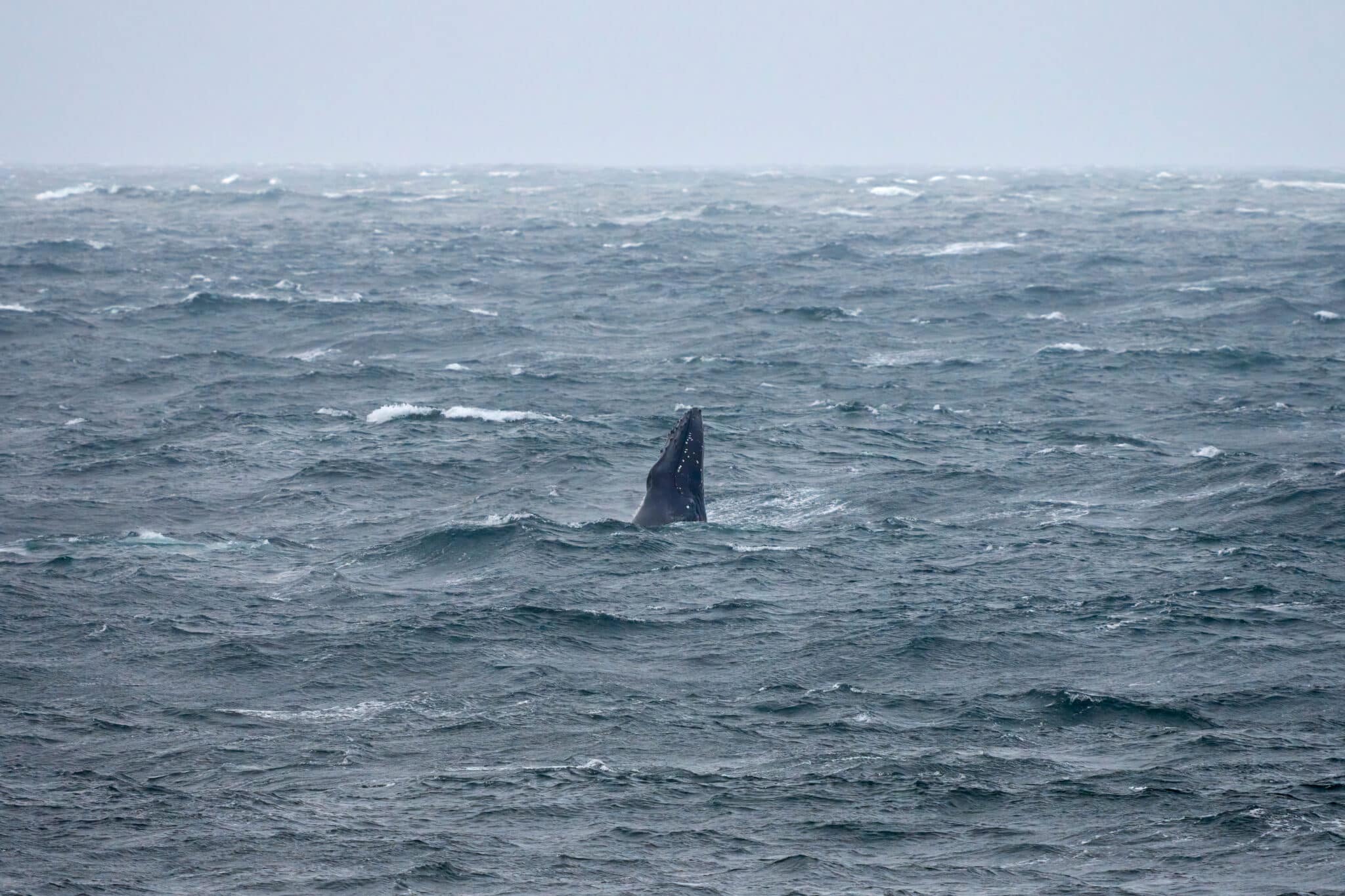
Each year, an invisible yet titanic spectacle unfolds beneath the surface of the oceans. Humpback whales traverse thousands of kilometres, crossing the Southern Hemisphere in a silence thick with effort. This journey, essential to their survival, is accompanied by a physiological upheaval that intrigues scientists: a staggering loss of weight, more than a third of their body mass, without any evident impact on their health.
An Extraordinary Migration
The humpback whales (Megaptera novaeangliae) are renowned for their captivating songs and spectacular breaches. Yet behind this image of peaceful giants lies one of the most extreme survival strategies in the animal kingdom. Each year they abandon the icy, prey-rich waters off the Antarctic Peninsula to reach tropical seas where they mate and give birth. A journey of over 8,000 kilometres… with no feeding.
This prolonged fasting, which can last up to two months, forces the animal to draw heavily on its fat reserves. To better understand the effects of this migration on their bodies, a team of researchers from Griffith University in Australia tracked 103 whales using a cutting-edge method: drone photogrammetry. The data they collected reveal a striking reality.
Losing 11 Tons in Two Months, Without Danger
The study’s results are unequivocal: humpback whales shed up to 36% of their body mass during their migration. That translates to more than 11,000 kg of fat per individual, roughly the combined weight of two adult elephants. A remarkable metabolic feat that would, in humans, amount to losing more than 30 kg in less than two months—without causing muscle or organ deterioration.
To accumulate such an energy reserve, whales must consume colossal quantities of Antarctic krill: nearly 57,000 kg per season. In other words, around 28.5 million of these tiny crustaceans are required by a single whale to “fill up” before departure. This “feast-and-fast” strategy is unique in its scale and regularity.
A Physiology Built for the Extreme
Unlike humans, the whale possesses a metabolism particularly well suited to mobilizing fat stores. Its adipose tissues, far denser and more energy-rich than ours, are designed to release large quantities of calories without triggering deficiencies. Vital organs continue to function normally, and females can even calve during the fasting period, a testament to their extraordinary physiological resilience.
The energy expended during the migration equals the caloric consumption of a human over more than sixty years. Yet the whales emerge capable of reproducing, nursing their calves, and heading back toward the Antarctic months later to repeat this annual cycle.
The Threat Looming Beneath the Surface
But this survival strategy, impressive as it is, rests on a fragile condition: the abundance of krill. The populations of this tiny crustacean are in decline, affected by the rapid melting of Antarctic ice and the overexploitation of marine resources. This retreat of krill already reverberates through other dependent species, such as the chinstrap penguin or the Papuan penguin. Yet for the whales, whose survival depends almost entirely on these massive feedings before migration, the consequences could be far more dramatic.
Researchers emphasize that whales reach the tropics in a state of advanced fatigue, relying on their reserves to survive and reproduce. If these reserves dwindle, their fertility, the growth of calves, and even their ability to undertake the return voyage could be compromised.
When Technology Illuminates the Giants of the Seas
This study, published in the journal Marine Mammal Science, also illustrates how technology enables a better understanding of the behavior of animals that are difficult to observe. Thanks to drone imaging, scientists can now measure with precision the evolution of the physical condition of these marine mammals over months, without disturbing them.
These data are valuable to biologists, but also to conservation policies. By clearly identifying the link between whale health and the availability of krill, researchers highlight a highly climate-sensitive ecosystem.
