
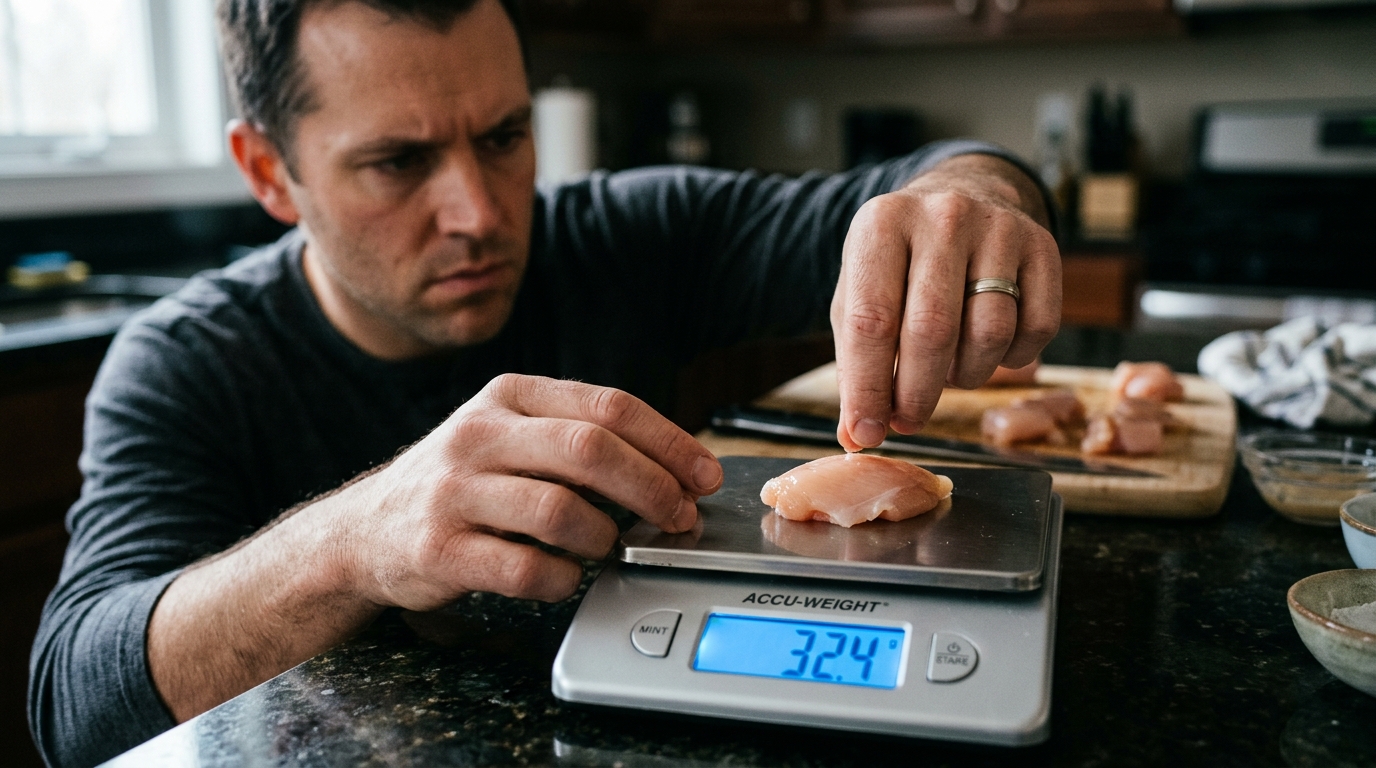
A family meal skipped for a matter of grams of protein, a kitchen scale becoming the most-used item on the counter, and a dessert refused in principle rather than out of desire: this kind of scene is increasingly recognized by more and more relatives. Some men prefer to leave the table to head to the gym. Behind this outward rigidity, it is hard to tell where discipline ends and something more worrying begins. By closely observing this behavior, we can begin to understand what is really at stake behind the plate.
- Most people already consume enough protein; eating more provides no benefit and taxes the kidneys
- Systematically weighing foods, refusing a meal or a dessert, and feeling anxious about a slip are signals of orthorexia, bigorexia, or athletic anorexia
- Reintroducing flexibility, such as accepting a dessert without guilt or sharing a meal without calculating every gram, can gently initiate a rebalancing
- When the pursuit of performance becomes a mental prison
- These signals that should have alerted much earlier
- Taking back control: toward a calmer relationship with food and sport
When the pursuit of performance becomes a mental prison
The supermarket aisles don’t lie: bars, drinks, yogurts, and even apple sauces now proudly display their protein content. This high-protein wave rides on fitness and running trends, fueled by the belief that more protein is always better for performance. Yet nutrition is far more nuanced: a large portion of the population already consumes enough protein to meet their needs, or those of a regular endurance athlete. Eating more offers no extra benefit and can even create unnecessary work for the body, particularly for the kidneys that must eliminate the waste from this excess. But when the logic leaves health considerations and becomes an obsession with numbers, the relationship with food changes in nature. It stops being a healthy habit and becomes permanent control.
These signals that should have alerted much earlier
With hindsight, several details could have tipped someone off much sooner. Behind this strict dietary discipline sometimes lie two silent disorders: orthorexia, the obsession with eating healthily, and bigorexia, the obsession with muscle and athletic performance. Unlike conventional anorexia, the person typically does not focus on weight or body image, but on the quality and composition of what they ingest. Among men, a specific disorder even has a name: athletic anorexia, characterized by voluntary energy restriction, a pursuit of fat loss, and high protein intake at every meal.
Certain signals, taken in isolation, may seem minor. Together, they sketch a more worrisome picture:
- Systematically weighing every bite, even outside of any athletic preparation
- Refusing a family meal or a dessert if the day’s protein target isn’t met
- Prioritizing the gym over social time
- Feeling anxious about a dietary slip
These eating-behavior disorders affect men more widely than is often imagined, with diagnoses frequently arriving late due to a lack of timely recognition.
Taking back control: toward a calmer relationship with food and sport
Acknowledging the problem is already a crucial first step. The obsession with proteins, however trendy it may be, can foster a restrictive eating pattern that deserves special attention, especially when it goes hand in hand with anxiety, excessive control, or social isolation—as when a family meal is sacrificed for a workout. This isn’t about demonizing the desire to eat well or to engage in regular physical activity, but about reintroducing flexibility where there are only rigid rules. Accepting a dessert without guilt, sharing a meal without calculating every gram, or simply reconnecting with the pleasure of eating together are simple acts that can gently start a rebalance.
Behind the marketing glitter of hyper-protein products lies sometimes a reality far more fragile than it appears. Observing a loved one’s eating habits with kindness, without judgment, can make all the difference in helping them regain a serene balance between sport, eating, and social life.
