
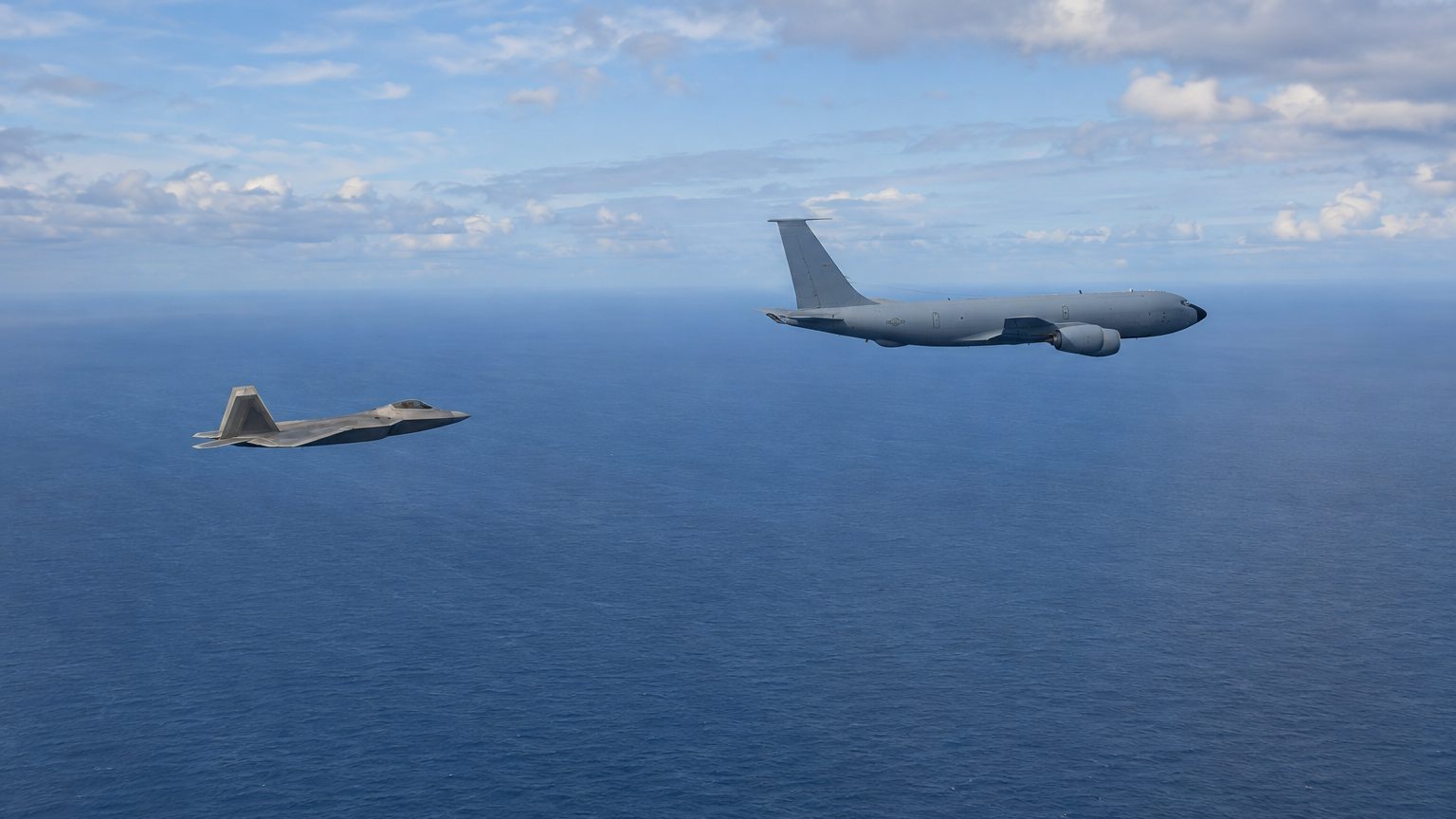
On February 11, 2007, six F-22 Raptors from the 27th Fighter Squadron took off from Hickam, Hawaii, for their first deployment to Kadena on Okinawa. Not a combat mission: a routine convoy, escorted by tanker aircraft, for the most expensive stealth fighter ever built. Over the Pacific, however, the pilots lost their navigation and had to follow their refueling aircraft by sight in order to return.
The software could not transition from 180° West to 180° East.
- A software bug disabled navigation for six F-22 Raptors as they crossed the Pacific’s 180th meridian
- The pilots had to follow their tanker aircraft by sight for several hours over the ocean
- Lockheed Martin fixed the code in 48 hours, and the anomaly potentially affected up to 87 aircraft in the fleet
A line that exists only on maps
The Raptor was deployed overseas for the first time, with the 27th Fighter Squadron, bound for Kadena. More than 250 squadron members, drawn from Langley Air Force Base in Virginia, were to conduct a 90- to 120-day rotation there.
The 180th meridian cuts across the Pacific almost from pole to pole, and the date line follows its path with a few detours. For an aircraft traveling from Hawaii to Japan, the longitude flips from 179.99° West to 180° East. According to the analysis published at the time, the issue did not stem from the date change but from this longitude flip. The U.S. Air Force declined to specify the cause, citing only a navigation-system software anomaly between Hickam and Kadena and invoking operational security to say nothing more.
On CNN, retired General Donald Shepperd explained that navigation, communications, and fuel systems failed as the line was crossed. The Register reported simultaneous failures of navigation consoles on all aircraft in the group.
The F-22 software comprises roughly 1.7 million lines of code, most of which handle radar data. Within this mass, a geographical edge case that ground testing apparently had not simulated was enough to make the entire system falter. Developers are familiar with such traps (time zones, leap years, daylight saving changes), but this time it erupted in the middle of a twelve-hour inaugural flight.
Following a refueling tanker as one follows tail lights
Deprived of navigation, the pilots had no option but to remain with the tanker aircraft that accompanied them. The tanker equipment, being less advanced, remained operational, and their crews guided the disoriented fighters back to Hawaii. According to the Air Force, one pilot even managed to reach Lockheed Martin mid-flight to try to diagnose the fault. It was a return to early aviation—flying by sight, with a sensor-laden aircraft effectively muted in terms of its sensors.
Without the tankers, or in worsening weather, the situation could have ended in disaster.
Sources cited $125 million per aircraft, and more than $300 million when the program’s cost is distributed. Even at the lowest price, six aircraft amounted to $750 million in hardware, not counting the pilots. A mission of such length, far from any safe landing strip, left very little room for a failure of this kind.
A fix in 48 hours, a deployment saved
Lockheed Martin fixed the code in about 48 hours.
The Air Force offers a slightly different account: its engineers located the problem within a few hours and resolved it on the aircraft within a few days. After successful testing, the Raptors continued their deployment to Kadena.
In total, 12 Raptors and more than 250 airmen from Langley joined Kadena as part of the Air Force rotation. The first two aircraft arrived in Japan on a Saturday, February 17, marking the stealth fighter’s first overseas deployment. The squadron commander, Lieutenant Colonel Wade Tolliver, summarized the sequence by saying that with each flight the team learned something new. The commander of the Kadena-based 18th Wing called it a historic moment.
The Air Force later stated that software anomalies were corrected on about 87 F-22s. This figure underscores the risk: the defect did not threaten just six aircraft but the entire fleet equipped with the same software. The Raptor achieved full operational capability in December 2007, ten months after the incident.
Accounts differ on a few details: the Air Force dates the flight as February 10, while other sources place it on February 11. Some reports mention 12 aircraft, i.e., the full deployment in terms of strength, whereas only six carried out the initial convoy.
Source: war-vehicles.fandom.com
