
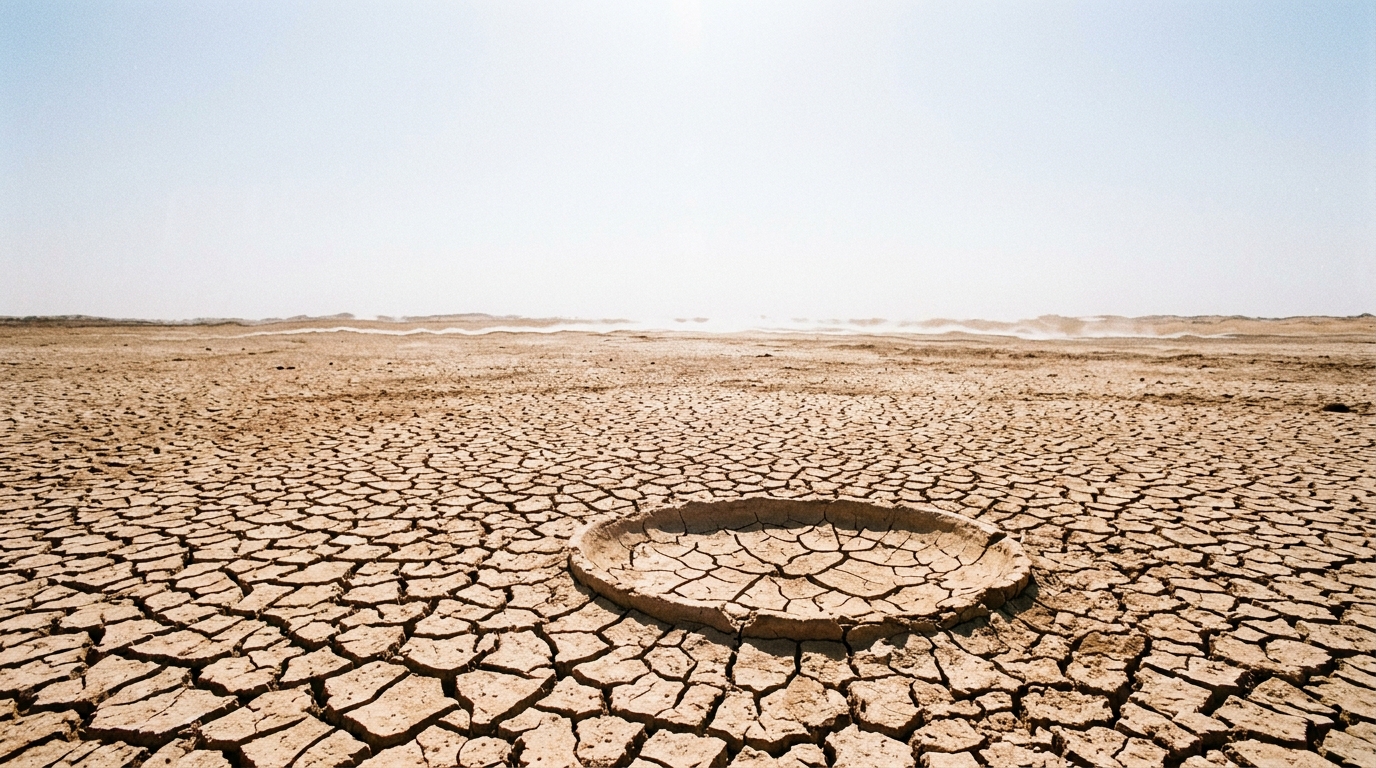
When people think of El Niño, they picture devastating typhoons or spectacular floods. Yet the real danger of this extraordinary climatic phenomenon lies elsewhere: a silent, insidious heat that could cause 451,000 additional deaths worldwide within six months. A staggering figure that deserves close attention.
- Extreme heat linked to El Niño, not storms or floods, would be responsible for the majority of the 451,000 additional deaths projected within six months.
- Africa, especially the Sahel with 66,800 deaths including 31,400 in Nigeria, as well as Sudan, Niger, and Chad, would bear the heaviest burden.
- Beyond direct mortality, heat would also drive the spread of vector-borne diseases and worsen droughts and wildfires, prompting authorities to call for stronger preparedness.
- The heat, the killer that never shows up
- Africa on the front line of a silent catastrophe
- When the thermometer climbs, epidemics spread
- A climate phenomenon with consequences far wider than expected
The heat, the killer that never comes into view
El Niño is spontaneously associated with images of violent storms, villages swept away by floods, or ruined harvests. These scenes exist, but they overshadow a much deadlier and far less visible threat: . Unlike a cyclone that dominates television news, a prolonged heatwave kills slowly, often without people linking it to it. It primarily hits the elderly, the frail, those without access to air conditioning or suitable care.
This year, the phenomenon has reached an unprecedented scale. In early October, tropical Pacific waters were more than 2.5°C above normal, a gap that far exceeds what was seen during previous record episodes. And the seasonal peak has not even arrived yet, which raises the prospect of even greater intensification in the weeks ahead. It is precisely this thermal anomaly, quiet on paper but colossal in its effects, that explains the majority of the feared 451,000 deaths.
Africa on the front line of a silent catastrophe
If all regions of the globe will feel the tremors of this phenomenon, the heaviest price will be paid by the Global South, with Africa in particular. The Sahel, this vast semi-arid belt that separates the Sahara from the more fertile savannas, would account for around 66,800 additional deaths, nearly half of them in Nigeria (31,400 victims).
Other countries in the region would be just as hard hit: Sudan could see about 17,500 heat-related deaths, Niger 10,000, and Chad 8,000. These figures, chilling in their scale, reflect a reality often invisible from Europe: in these territories, health infrastructures and cooling systems are severely lacking, leaving populations vulnerable to increasingly long and intense heat waves.
Southeast Asia is not spared either. The Philippines, Vietnam, Thailand and Cambodia could together register 19,400 additional deaths, while Indonesia would account for another 19,300. India and Brazil round out this troubling picture, with 15,800 and 13,300 expected deaths respectively. North America, Europe and Australia will also feel the effects of the phenomenon, albeit to a lesser extent.
When the thermometer climbs, epidemics spread
Heat does not kill only on its own. It also acts as an aggravating factor for other scourges, notably the spread of vector-borne diseases. El Niño could thus promote the dissemination of these illnesses, especially in areas already weakened by poverty and limited access to care.
This mechanism, often underestimated in public climate discussions, illustrates how the health consequences of a weather phenomenon extend far beyond the realm of spectacular natural disasters. Droughts and wildfires could also have harmful effects, and at the same time, climate conditions would foster the rise of certain diseases.
A climatic phenomenon with consequences far wider than expected
Facing this situation, international authorities are urging governments to prepare seriously, especially in areas such as agriculture, public health, energy and water resources. Some policymakers even advocate that citizens stockpile essential supplies in case supply chains are disrupted. Other experts take a more measured view while acknowledging that it would not be surprising to see certain grocery store aisles temporarily emptied in the coming months.
What stands out in this affair is the gap between the popular image of El Niño, associated with storms and spectacular floods, and the statistical reality of its toll. The heat, invisible and silent, remains the main driver behind this predicted excess mortality. A stark reminder that climate crises are not measured solely by their spectacular moments, but most notably by their most discreet human consequences.
As autumn settles in our latitude, it is striking to consider how a thermal imbalance occurring thousands of kilometers away can redraw the destinies of hundreds of thousands of people. It remains to be seen whether this alert will be enough to accelerate adaptation efforts in the most vulnerable regions before the next El Niño episode comes along to test our resilience once more.
