
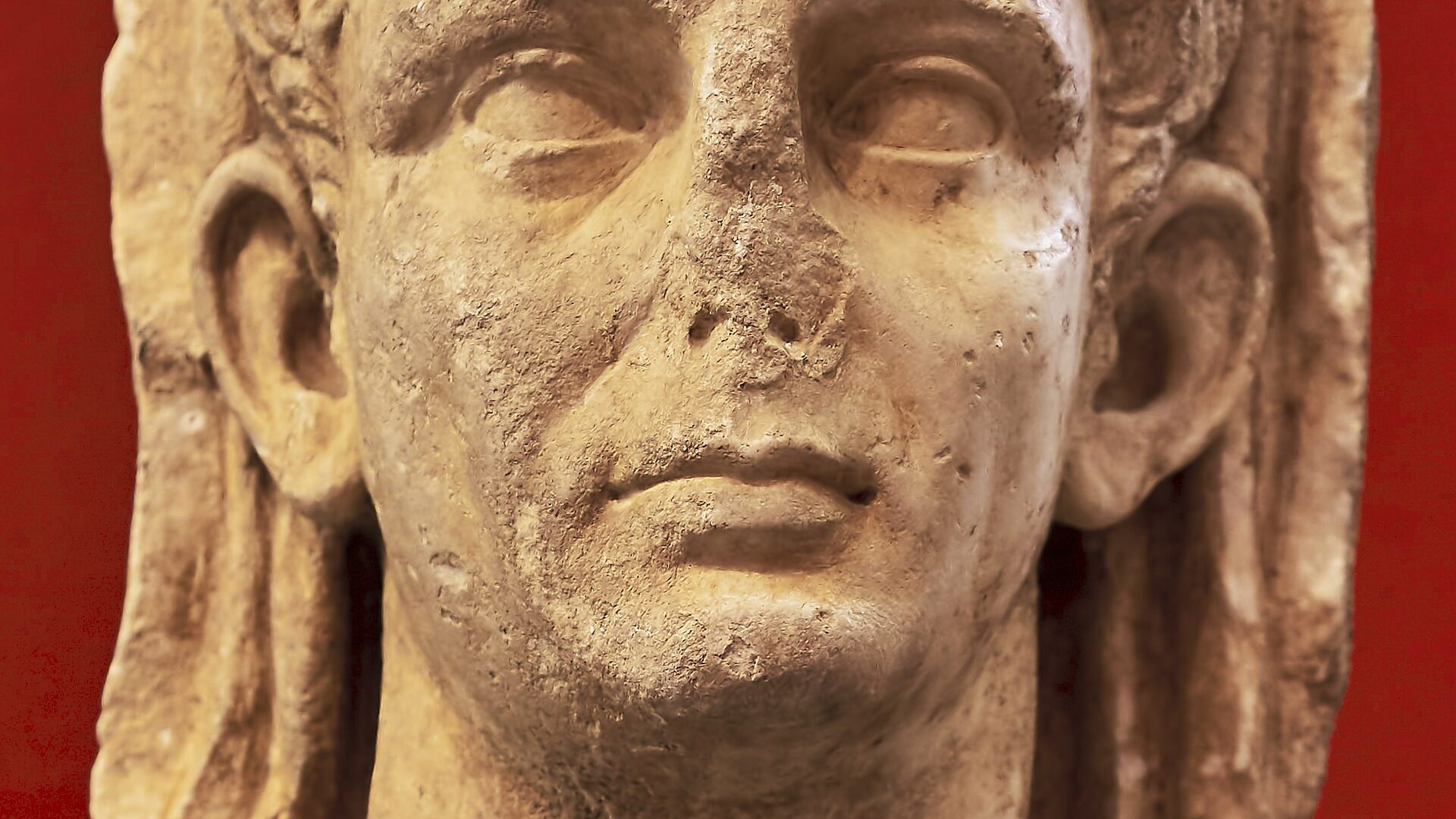
Eleven years of work, 30,000 laborers, 5.6 km of tunnel: Emperor Claudius did not do things by halves to drain Lake Fucino in the Abruzzo region. Construction began in 41 CE and concluded in 52, with a grand inauguration. The lake, for its part, remains. It would take eighteen centuries for it to disappear completely.
- Emperor Claudius launched in 41 CE an 11-year project mobilizing 30,000 workers to bore a 5.6-kilometer tunnel beneath a mountain in the Abruzzo region.
- The 52 CE inauguration took place in grand fashion with a naumachia (naval battle) on the lake itself, a rare spectacle to celebrate an engineering feat.
- The Roman project reduced the lake from about 140 to 90 km², due to insufficient maintenance: it took until 1862 for Torlonia and Montricher to complete the draining.
Thirty Thousand Workers Under a Mountain
Thirty thousand workers for eleven years.
The tally comes from Suetonius, who mentions these works in his Life of Claudius, in chapters 20 and 21. Thirty thousand workers, that’s more than a third of the capacity of the Stade de France. Their mission: to bore 5.6 km of gallery, i.e. a 5-kilometer run with 600 meters of spare. The lake had no natural outlet, its level fluctuated, and floods threatened the surrounding lands.
The emperor also saw it as a way to expand cultivable land. The project was therefore both agricultural and political: a sovereign who drains a lake proves mastery over nature, and the Romans loved this kind of demonstration. Claudius pushed the idea to the point of staging it.
A Naumachia to Celebrate the Work
In 52, the inauguration took the form of a naumachia, a naval battle staged on the lake itself. Suetonius mentions this spectacle among the notable achievements of his reign. Hosting a naval battle on water that was about to be drained reveals a theatrical sensibility fairly uncommon among engineers.
The result is less spectacular than the setting.
The lake shrinks from about 140 km² to about 90 km². Fifty square kilometers gained amounts to roughly half of Paris intra-muros, which is far from negligible. Yet 90 km² of water remains a lake, not a small one. Due to insufficient maintenance, the Roman project did not endure, and Claudius’s endeavor remained unfinished.
1862: Torlonia Resumes the Project
It would be until 1862 before Alessandro Torlonia launched the complete draining, with the engineer Jean François Mayor de Montricher. Their canal measures 6.3 km in length and 21 m in width, i.e. 700 meters longer than the Roman gallery.
The works stretched on for more than 13 years starting in 1862. That is two years longer than Claudius’s project, with technical means that no Roman could have imagined. The sources diverge on the exact year of completion, which says a lot about the scale and magnitude of the enterprise.
Eighteen centuries separate the two undertakings.
What the Lake Left Behind
Where water once lay, today there is a plain of 155 km², at an altitude of 669 m, which has become one of Italy’s most fertile regions. It is one and a half times the area of Paris intra-muros, devoted to agriculture where Claudius had only managed a shrunken lake. The lake that the emperor sought to master ultimately ended up as cultivated land, under the direction of Torlonia and Montricher.
The modern project followed the same corridor as the ancient one, and in the upper part of the tunnel, the original Roman masonry would remain visible in places.
Sources: fr.wikisource.org | fr-academic.com
