
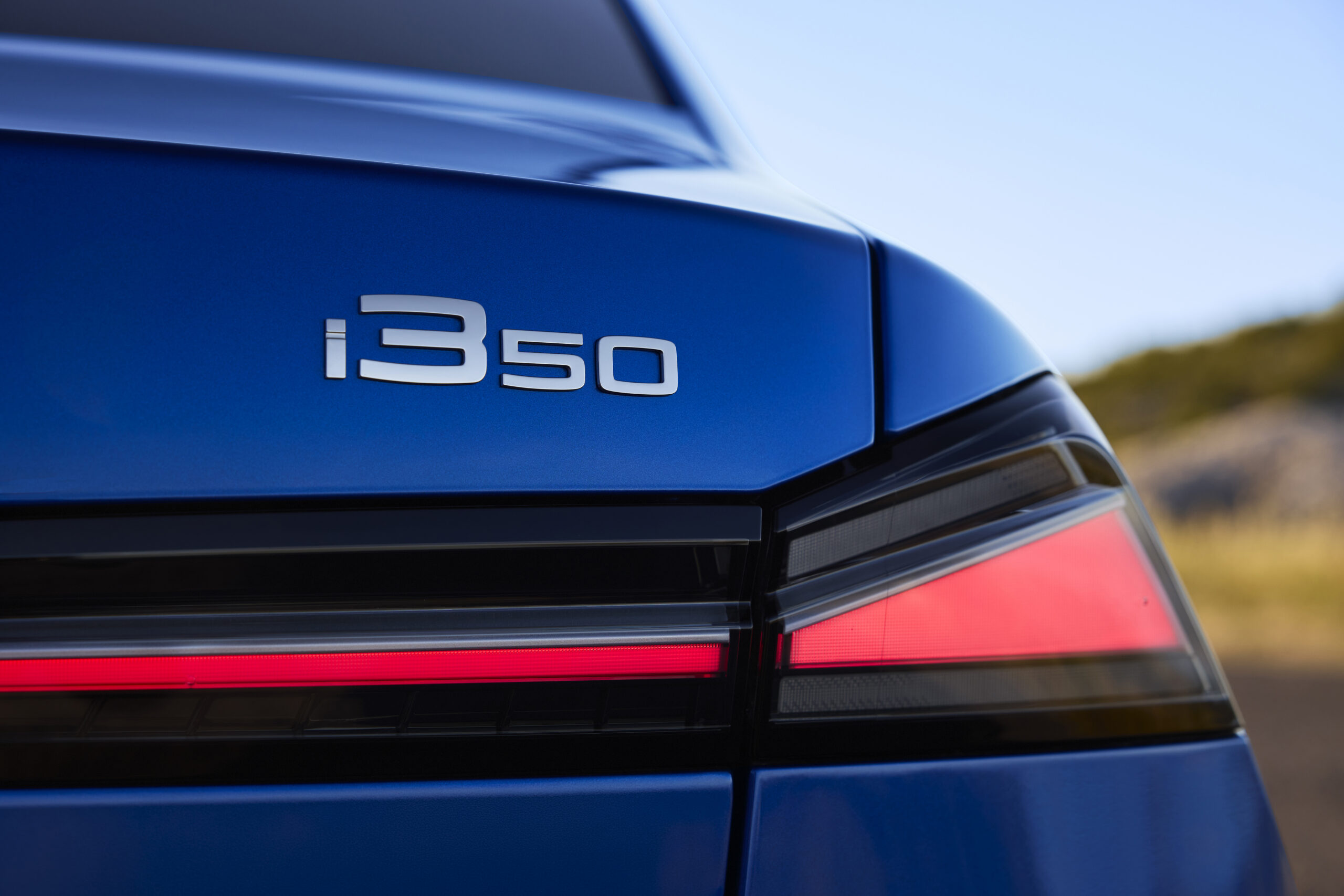
The new BMW i3 pairs two motors that do not generate their magnetic field in the same way. At the rear, a synchronous motor with electric excitation. At the front, an asynchronous machine whose operation requires a “slip.” Behind these terms lies an engineering choice that affects efficiency, weight, and the cost of electric propulsion.
The slip in question does not concern tires or a component that would slip in the transmission. It designates a difference in speed inside the motor, between its rotor and the magnetic field driving it. Without this gap, the asynchronous motor cannot produce its torque by induction.
The new BMW i3 offers a concrete example of this physical peculiarity. Its 40 xDrive and 50 xDrive versions each have two electric motors, one on each axle. But BMW did not simply install two copies of the same machine: the rear motor is synchronous, the front one asynchronous.
Both convert electrical energy into motion. The way they accomplish it differs enough for the manufacturer to pair them within its sixth generation of electric propulsion, named Gen6.
At the rear, an electromagnet follows the rotating field
To understand this pairing, it is necessary to distinguish two elements. The stator is the fixed part of the motor. The rotor is the movable part, whose rotation is transmitted to the wheels through a gearbox. The electromagnetic interactions between these two assemblies enable the motor torque to be produced.
On the i3’s rear axle, BMW uses a synchronous motor with electric excitation, designated by the acronym EESM. The stator windings, powered by three-phase alternating current, create a rotating magnetic field. The rotor has its own windings, fed with direct current, which turn it into an electromagnet.
In synchronous operation, the rotor turns at the same speed as the stator’s rotating field. The term describes this relationship between two speeds inside the machine, and not a synchronization between the front and rear wheels.
Electric excitation enables adjustment of the rotor’s magnetic field intensity. BMW explains in particular that it can reduce this field when demand is low to limit certain losses, then adapt the excitation to higher demands.
This architecture differs from a motor whose rotor uses permanent magnets. It adds a control parameter: the excitation current. However, this current must be supplied and it also causes electrical losses in the windings. The challenge is therefore to find the best setting for each situation, rather than permanently maximize the magnetic field.
BMW reserves this machine for the rear axle, which it presents as the i3’s main drive axle.
At the front, the rotor must stay offset
The front motor uses another solution. It is an asynchronous machine, also known as an induction motor, designated by the acronym ASM.
Its rotor carries a conductive cage. In BMW’s description, this cage is made of aluminum bars connected by short-circuit rings. The current required to create the rotor’s magnetic field is not supplied by a dedicated excitation source: it is induced by the stator’s rotating field.
This induction requires relative motion. When the machine operates as a motor, its rotor turns slower than the rotating field. It is this difference, called slip, that allows currents to be induced in the cage and to produce torque. If the rotor were to reach exactly the speed of the field, this mechanism could no longer sustain torque in the ideal model.
The term can evoke slip in traction or a mechanical defect. Here it describes a normal operating condition. The induction motor produces its effort thanks to this speed difference; the synchronous motor works with a rotor that follows the rotating field.
That does not mean the front wheels must turn more slowly than the rear wheels. Each motor has its own electrical control and reduction ratio. The slip is measured relative to the machine’s magnetic field.
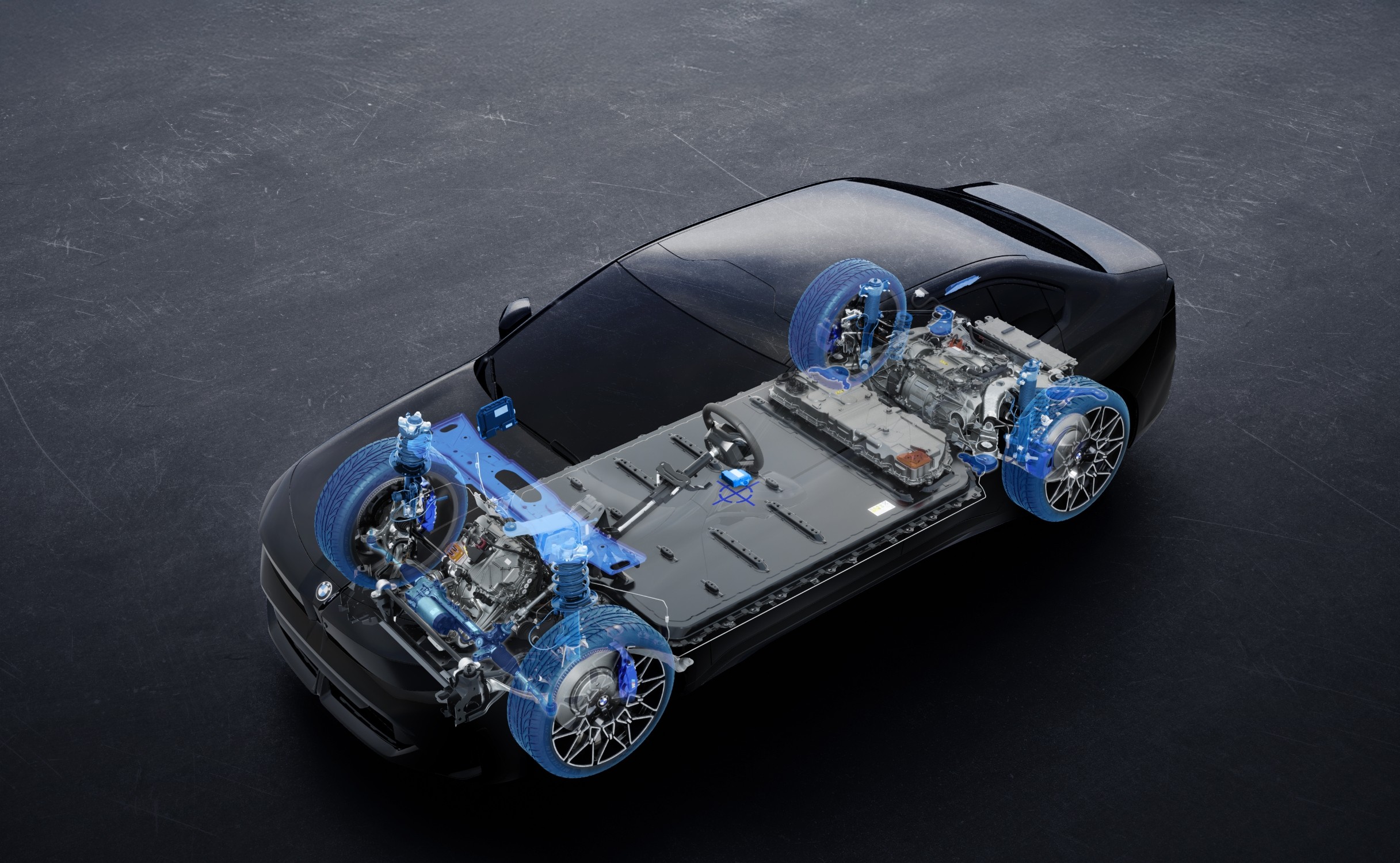
Two architectures to balance the compromises
Why combine these two technologies? BMW highlights the adjustability and efficiency of the rear unit, while the front induction motor offers a compact and economically appealing solution. This distribution forms part of the Gen6 design already unveiled for Neue Klasse models.
In both i3 variants, the front motor is rated at 123 kW, or 167 hp. The rear motor develops 195 kW in the 40 xDrive and 240 kW in the 50 xDrive. The maximum power ratings for the complete assemblies reach 275 kW, or 374 hp, and 345 kW, or 469 hp.
But the advantage of the pairing is not limited to peak power. A car alternates between starts, low-load cruising, acceleration, and energy recuperation. The efficiency of an electric machine varies with its rotational speed and the torque demanded. The control of the whole system must account for these changes.
The inverter plays a central role here. It converts the battery’s direct current into alternating current suited to the motors and controls their supply. For its Gen6 synchronous machine, BMW indicates that it has revised the rotor, the stator, the electronics, and the cooling. The inverter makes use of silicon carbide semiconductors and integrates into the 800 V architecture.
The ultimate efficiency therefore depends on a set of choices. The available documents do not provide efficiency maps or a comparison that isolates the benefit of the sole front asynchronous motor. They describe an architecture and its objectives, without demonstrating that it would be superior to all others in every operating condition.
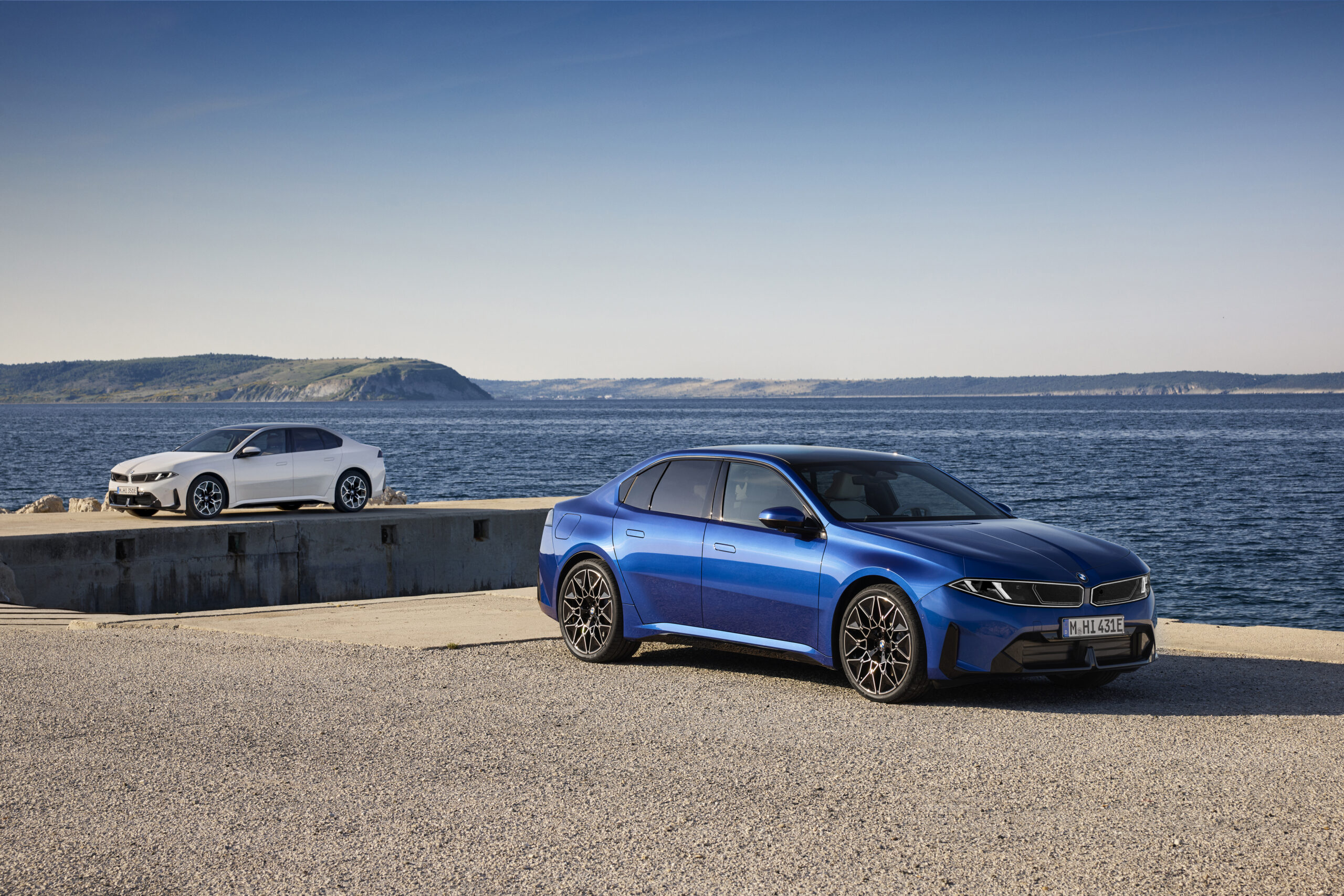
Des pertes réduites de 40 % ne donnent pas 40 % d’autonomie en plus
BMW accompanies this generation of propulsion with three numbers: 40% less energy losses, 20% lower costs, and a 10% reduction in mass, compared to a previous-generation xDrive configuration. The manufacturer ties these gains to the overall propulsion system’s evolution, including the electric machines, the electronics, and the thermal management.
The first figure requires careful interpretation. A reduction in losses does not correspond to an identical reduction of all energy consumed.
Take a purely pedagogical example, which does not describe a BMW measurement. A system receives 100 units of energy, converts 90 into useful mechanical energy, and loses 10. If its losses drop by 40%, they fall from 10 to 6 units. For the same energy input, it now delivers 94 units of useful energy: its efficiency rises from 90 to 94 percent, a four-point gain.
At the scale of the car, other elements come into play as well: air resistance, tire rolling resistance, mass, temperature, and the consumption of equipment. The 912 km WLTP maximum range announced for the i3 50 xDrive, equipped with a usable 108.7 kWh battery, cannot therefore be attributed to the mere pairing of its motors.
The choice made by BMW rather illustrates the precision of optimization work. The rear rotor follows its rotating field; the front rotor must maintain a lag with its own field as it produces torque. Two different modes of operation, coordinated by the electronics to deliver the requested effort while minimizing energy losses.
