
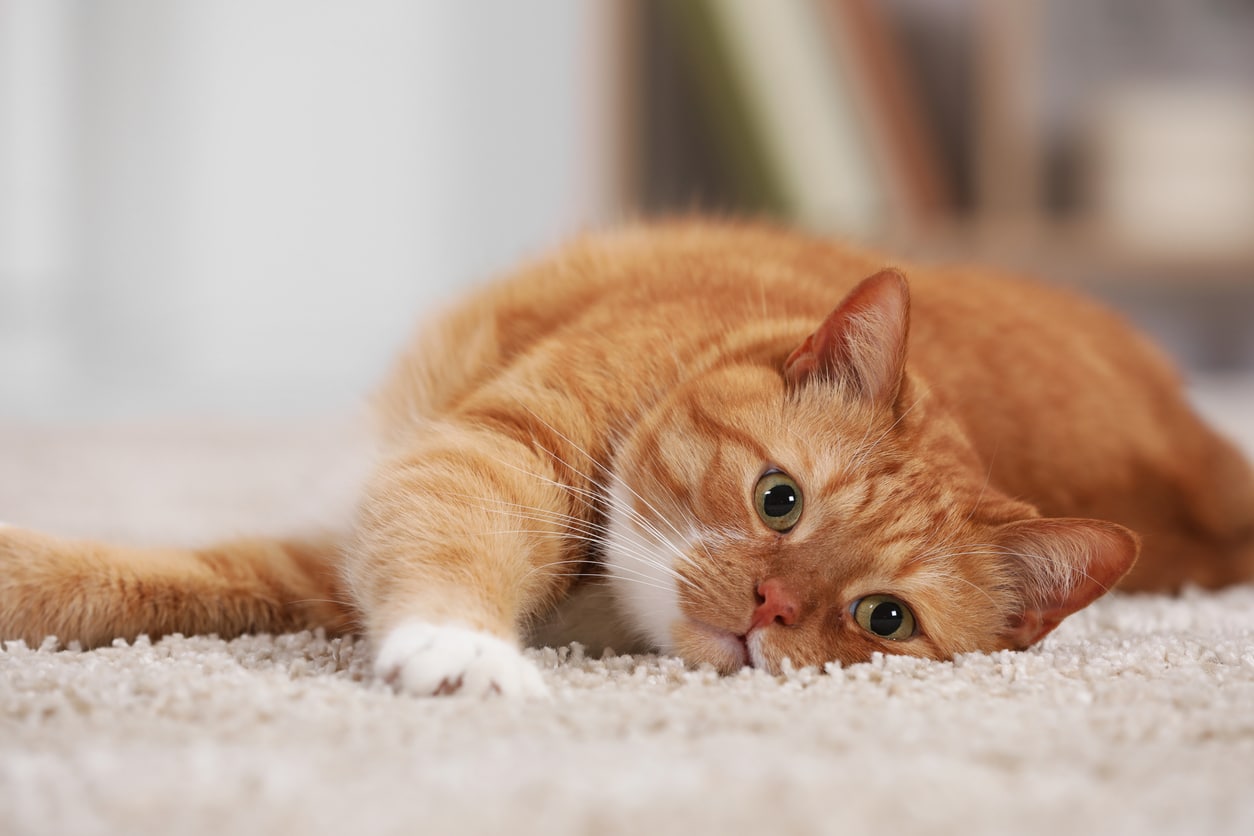
Red cats occupy a special place in the collective imagination. Often described as affectionate, mischievous, and charismatic, they fascinate as much by their supposed behavior as by their rarity. But what makes these felines so unique, and why are they so few in number? The answer lies in their genes. For decades, scientists have been exploring the genetic mechanisms responsible for this vivid, warm color, thereby revealing the subtleties of feline biology. A recent publication in the journal Science sheds further light on this phenomenon, reminding us that behind every flamboyant coat lies a fascinating story of melanin and chromosomes.
A Determining Pigment
Typically, orange cats are regarded as very affectionate, charismatic, energetic, and sometimes even a bit mischievous. According to some owners, these cats are more inclined to seek attention and form strong bonds with their human companions. But what about this orange color? It would be linked to genetics, as explained in a publication in the journal Science on November 27, 2024.
For more than half a century, several studies have shown that the color of orange cats results from a variation in the MC1R gene, which regulates pigment production in the coat. This gene, however, can influence the ratio between two types of melanin, namely eumelanin and pheomelanin. The former yields black (or brown) tones and the latter red or orange hues. Consequently, orange cats exhibit a higher production of pheomelanin.
A High Prevalence Among Males
About 80% of orange cats are male. This strong predominance can be explained by the close link between the MC1R gene and the X chromosome. Incidentally, as with humans, male cats possess only one X chromosome (XY) and females have two (XX). Thus, a single copy of the gene is enough for a male to display an orange coat, whereas females require two copies. Therefore, orange female cats are much rarer than orange male cats.
Some researchers wish to know where and when the mutation first appeared. According to Leslie Lyons, a feline genetics expert at the University of Missouri (USA), some mummified Egyptian cats were orange, a sign that orange cats existed already in antiquity.
Finally, let us note that the distinctive temperament of orange cats has not been proven by any scientific study. Some studies indeed attempted to establish such a link, without success. There is no conclusive evidence that the orange color gene shapes cat behavior. Thus, only anecdotes help understand the extent of this phenomenon, and on YouTube, numerous videos contribute to the popularity of orange cats by highlighting their special character.
