
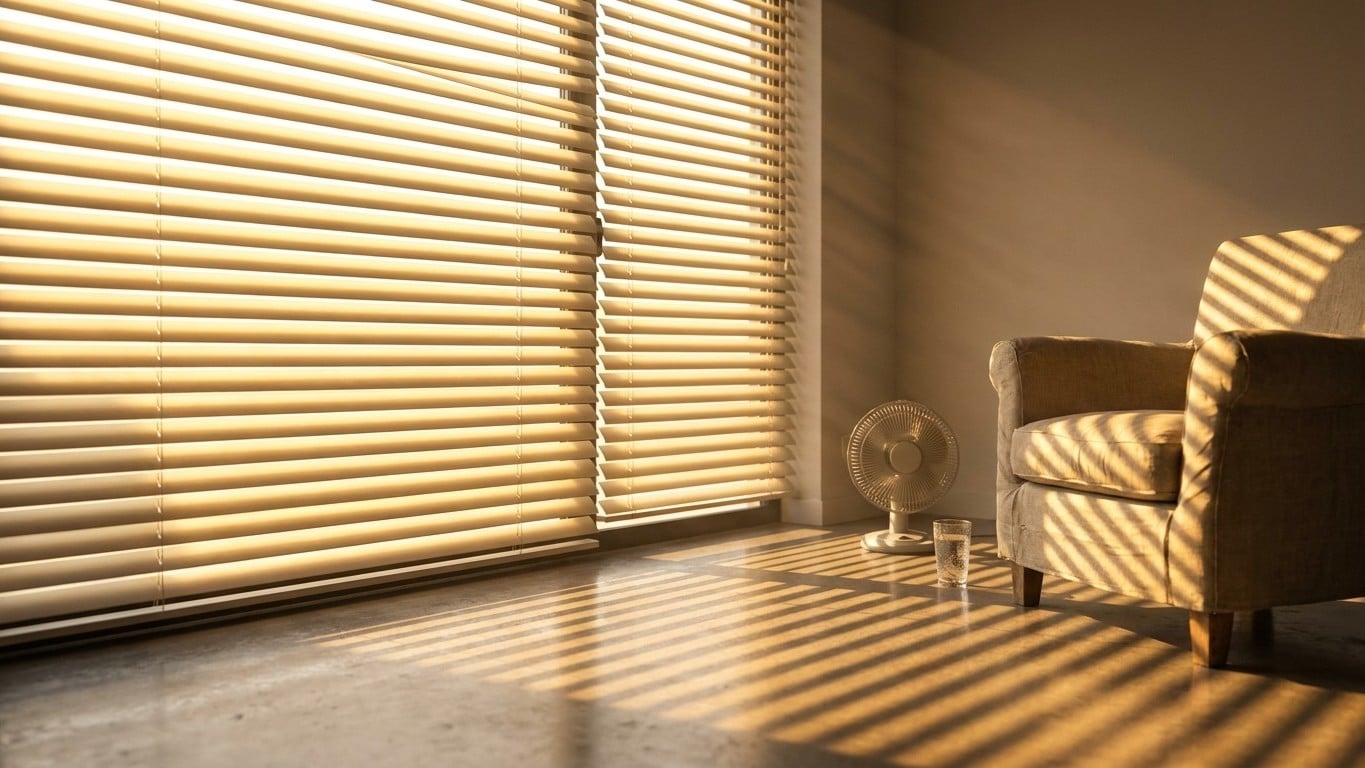
Thirty-five degrees in a child’s bedroom, Bordeaux, late June. Not in a dilapidated dwelling or beneath the roofs of an old, poorly insulated building, but in a brand-new apartment, classified A for energy performance, delivered just a few years ago in the Brazza eco-district, on the right bank of the metropolis. The residents of this new eco-district brace for the heatwave: at the end of June, in their newly built, yet compliant with standards and rated A homes, the temperature climbed to 35°C. France 3 Aquitaine spoke of a “furnace.” The word is well chosen.
Key takeaways
- Brand-new homes built to standards reach 35°C in Bordeaux summers
- RT2012 thermal norms were designed only for winter, not for heatwaves
- The problem has persisted since 2022, affecting several Bordeaux eco-districts
A-rated housing, but uninhabitable in summer
A third wave of heat returned the anxiety of Brazza’s residents to the surface: “This is awful. In some places it climbs to 35 degrees,” sighs one resident. The testimony is not unique. In the new Brazza eco-district, residents choke: “We’re at 33, 34,” estimates a resident. Another recalls a daily life entirely organized around the heat: “It’s the third summer we’ve spent here, and it’s getting complicated. We live in the dark, we open at night, but I feel it isn’t enough.”
For some households, the absence of shutters makes things worse. “My home has no shutters, which means heat enters very early into the house. Even when I close, I still have waves of heat,” explains a mother. Other residents had to improvise almost artisanal solutions. A resident who has lived there since spring vegetated her entire terrace to try to gain a few degrees, before investing in a portable air conditioner, all while closing the windows from 11 a.m. to preserve a little freshness. Every day, she swabs the floor to “refresh the parquet that heats up,” and hangs laundry early in the morning in the hope of scraping a few more degrees. A neighborhood student counts the days literally until he can move out, recalling how his study sessions during a heatwave were an unpleasant memory.
The paradox of insulation designed for winter, not for summer
How did a district touted as the ecological showpiece of Bordeaux end up here? Opened in 2017, the Brazza eco-district carried the promise of summer-fresh apartments, with a maximum temperature of 25 degrees, an innovative project grandly presented at the time by Alain Juppé, then mayor of the city. The reality, a decade later, directly contradicts that promise.
The explanations offered by residents and observers converge on a single diagnosis. The problem highlighted by residents stems from several elements: absence of shutters, insufficient solar protections, concrete walls that store heat, limited ventilation or the impossibility of creating real air currents. In some studios, a single fixed window makes heat evacuation almost impossible once the day has progressed. The finding is stark: the energy performance of a building can no longer be designed solely for winter.
That is the paradox of these recent constructions. The French thermal standards, especially RT2012, which guided Brazza’s construction at the time, were designed to limit heat loss in winter and to reduce heating bills. Result: thick walls, openings that are sometimes narrow, and air tightness that is reinforced. Effective against the cold. Catastrophic when the thermometer rises, and nothing was planned to evacuate the heat stored in concrete. Architects apparently underestimated the magnitude of climate warming to come in a city like Bordeaux, where summers regularly surpass 35, 38, 40 degrees and have become the norm rather than the exception.
A problem identified for years, never really corrected
The most troubling aspect is that this situation is far from a sudden discovery. As early as 2022, residents of a Brazza residence were already sounding the alarm about the same phenomenon. Residents of several recently delivered Bordeaux residences, notably in Brazza and Euratlantique projects, had difficulty bringing indoor temperatures below 30°C, and some occupants suspected non-compliance with thermal regulations, to the point of considering taking action against developers. In a Cogedim-built residence, a tenant described a south-facing living room where it could reach 34°, before having to buy blinds that clip inside the windows—a makeshift solution that limits direct rays but leaves heat to accumulate on the exterior glazing.
Brazza is not an isolated case in Bordeaux. The Ginko district, another reference eco-district of the metropolis, experiences similar difficulties, with a comparable rise in indoor temperatures according to several testimonials gathered on-site. In the long run, Brazza is destined to host 4,800 new homes across 53 hectares, with a second construction phase extending to 2032. In other words, the question of summer comfort will not resolve itself: each new tranche of housing delivered potentially reproduces the same flaws if nothing changes in design.
Rethink construction before the next heatwave
The Bordeaux case goes well beyond a local anecdote. It shows that adapting a metropolis to heat waves requires more than parks, streets, or water features; it also requires housing plans, façades, materials, and external protections. A recently built building, well located and aesthetically well kept, can still become a thermal trap as soon as June’s first heatwaves arrive.
For the current Brazza residents, the solutions remain largely individual and costly: portable air conditioners bought in haste, blinds mounted inside windows, vegetated terraces whose cooling effect will only be felt after several years. On the city’s scale, the real challenge remains: impose effective solar protections, rethink building orientation, and embed, from the design stage, heat waves up to 40 degrees rather than only severe winters. The RE2020, which succeeded RT2012, theoretically accounts for summer comfort more effectively. The question remains whether the next phases of Brazza, planned through 2032, will truly learn the lessons.
Sources : france3-regions.franceinfo.fr | jeuxvideo.com
