
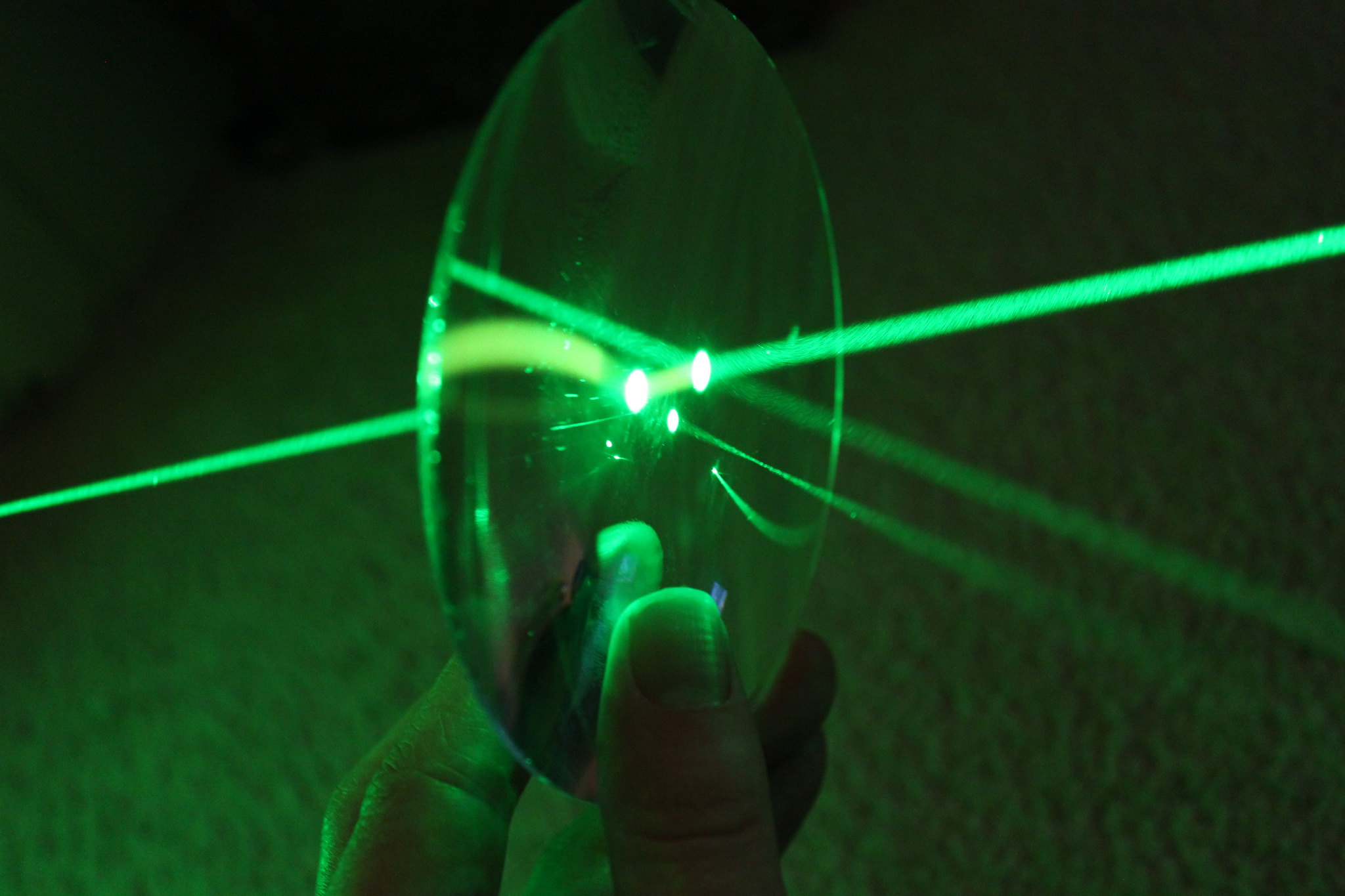
Recently, Chinese researchers successfully tested a bidirectional laser communication channel that spans more than 400,000 kilometers between Earth and the Moon. What underpins this technology? What does it bring that’s new? Could it become indispensable for the future of space exploration?
The foundations of an interplanetary “information highway”
For a long time, space missions have communicated with Earth mainly through radio signals (radio frequencies), especially microwaves. Yet another technology has been explored for some time, notably by NASA and the European Space Agency (ESA): laser communications. China is not left behind in this regard, as revealed by an article from China Global Television Network published on August 30, 2026.
In fact, the Chinese Academy of Sciences has just successfully tested a bidirectional laser communication channel spanning more than 400,000 kilometers between Earth and the Moon. This represents a first for the Chinese space program, via the experimental satellite DRO-A. According to officials, this test laid the groundwork for a true interplanetary information highway.
The Chinese engineers claimed that the bidirectional laser achieved speeds of up to 100 Mbit/s. This rate makes it possible, for instance, to transfer an 8K high-definition image in just 12 seconds, compared with 4 to 5 minutes through traditional radio links. Additionally, the upload speed reached 1.25 Mbit/s.
Beware of beam deviations
While lasers offer the advantage of transmitting larger data volumes and using more compact equipment, certain concerns remain. At such a distance, any error can cause a deviation of the beam. Indeed, the alignment can be disturbed by atmospheric turbulence on Earth and, of course, by the satellite’s own motions. Even a tiny deviation can translate into an offset of several kilometers by the time the signal reaches the Moon.
To address this issue, the Chinese scientists developed a tracking system. This system is capable of real-time accounting for orbital movements, atmospheric disturbances, and details related to signal propagation. The objective is clear: keep the laser beam pointed steadily in the intended direction, despite the movements of the equipment.
Nevertheless, after traveling 400,000 kilometers, the beam becomes extremely weak. Engineers must therefore distinguish the signal from the “noise” produced, notably by moonlight and starlight. To achieve this, researchers employed single-photon detectors. This technology was combined with signal-processing techniques and coding methods designed to mitigate the effects of noise.
Why lasers are a technology of the future
This innovation stems from a very particular realization. As we enter a new era of crewed lunar missions and permanent base construction, traditional radio signals will soon be insufficient. Indeed, there will be a growing need to transport massive quantities of scientific data and video streams. The reality is that laser bandwidth is significantly higher, while the equipment required is less bulky.
Recall that, with Russia’s cooperation, China plans to build its International Lunar Research Station (ILRS). Officially announced in 2021, this project directly competes with NASA’s Artemis program. In both cases, the aim is to establish a durable human and robotic presence on the Moon. Regarding communications, the bidirectional laser could well become an indispensable technology.
