
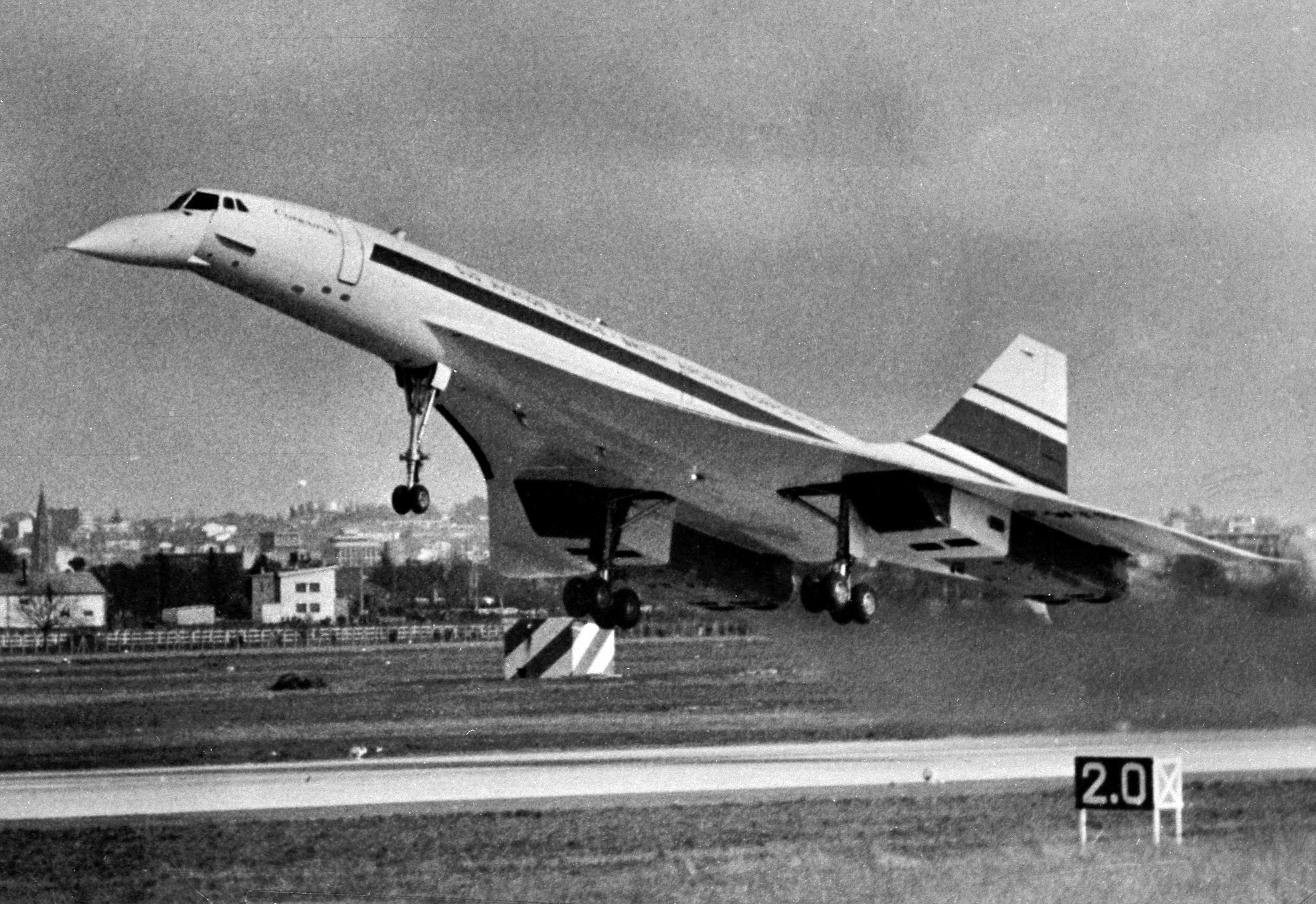
People often believe that the Concorde was taken out of service because it had become too dangerous, too loud, or technically passé. This cliché has stubborn staying power, even as it completely misses the real explanation. It is time to revisit the story of this extraordinary aircraft, capable of linking Paris to New York in three and a half hours, and to understand what truly doomed it. For the Concorde did not die because of its dazzling speed. Its retirement in 2003 was driven by far more mundane, almost trivial reasons compared to the technological triumph it represented. To understand how we arrived at this conclusion, we must go back to the very origins of this project, born in the heat of the Cold War in aviation.
- The Concorde, born in 1962 from a Franco-British agreement, linked Paris to New York in about 3h30 at altitudes above 50,000 feet for around $12,000 round trip.
- The aircraft’s tragic crash mainly eroded public confidence, without the technical safety of the plane being truly questioned.
- Ultimately, it was the prohibitively high operating cost, impossible to recoup, that led to the Concorde’s definitive retirement in 2003.
- A race against the Soviets and the speed of sound
- Three hours and thirty minutes to cross the Atlantic
- The crash that changed everything, except what we think
- The price tag that ultimately carried it all away
A race against the Soviets and the speed of sound
Everything begins in the immediate postwar era, when the great powers understand that mastery of the skies will become a strategic battleground. On October 14, 1947, American pilot Chuck Yeager achieves a feat that will stay secret for several months: aboard a Bell X-1, he becomes the first man to break the sound barrier. This achievement, revealed only in 1948, marks the starting point of a true arms race—but this time in the air, with speed as the new standard of power.
Europeans do not want to fall behind. In 1956, the United Kingdom creates the Supersonic Transport Aircraft Committee, charged with imagining a passenger jet capable of surpassing the speed of sound. But ambition quickly collides with unforgiving budget realities: such a project costs a fortune, far too large for a single nation to bear. Thus, in 1962, an unprecedented Anglo-French agreement is born, uniting two nations used to competing rather than collaborating. From this alliance forged by economic necessity, the Concorde will arise.
Meanwhile, the Soviet Union develops its own rival, the TU-144. But the fate of this aircraft turns tragically in 1973 at the Paris Air Show: the plane crashes in front of the world’s cameras, killing six aboard and eight people on the ground at Goussainville. This tragedy casts a freezing shadow over supersonic aviation, barely a few years before the Concorde enters service.
Three hours and thirty minutes to cross the Atlantic
Despite this heavy backdrop, the Concorde makes its first flight at the same Paris Air Show in 1973, before 200,000 spectators who came to witness this historic moment.
Once in commercial service in 1976, the Concorde delivered on its wildest promises. It linked New York to London or Paris in about three hours and thirty minutes, cutting the traditional Atlantic crossing time by half. On board, passengers cruised at an altitude surpassing 50,000 feet, a level so high that one could glimpse, through the window, the faint curvature of the Earth. An almost space-like experience, reserved for a handful of privileged travelers.
Because this journey comes at a price: about $12,000 for a round trip across the Atlantic. A colossal sum that made the Concorde a symbol of prestige as much as a means of transport, reserved for business travelers or personalities able to indulge in this dream of absolute speed.
The crash that changed everything, except what we think
The image of invincibility surrounding the Concorde eventually began to fracture brutally. A tragic accident tarnished the aircraft’s nearly spotless reputation, sowing doubt in the minds of a public accustomed to seeing this technological jewel as infallible. Overnight, the mythical aura of the supersonic plane was dented.
Yet, contrary to widespread belief, the aircraft’s technical safety was not actually at fault in its final retirement. The Concorde remained, from an engineering standpoint, a solid and well-controlled achievement. It was not the machine’s reliability that sealed its fate, but the way this event changed the perception of airlines and passengers.
A creeping, insidious doubt then settled in, weighing on the aircraft’s commercial prospects. Even without fundamentally questioning its safety, this episode long-lastingly undermined the confidence in this peculiar, already costly and demanding mode of operation.
The price tag that ultimately carried it all away
The real brake on the Concorde’s destiny lay in an untenable economic equation. Flying a supersonic airliner entails substantial operating costs, difficult to amortize over the long term, especially in a context where airlines seek first and foremost to monetize their fleets. This constant financial pressure, coupled with the physical constraints inherent to supersonic flight, ended up weighing more heavily than the prestige of the aircraft.
In 2003, the Concorde was definitively withdrawn from service. Since then, and despite the twenty years that have passed, no commercial supersonic airplane has resumed the mantle. This absence of a direct heir illustrates how delicate the balance struck by the Concorde between performance and economic viability remains, even today, extremely difficult to reproduce.
Several aerospace startups are currently working to revive this type of travel, drawn by the promise of an Atlantic crossing in just a few hours. But for now, none has managed to turn this ambition into enduring commercial success, proof that the challenge posed by the Concorde extends far beyond a mere technological question.
Ultimately, the Concorde’s story tells less of a technical failure and more of a dream too costly for its era. Between engineering prowess and a financial dead end, this aircraft continues to fascinate, as a symbol of what humanity can achieve when it pushes its own boundaries. The question remains whether current projects will someday succeed where the Concorde ultimately bowed out.
