
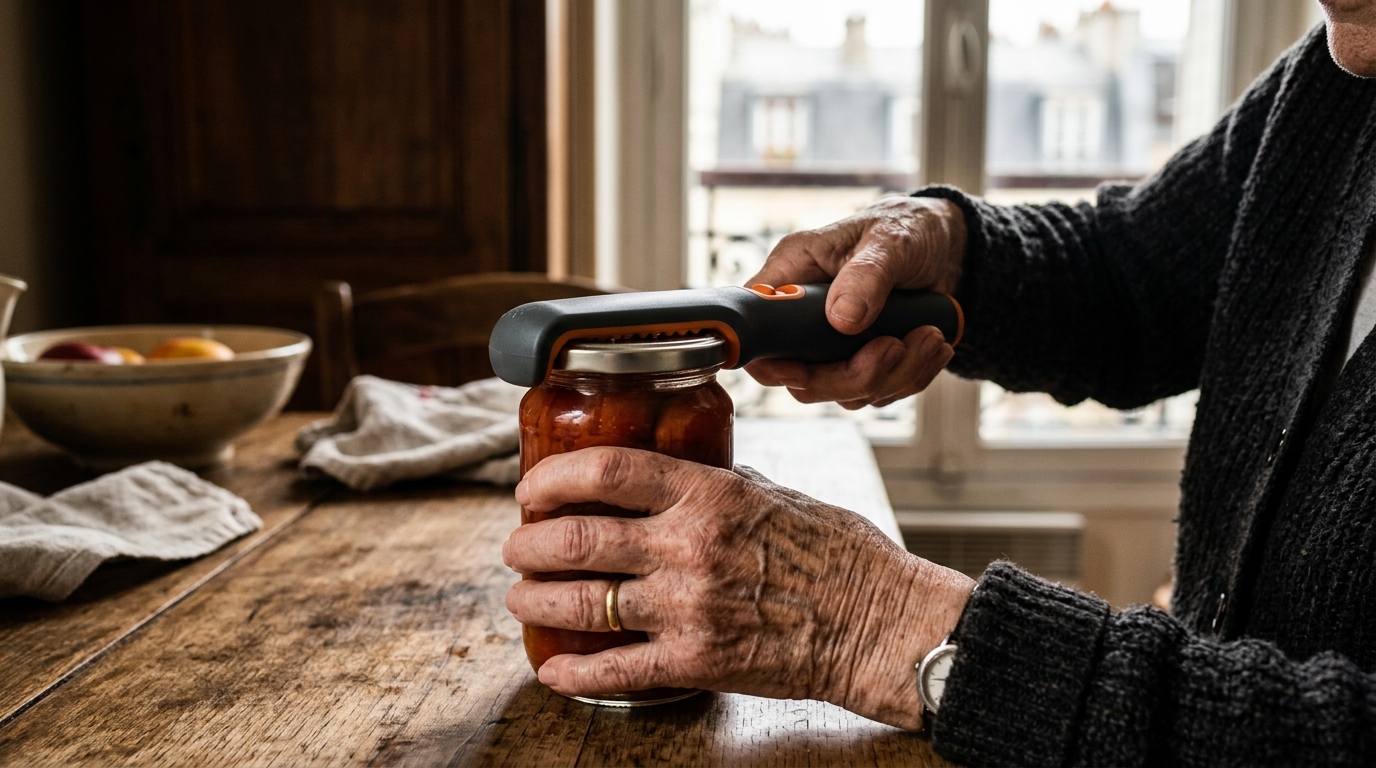
We often imagine that the aging of a population can be boiled down to two dossiers: pension funds that creak and hospitals that overflow. This is the angle from which demographic aging is almost always approached, as if living longer posed a problem only for accountants and caregivers. Yet, as France counts more and more septuagenarians, eightiagenarians and beyond, the concerns that surface are far more concrete: a sidewalk too narrow, an app impossible to open, a home without an elevator. These everyday frictions, largely invisible in public debates, are precisely the ones that will shape the lives of millions of French people in the years to come.
- People aged over 60 now make up 28.5% of the French population, up from 19.1% in 1991, while the natural balance became negative in 2025.
- A large portion of housing stock and many French cities remain poorly adapted to seniors, with steep stairs, uneven sidewalks and transportation that is not accessible, especially in rural areas already the oldest.
- The digitization of administrative, medical and banking procedures creates a silent digital divide affecting many of those over 60, including sixty-somethings who are comfortable with technology.
- The figure that upends French demographics
- Housing, the blind spot of the greying transition
- The city built for 30-year-old legs, not 70
- The digital realm, a new silent fracture
- What this demographic shift actually changes in daily life
The figure that upends French demographics
France now counts 69.1 million inhabitants, and among them, 21 million are over 60. This age group now accounts for 28.5% of the entire French population, up from 19.1% in 1991. In just three decades, the share of seniors has jumped by nearly ten points, a shift that is accelerating as the baby-boom generations advance in age. Those over 75, for their part, represent 11.1% of the population, i.e., now one in ten people you meet in the street, up from 8.8% in 2010.
This movement is reinforced by a phenomenon unseen since the postwar period: in 2025, France’s natural balance of births turned negative, at about -6,000. Births continue to fall, with around 645,000 babies expected, i.e., 2.1% fewer than in 2024. In other words, the age pyramid no longer simply ages from above; it also narrows from below. Projections suggest that the share of those over 75 will rise to 16.4% by 2050, equal to that of those aged 60–74, signaling that this shift is not a pause but a long-term trend.
Housing, the blind spot of the greying transition
Even before considering hospitals, aging makes itself felt at home first. A majority of French homes were built in an era when no one anticipated fragile knees or unstable balance: steep stairs, bathrooms without grab bars, buildings without elevators. Yet, the desire to stay in one’s home for as long as possible, the famous maintaining at home, collides directly with these dwellings that, over the years, have become real daily obstacle courses.
This reality is not distributed evenly across the territory. Rural departments in the Massif Central and the “empty diagonal,” such as Creuse, Cantal, Lozère, and Lot, exhibit the highest aging rates in the country, as do certain rural areas and the southern half of the mainland, as well as the Caribbean. Conversely, Île-de-France and the overseas territories remain broadly younger. This aging map covertly outlines a map of urgent renovation needs, often in areas where funds to adapt housing are the most limited.
The city built for 30-year-old legs, not 70
One only has to observe a pedestrian crossing to understand how our cities were designed for young, fast bodies. The time allocated to cross a street, the height of the sidewalks, the absence of benches to rest between shops—all of this reflects urban choices made long ago, at a time when the average age of the population bore little resemblance to today’s. With 21 million French people over 60, these details cease to be anecdotal and become real barriers to mobility and autonomy.
Public transport illustrates this misalignment well: poorly lit platforms, long transfers, steps too high to board certain buses. In rural areas, where the share of seniors is highest, the problem is compounded by a dire lack of mobility solutions, with private car often the only way to keep an active social life. Tomorrow’s city will therefore have to adapt to older, slower users, yet those users will still want to go out, shop, and see the world.
The digital realm, a new silent fracture
In recent years, a large portion of administrative, medical or banking procedures has moved to screens. Booking a doctor’s appointment, renewing a vehicle registration, checking bank statements: everything now goes through apps, usernames and passwords. For a significant portion of the 21 million French people over 60, this rapid digitization is akin to a genuine silent fracture, less visible than doctor shortages but just as disabling in daily life.
This difficulty is not limited to those over 80 or far from technology. Even sixty-somethings comfortable with a computer sometimes find themselves at a loss facing interfaces that constantly change, QR codes to scan, or apps that require two-factor authentication. The result is often the same: a quiet retreat from certain procedures, due to insufficient support, while access to rights should never depend on mastering a smartphone.
What this demographic shift actually changes in daily life
Side by side, these observations paint a picture different from the one usually presented in aging debates. Certainly, pensions and hospitals remain important, but they obscure more discreet issues that directly affect millions’ quality of life: an ill-suited home, a city that moves too quickly, an overly demanding digital world. It is these elements, almost invisible in major political discussions, that determine whether an elderly person can continue living at home, moving around alone, and preserving autonomy.
The share of those over 60 now exceeds that of those under 20 by six percentage points, standing at 22.5%. This gradual generation inversion calls for rethinking priorities: less fixation on large budget figures, and more attention to these small daily adjustments which, taken together, make all the difference between a life spent grudgingly and a life lived with serenity in old age.
As autumn approaches, when cities return to their usual rhythm after the summer, questions about housing, mobility and access to digital tools deserve the same level of seriousness as those about retirement or hospital care. For behind the impressive figure of 21 million French people over 60 lies a very concrete reality: a society that still has to learn to adapt to its own inhabitants.
