
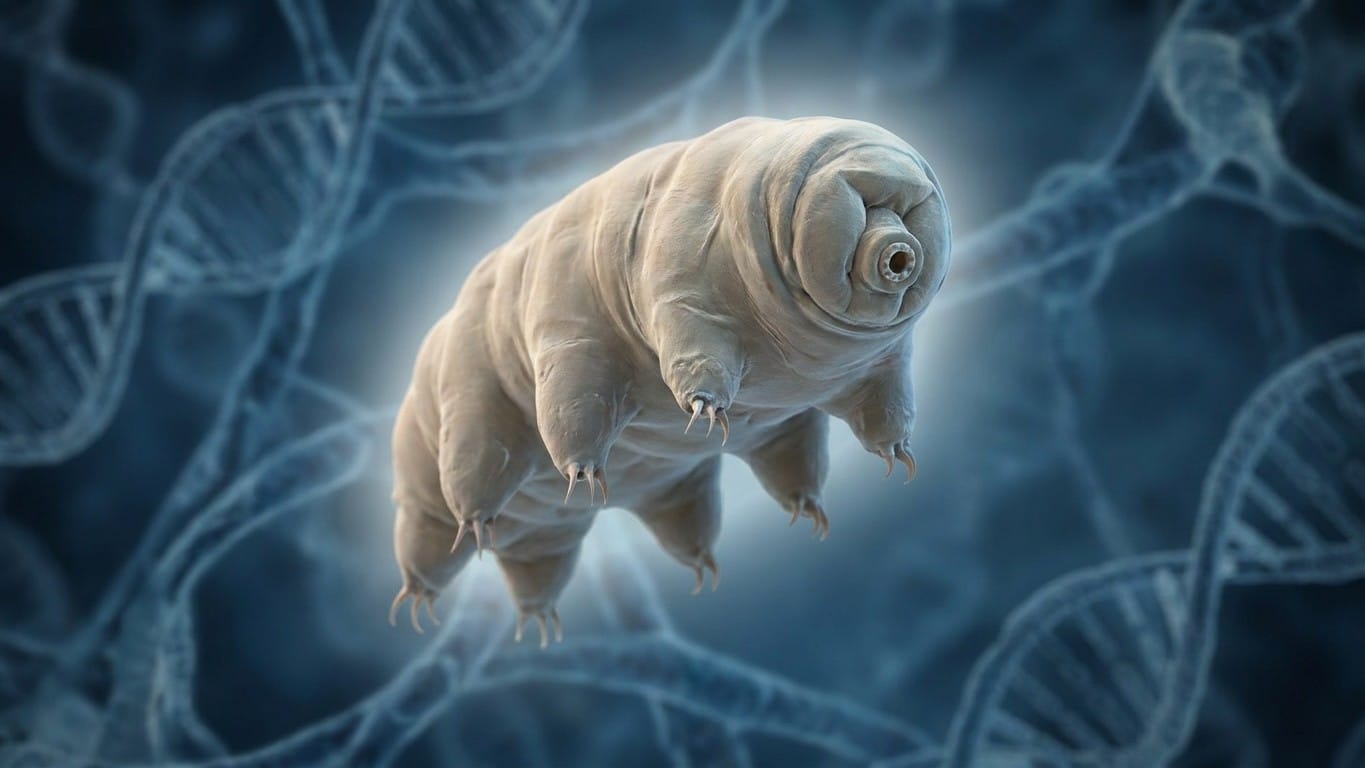
Forty percent. That is the reduction in DNA breaks observed in healthy mouse tissues after injecting an mRNA encoding a tardigrade protein, prior to exposure to X-rays. This discovery, led by a MIT team in collaboration with the University of Iowa and Brigham and Women’s Hospital, could alter the landscape for millions of patients treated with radiotherapy each year.
The principle seems almost too simple to be true. Researchers used nanoparticles to deliver, directly into the cells lining the mouth and rectum of mice, the genetic instructions to produce Dsup, a protein that tardigrades naturally synthesize. The team created polymer- and lipid-based nanoparticles that deliver the mRNA instructions to produce the tardigrade Dsup protein, targeting the cells that line the oral and rectal cavities—the tissues most frequently damaged during radiotherapy for head-and-neck cancers and prostate cancer. These areas are not chosen at random: they are precisely where radiotherapy’s side effects are most painful and disabling on a daily basis.
Takeaways
- Could a mysterious tardigrade protein become our invisible shield?
- How microscopic creatures survive radiation doses 3,000 times higher than humans
- And if the protective secret could be delivered temporarily, then erased, without altering our genome?
A water bear capable of withstanding 5,700 grays of radiation
To grasp the appeal of this protein, one must look at its origin. The tardigrade, this microscopic animal also known as the water bear, typically measures under a millimeter but possesses a resistance that defies belief. This protective ability comes from tardigrades—microscopic creatures endowed with an extraordinary capacity to endure extreme conditions, including radiation levels 2,000 to 3,000 times higher than what humans can tolerate. For perspective on the gap: four grays are enough to kill a human, while some experiments cited by research institutes mention doses of up to 5,700 grays endured by these tiny animals without irreversible harm.
This extraordinary resilience rests largely on a single molecule. This radioprotective effect is partly due to a DNA damage suppressor protein (Dsup), unique to tardigrades, which binds to DNA and shields it from radiation-induced breaks. Discovered in 2016 by a Japanese team led by Takuma Hashimoto at the University of Tokyo, this protein had already surprised scientists in the lab. After exposure in incubators, cells that express Dsup exhibited about 40% fewer damages. Ten years later, MIT took a decisive step: making this protection work not in a Petri dish, but in a living organism as a whole.
How messenger RNA transforms mouse cells into mini-tardigrades
The technical feat lies in the delivery method chosen. Rather than permanently altering the animals’ genomes, which would raise obvious ethical and practical issues, the team opted for transient expression. Researchers delivered an mRNA encoding Dsup into the tissues, triggering a temporary expression of the protein that shields DNA during treatment, before the mRNA and the protein dissipate after a few hours. The body builds its own armor for the duration of irradiation, then erases it. No lasting trace, no permanent genome modification.
The results vary by tissue studied, which deserves note rather than being buried in a misleading average. After injecting particles carrying the mRNA, the scientists exposed the rodents to a radiation dose similar to that used in human radiotherapy, which led to a 50% reduction in radiation-induced double-strand breaks. Other analyses report a reduction of about 40% in oral tissues and roughly half in the rectum. The gap between these figures likely reflects differences in treated areas and specific protocols, but the order of magnitude remains constant: protected cells experience notably fewer genetic damages than unprotected ones.
The detail that changes everything in this approach is the targeting. The protein protects only healthy tissues, never the tumor itself. Tested on mouse cancer models, the nanoparticles produced enough Dsup to shield normal cells from the harmful effects of radiotherapy, while still enabling effective tumor treatment. The shield closes over healthy cells, leaving the tumor exposed to radiation. That is exactly what a therapy of this kind aims to achieve: strike hard where needed, spare the rest.
Towards clinical use, but not right away
The medical stakes go far beyond patient comfort. The cell-killing power of radiation, while highly effective against tumors, is a double-edged sword when it damages healthy tissues. Practically, this translates into painful mouth ulcers, severe digestive disturbances, sometimes to the point of interrupting essential treatment. The side effects caused by radiation-damage to healthy tissues can be severe enough to prevent patients from completing their therapy, notes James Byrne, one of the researchers involved in the project. Reducing this toxicity could, in theory, allow higher and more effective doses against cancer without sacrificing patients’ quality of life.
One caveat that the researchers themselves emphasize: a 2023 study showed that Dsup, injected directly into neurons, produced the opposite effect of what was sought: rather than protecting DNA, it promoted its degradation and a form of neurotoxicity. The miracle protein is therefore not universal; its effectiveness and safety tightly depend on the cell type targeted. Before imagining routine injections before every radiotherapy session, years of trials will be required, likely starting with well-identified peripheral tissues such as the mouth or rectum, before considering broader applications, including limiting X-ray exposure during repeated medical imaging.
Sources: dailygeekshow.com | trustmyscience.com
