
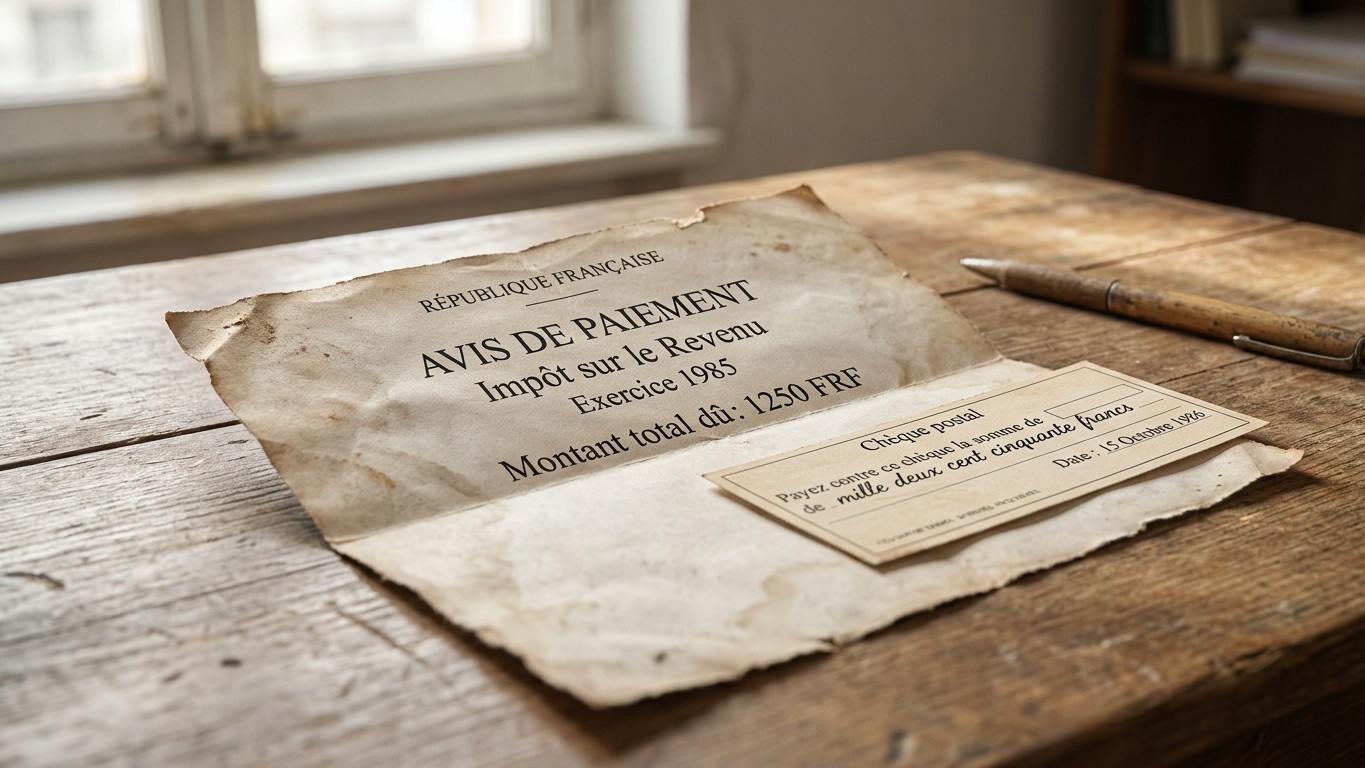
July 1979. The largest space station ever launched into orbit by the United States weighed 77.5 tons at the moment it reentered Earth’s atmosphere. Skylab broke apart over western Australia, scattering debris for miles. But what NASA received in return was neither a diplomatic complaint nor a hefty cleaning bill: it was a simple littering fine, $400, drawn up with the utmost administrative seriousness by a small coastal municipality. The American space agency never paid it. Not out of bad faith, but because no one in Houston ever really knew what to do with such an absurd yet authentic fine.
Key takeaways
- A space superpower receives an administrative fine from a small Australian town for its debris
- The official form really exists, but no one knows how to handle it
- Thirty years later, California radio listeners settle the debt through a fundraising drive
A trajectory meant to end in the ocean
On paper, nothing suggested that a stretch of Australia would end up under a rain of space scrap. The engineers had cut the station’s control gyroscopes to steer it away from population centers in North America, hoping the debris would fall harmlessly into the Indian Ocean. NASA even attempted a final piloting move: with the limited control it had left, the agency tried to steer Skylab toward the ocean southeast of South Africa. The calculation looked good on paper. It proved wrong in practice.
For the predicted path did not match what actually occurred, and pieces of Skylab, large and small, finished their descent in the southwestern part of Australia. Behind this slight trajectory deviation lay a pileup of technical hiccups. Skylab had been abandoned in orbit since 1974, awaiting a Space Shuttle that would either boost it up again or dispose of it cleanly. But the Shuttle program was delayed, and solar activity more intense than expected thickened the upper atmosphere, slowing the station much faster than models had anticipated. Result: no more engine, no shuttle available, and a 77-ton object surrendered to the whims of physics.
The night the sky fell on Esperance
Re-entry turned into a planetary event. American newspapers even floated insurance against injuries from space debris, half-serious and half-amused. The San Francisco Examiner took the prank as far as promising a reward to anyone who could deliver a fragment of Skylab to its offices. No one at the paper imagined the news would cross the Pacific to reach Australia. Yet a teenager from the small town of Esperance, awakened in the middle of the night by pieces of the space station landing on the roof of his house, seized the opportunity: the San Francisco Examiner had offered $10,000 to the first person to deliver a fragment of Skylab to its offices, and Stan Thornton, 17, found pieces on his property before flying to San Francisco to claim the prize.
Materially, the on-the-ground consequences were modest given the magnitude of the event. The debris field stretched across the ocean and onto land, scattered along a sparsely populated swath of southwestern Australia, without injuring anyone or causing real damage. Some fragments, such as an oxygen tank now on display, are kept at the Esperance Municipal Museum, which has become an unlikely stop for those wanting to touch a piece of space history.
A fine for laughs, unpaid for thirty years
That is where the now-iconic gesture of the small municipality comes into play. Rather than indignation, local authorities chose bureaucratic irony: when NASA representatives came to discuss the debris, the Shire of Esperance presented them with a $400 littering fine, under a local ordinance that would apply to anyone who had scattered waste in the district. Everyone, on both sides, understood the joke. Yet the fine was real, handwritten on an actual form, with a real amount.
NASA, for its part, did not pay. The agency ignored the bill, and the councillors eventually treated it as lost. The story might have stopped there, tucked away among the dusty curiosities of space exploration. But Esperance has memory and a sense of theater: as the thirtieth anniversary of the crash approached, billboards appeared across town reminding people of the unpaid debt. The wink finally paid, literally. In 2009, a Californian radio host heard of the story and launched a fundraising appeal on his morning show: the drive raised the $400 needed, and the amount was ultimately donated to NASA in 2009, in time for the thirtieth anniversary of Skylab’s fall.
Thirty years to settle $400, with the check paid not by a federal agency but by amused California radio listeners—this sums up the mismatch between the technical grandeur of the space program and the modest, almost endearing, nature of its most famous bill. Even today, Esperance’s paid-stamp signs serve as photo keepsakes for passing visitors, proof that a municipal joke can, with a little patience, carve its own line in the history of space exploration.
Sources: spacedaily.com | 19fortyfive.com | en.clickpetroleoegas.com.br
