
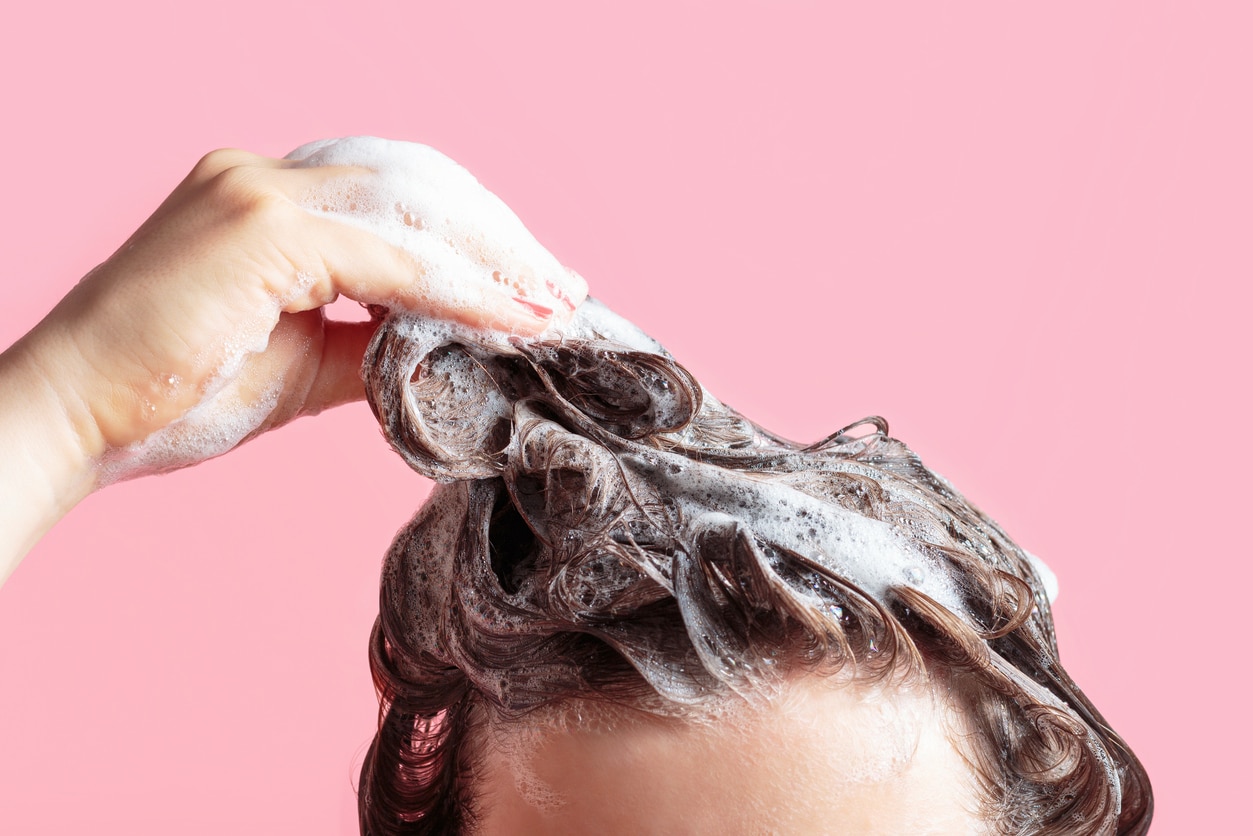
Flat hair, roots that grease quickly, ends hopelessly fragile… Yet every morning, the same gesture, the almost automatic reflex of shampooing in the shower. And if this routine so ingrained in our lives wasn’t ideal for our hair? More and more French people are wondering: do we really need to wash our hair so often? The concept of the “low-poo” – meaning “less shampooing” – is slowly taking hold in our bathrooms. Behind this new trend, a small revolution is underway, driven by the desire for authenticity and sobriety in our daily care. What does this practice truly reveal about the health of our scalp? A deep dive into a topic that leaves no one indifferent.
Washing your hair every day: a routine to reconsider?
Why has daily hair hygiene become the norm
A few decades ago, washing your hair every day wasn’t obvious. But the advent of mild shampoos, varied conditioners, and the promise of hair that is always “fresh” convinced many to adopt this ritual. In France today, it is estimated that more than 20 % of women wash their hair at least every two days. This normalization of frequency rested on modern hygiene standards, but also on the dictates of hair that must look impeccable and shiny at every moment.
The signals sent by a scalp washed too often
However, increasing the number of washes is not without consequences. A scalp exposed to products too frequently often responds by producing more sebum, which can create a vicious circle: the more you wash, the greasier it gets, faster. The signs? Roots that become oily again in less than 24 hours, itching or a pulling sensation. In the end, hair that seems dull, soft, or, on the contrary, more limp than ever.
The “low-poo”: the trend that shakes up our habits
Where does the “low-poo” movement come from?
Going against the grain of cosmetic overconsumption, “low-poo” first spread among those who sought to protect the health of their scalp. This approach involves spacing out shampoos and limiting the use of formulas rich in detergents, preferring gentler, more natural cleansers, and sometimes even the complete removal of traditional shampoo. This philosophy appeals to a growing group attentive to product ingredients and the ecological footprint of daily actions.
Less shampooing, more natural: what it really changes
By adopting the “low-poo,” one seeks to give the hair some breathing space. Limiting the number of washes would indeed allow the sebaceous glands to regain their natural balance. The result: the scalp oils less quickly, the ends dry less, and the hair fiber retains more shine. Practitioners often report hair that is less brittle, softer and fuller, even if the transition can require patience and perseverance.
What experts reveal about the ideal washing frequency
What science says about the needs of the scalp
Our scalp hosts a fragile ecosystem, made up of sebum, microorganisms, and a protective skin barrier. Cleaning too often can disrupt this balance, sometimes leading to excess sebum production. Professionals generally recommend washing hair two to three times per week, depending on individual needs. For many, there is no medical necessity to increase this frequency, except after intense physical activity or in case of excessive sweating.
Recommendations differentiated by hair type
Normal, dry, curly, or oily-prone hair: needs naturally vary. Fine hair, more exposed to pollution and sebum, may require somewhat more frequent washing. Conversely, thick, curly, or very dry hair benefits from spacing washes further to protect precious natural hydration. The rule? Adapt the routine to the feeling of cleanliness and scalp comfort, and not to a fixed rule dictated by advertising.
Spacing out shampoos: risks, benefits and common misconceptions
The real impact of the “low-poo” on your roots and ends
Contrary to fears, spacing out washes does not entail particular health risks for the hair. On the contrary, the hair often appears more supple, less dull, and less brittle. Far from myths, a low number of washes does not prevent good hygiene, provided you adopt the right daily habits: gentle brushing, massage of the scalp, and thorough rinsing to remove dust and residues.
Myth or reality: do hair types grease up less quickly?
The experience of many French people tempted by the “low-poo” is clear: after a short adjustment period, sebum production slows down. Encouraging sign, some notice that after a few weeks the roots stay fresh and airy longer, without an uncontrollable greasy sensation. A beneficial shift for those who dread daily washing and want to regain true hair freedom.
Adopting the “low-poo” in your routine: a practical guide
Tips to make the switch smoothly
Transitioning to “low-poo” should be gradual, without abruptly changing habits. To limit the “greasy roots” effect in the early days, it is advised to add an extra day between each wash, progressively. Adjusting your hairstyle (ponytail, braids) during this period can also help. Using gentle shampoos, free of sulfates or silicones, is also a key to supporting this approach successfully.
The right habits, from brushing to rinsing, for healthy hair
Brush your hair every evening to distribute sebum, opt for hydrating products on the ends, rinse thoroughly with lukewarm water, and gently massage the scalp: these essential habits easily replace overly frequent washing. Finally, watch the water temperature, which can weaken the hair if it is too hot, and always favor air-drying as soon as possible to limit breakage.
When the “low-poo” isn’t enough: special cases and exceptions
Situations that justify more frequent washing
Despite all its benefits, “low-poo” isn’t universal. Certain situations warrant more frequent washing: intense sports activities, exposure to urban pollution, dirty jobs, or periods of heavy sweating. Similarly, in cases of scalp conditions (eczema, severe dandruff), a health professional’s opinion should guide the frequency and nature of care.
Colored hair, sensitive scalps: adapting your routine
Colored hair requires specific care to preserve shine and color hold. A balance must be found between washing too soon (which can fade) and prolonged intervals (which risk weighing down the roots). In case of a sensitive or reactive scalp, it is advisable to choose ultra-gentle, lightly scented products, and above all to listen to any discomfort or irritation.
What experts say about washing hair
The main ideas to keep in mind to make peace with your washes
Daily washing is no longer mandatory. Two to three shampoos per week are more than enough for most healthy scalps. For the more adventurous, spacing even further is possible and even desirable, provided you monitor the overall health of the scalp. The “low-poo” is emerging as a credible, natural, and “tailor-made” alternative to reconnect with the balance of your hair, without compromising beauty or hygiene.
Outlook: how to find the rhythm that suits you and take care of your hair sustainably
Nothing prevents you from adapting your routines: listen to your hair, observe its reaction, and adjust gradually remains the best method. Question your habits, try new steps, test the rhythm that suits you best. Taking care of your hair is, first and foremost, give them the listening and the softness they deserve. Here is what to monitor: sensitivity, appearance, comfort… Valuable indicators for a sustainably adapted routine.
“Low-poo,” a temporary fashion or a shift in mindset? One thing is certain: learning to respect the natural rhythm of your hair gives it new vitality… and simplifies life. And you, ready to space out your shampoos to finally have light roots and ends full of life?
To go further on this topic, consult, for example, the recommendations of Assurance Maladie.
