
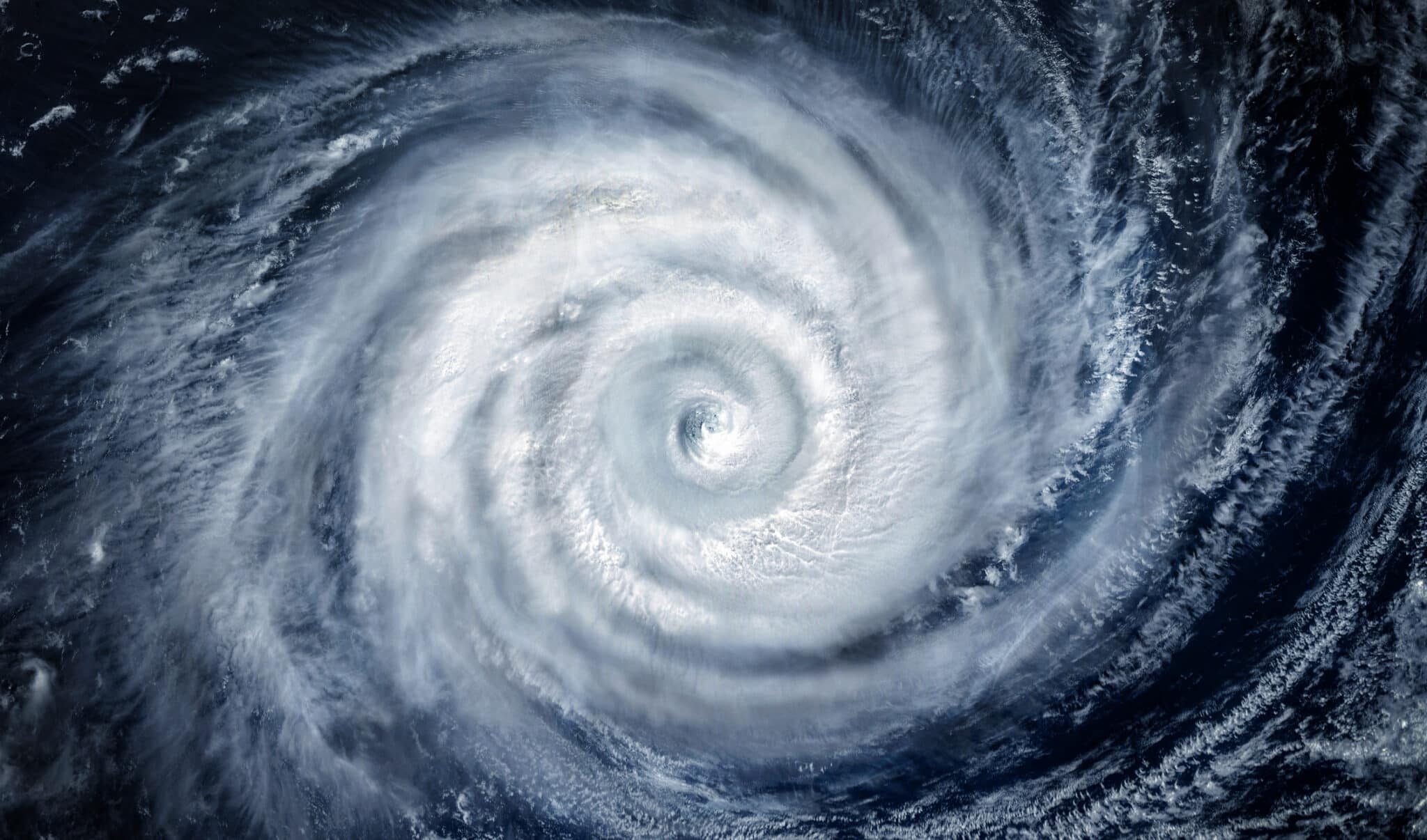
A few months ago in Japan, researchers conducted a new cloud seeding experiment. However, the goal is not to fight drought but rather to determine where rain will fall. It is mainly about preventing deluges linked to hurricanes, weather events that are becoming more frequent and intense due to climate change.
Reducing the Power of Hurricanes
First, it should be noted that cloud seeding is a local weather modification technique discovered in the 1940s. Belonging to the field of geoengineering, this method involves injecting chemical substances into clouds in order to induce rain (or snow). Since its inception, cloud seeding has been used to bring rain to arid areas and thus combat drought. In Japan, for several years now, researchers have been testing this technology with a different approach. The aim is to make it rain over the ocean — or over uninhabited areas — before the clouds reach cities. It is largely a matter of altering the structure of the hurricane cloud bands (typhoons) so that their energy disperses, thereby reducing their destructive power.
Between January 7 and 13, 2026, a new test took place above the snow clouds of Toyama Bay, on the west coast of Japan. A propeller aircraft dropped about thirty kilograms of solid carbon dioxide ice pellets at an altitude of 3,500 meters. Since the targeted clouds contain water droplets that remain liquid even below 0°C, the dry ice causes instant freezing. Thus, ice crystals form rapidly, then grow before falling to the ground. The test as well as the method were explained in detail in March 2026, in the journal Natural Hazards and Earth System Sciences, affiliated with the European Geosciences Union (EGU).
Governing the Climate by 2050
Ultimately, Japanese scientists aim to trigger, if needed, small early and localized precipitation, in order to weaken the destructive energy of future typhoons. This project, named TyphoonShot, is led by Yokohama National University, whose work involves studying the injection of dry ice — solid carbon dioxide — or other aerosols directly into storms using aircraft.
The ultimate goal of this research is to master the climate by 2050, i.e., Moonshot Research Program Objective 8, run by the Japan Science and Technology Agency (JST). The other objectives of this renowned program relate to sustainable development, disease screening and prevention, quantum computing, food security, autonomous robots, the mental and physical health of humans, and cybernetic avatars.
Encouraging Simulations, but Caution Is Warranted
It should be noted that cloud seeding is studied in a context of rising frequency and intensity of typhoons, particularly in Japan, due to current climate warming. However, despite somewhat encouraging numerical simulations showing a local reduction in extreme rainfall, the scientific community remains cautious for several reasons.
On the one hand, it is scientifically difficult to prove whether the weakening of a storm truly results from human intervention or from natural weather variations. It should also be noted that there are risks of creating problems elsewhere: by preventing rain from falling in one area, unforeseen storms could occur in another nearby region. Also, certain substances that could be used — such as silver iodide — raise environmental concerns, mainly due to their toxicity.
