
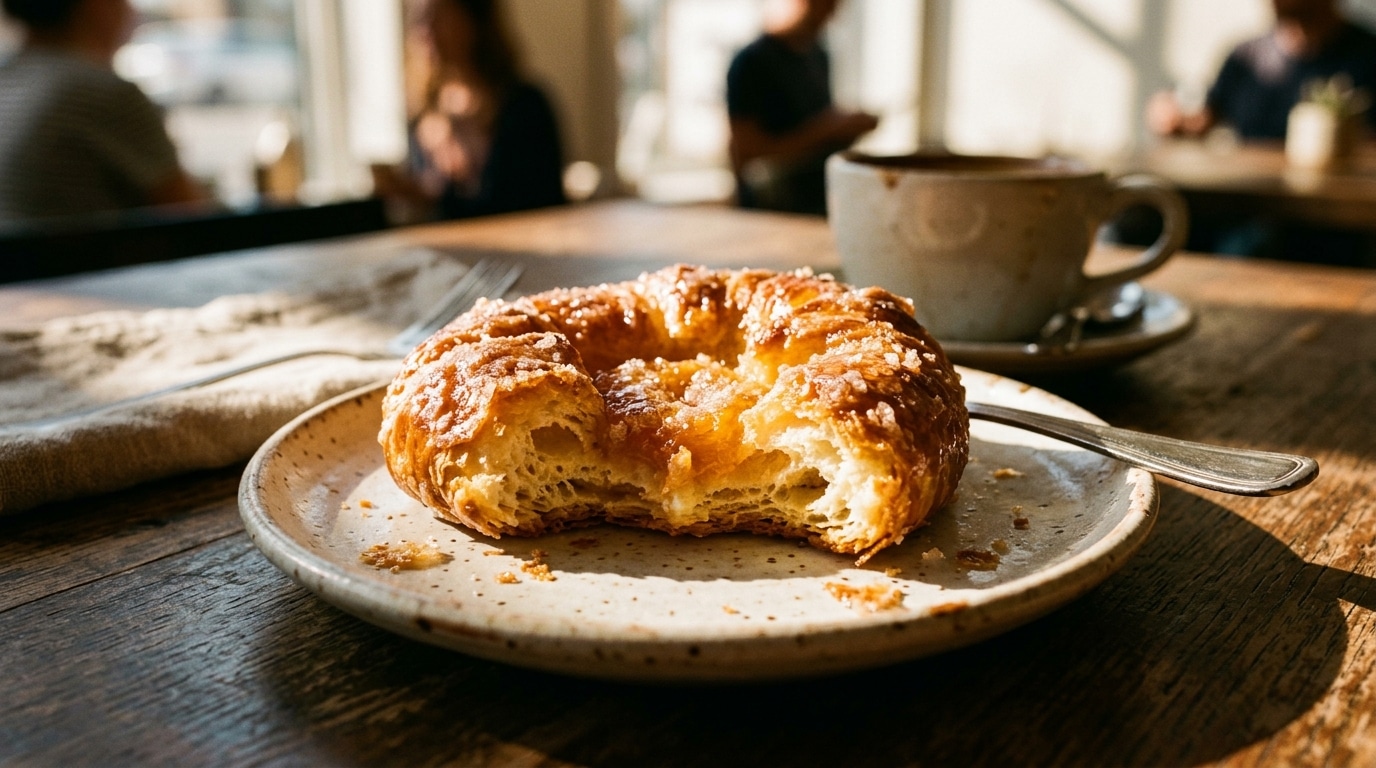
We often hear it: “A little pastry to hold you over until the meal won’t hurt.” The idea seems to make perfect sense. After all, if your stomach rumbles in the late afternoon, what could be more logical than giving it a bit of fuel? Yet the biological reality is far more tricky. That pastry or that square of chocolate you swallow around 5 p.m. to quiet a hollow doesn’t prolong your fullness: it actually triggers a mechanism that, two hours later, leaves you hungrier than before. Far from being a matter of willpower or overeating, this phenomenon results from a precise, almost clockwork sequence playing out in your blood. Understanding this mechanism is already a step toward reclaiming control over cravings that seem to appear from nowhere.
The Emotional Elevator of Your Blood Sugar, Decoded Minute by Minute
Picture your blood sugar level as an elevator. When you bite into a pastry, the device shoots upward to the top floors. The simple carbohydrates it contains are converted very quickly into glucose, and this rapid rise triggers what we call a glycemic spike. In the moment, you feel a real jolt: energy surges, fatigue fades, everything feels fine.
The trouble is that what rises quickly often falls just as quickly. After the peak, the elevator doesn’t stop gently at the desired floor: it sometimes plunges below the starting level. This sharp drop that follows the peak is precisely the moment when your body begins to demand more food, even though you’ve just eaten something. The mid-afternoon hunger isn’t satisfied; it’s displaced and amplified.
Insulin, that Overzealous Hormone That Makes You Hungry
At the heart of this mechanism lies a hormone: insulin. Its role is essential, but sometimes its hand is a little heavy. When glucose climbs abruptly, the body releases insulin to manage the influx and bring the sugar level back to normal. However, faced with a pronounced spike triggered by fast-acting sugar, the hormonal response can prove excessive.
This overly generous secretion of insulin is precisely one of the main hormonal mechanisms that lead to what is known as postprandial hypoglycemia, i.e., a drop in blood sugar occurring after a meal. In other words, in trying to blunt the spike, the body goes too far and drives glucose down lower than necessary. As a result, your body finds itself in an apparent energy deficit and triggers hunger signals, even though you objectively didn’t need to recharge.
Why Does Your Brain Crave More Even After You’ve Eaten?
Large-scale research has allowed this phenomenon to be measured on a broad scale. Following more than a thousand participants over two weeks, through thousands of breakfasts and tens of thousands of meals recorded via an app, the observations are telling. People whose blood sugar dropped sharply after eating, nicknamed the big “droppers,” consumed on average 75 calories more in the three to four hours that followed, and a little over 300 extra calories in total over the day compared with the light droppers.
That’s where the behavioral trap closes. After a glucose drop, the body doesn’t crave just anything: it typically demands more simple carbohydrates and sugar, in search of an immediate energy boost. You’re thus tempted by a second pastry, which will reignite a new spike, a new drop, a new hunger. A genuine vicious circle. It’s worth noting, however, that sugar isn’t the whole story: the magnitude of the drops varies from day to day for the same person, indicating that meal choices and physical activity also play their part.
What to Snack On Instead to Truly Hold Out Until Dinner
The good news is this mechanism isn’t a fixed fate. Since the culprit is fast-acting sugar that triggers a spike in isolation, the remedy is to choose snacks that raise blood sugar gradually and keep it stable. The idea isn’t to deprive yourself, but to outsmart your biology in a smart way. Among the three macronutrients, carbohydrates are the ones that convert the fastest into glucose: pair them with proteins and healthy fats, which slow digestion and smooth the curve.
- A handful of almonds or walnuts, rich in satiating fats
- A natural yogurt with a few seasonal berries
- A slice of whole-grain bread with a little cheese
- A hard-boiled egg, a protein powerhouse that sticks with you
- A few crunchy vegetable sticks with a chickpea purée
At the end of summer, when long days push dinner later, these alternatives let you wait without triggering the spiral. The principle remains simple: favor energy release that’s slow rather than energy delivered in a burst that leaves you dry.
Ultimately, that afternoon pastry reminds us of a counterintuitive truth: feeding hunger with quick sugar often fuels it. By understanding the sequence spike–insulin–drop, you stop blaming a supposed lack of discipline and start acting on the real cause. And when next the 5 p.m. hollow arrives, will you listen less to the immediate urge and more to the underlying strategy?
