
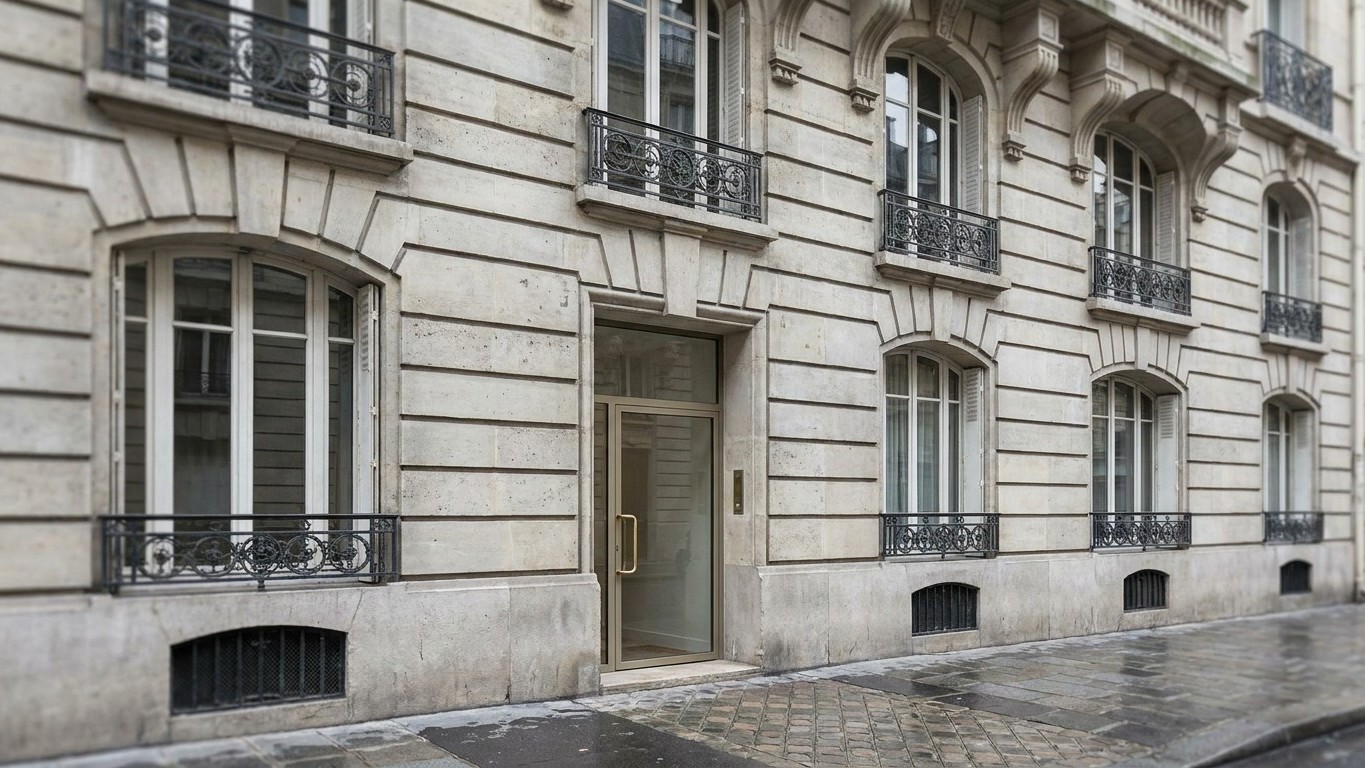
A building was sold for 85 million euros, then four years later bought back by the same state that had sold it for 325 million—this is the kind of file that sends shivers down the spines of public managers. This is precisely what happened to the former headquarters of the National Printing Office, located at 27 rue de la Convention in Paris’s 15th arrondissement. A parliamentary report devoted to the state’s real estate management highlights this operation as one of the starkest examples of dysfunction in how the administration handles its assets.
The story begins in 2003. The National Printing Office, a company wholly owned by the State, sold its Paris building to the Carlyle Group for 85 million euros excluding tax. The property, a complex of roughly 30,000 square meters combining offices with former workshops, no longer attracted the public company: its printing activities had moved to Choisy-le-Roi. The American private equity fund, on the other hand, saw a golden opportunity in a feverish Paris real estate market.
Key takeaways
- A building sold for 85 million, bought back four years later for 325 million, i.e., 240 million more expensive
- The Carlyle fund pocketed a net gain of 130 million euros in four years
- The State does not know its assets well and does not know how to optimize them
A financial back-and-forth that raised eyebrows
Four years was all it took for Carlyle to turn a profit. In 2007, the Ministry of Foreign Affairs, seeking a site to group its services that were then spread across about ten Paris locations, repurchased the same building for 325 million euros excluding tax. The Quai d’Orsay had long been seeking a solution: its services were distributed over about ten sites, in suboptimal locations, with administrative inefficiencies tied to dispersion and additional costs stemming from this spread.
On paper, the operation appeared justified by two factors: a surge in Paris office real estate prices, which nearly doubled between 2003 and 2007, and significant transformation work carried out by Carlyle to convert the former industrial workshops into modern office floors.
The problem lay in the scale of the gap. Even after subtracting the cost of the works, the margin enjoyed by the private fund remained dizzying. The parliamentary report on the state’s real estate management estimates the net gain pocketed by Carlyle at around 130 million euros, once the works and market evolution are taken into account. Over a four-year period, a private fund achieved a net gain exceeding the annual budget of many French local authorities. Not bad for a simple real estate back-and-forth on a building the State had itself owned just a few years earlier.
An initial sale already criticized by the General Inspectorate of Finance
The trouble did not come only from the repurchase price. As early as 2003, the sale to Carlyle drew harsh criticism. A report by the General Inspectorate of Finance (IGF), commissioned at the time by the Budget Minister, highlighted several flaws in how the National Printing Office negotiated the initial sale. According to this document, the sale price was about ten million euros lower than what it could have been, and roughly 25 million more could have been unlocked if the National Printing Office had taken the steps to reclassify some activity spaces as offices, which would have allowed a better valuation of the asset before sale.
The state effectively sold its own asset cheaply, then overpaid on the repurchase. A double miss that, viewed side by side, nearly becomes a caricature of mismanagement.
The terms of the sale contract did nothing to improve the situation. The closing delays raised issues: 31 months elapsed between the signing of the preliminary sale agreement in June 2003 and the authentic deed in early 2006, an unusually long delay, with settlement terms highly favorable to Carlyle. During this period, the fund paid neither a deposit, nor installments, nor interest. A clause that, on paper, seems minor but that allowed the buyer to secure the property without tying up capital for nearly three years, the ideal window to prepare a resale to the State.
What Parliament Has Taken Away Today
This dossier did not fade into memory of the 2000s. It has resurfaced today in the work focused on modernizing the management of public real estate assets. An evaluation mission led by members of Parliament has revisited the Rue de la Convention case as a typical example of the shortcomings of state real estate management, hampered by incomplete knowledge of assets and a governance structure that is too fragmented. The finding is unequivocal: the State does not know its own patrimony well, which prevents it from anticipating its needs and pushes it to undertake costly operations in a hurry.
The Quai d’Orsay had indeed been seeking a consolidation solution for two decades before consenting to this high-priced acquisition, lacking the ability in 2003 to retain a property that could have been reused directly.
This case also fed the parliamentary debate as early as 2007: several senators called for a congressional inquiry, which the majority refused at the time. Twenty years later, the issue reappears in a different form, with reforms to the management of the State’s real estate assets now under discussion between the National Assembly and the Senate, including the proposal to create a public institution tasked with professionalizing the leasing and valuation of public properties. Whether this new tool would have sufficed to prevent such an expensive back-and-forth for public finances at the time remains to be seen.
Sources: senat.fr | assemblee-nationale.fr
