
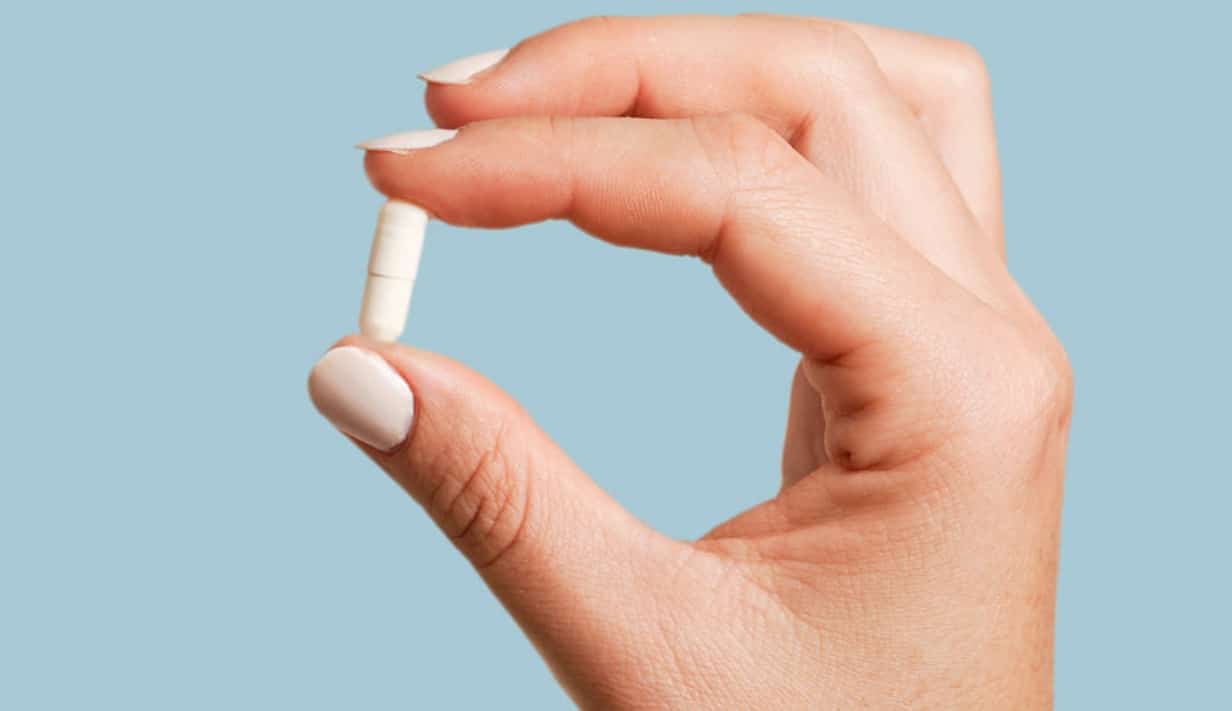
Recently, a U.S. laboratory began marketing a very special dietary supplement. It would be capable of intercepting microplastics (and nanoplastics) in the digestive system before they cross the intestinal barrier. What is this supplement? Why has it already sparked controversy?
Macrostructures of about 200 micrometers
For some time, science knows that microplastics (and nanoplastics) are capable of crossing the intestinal barrier before spreading into the bloodstream. As explained by a publication from the National Institute for Agricultural Research, Food and Environment (INRAE) at the end of 2025, this can lead to systemic inflammation, oxidative stress, as well as metabolic disturbances in deep organs – notably in the liver and brain.
The American laboratory Quorum Innovations developed Qi601, an innovative postbiotic compound designed to intercept microplastics and nanoplastics in the digestive system, before they cross the intestinal barrier. These studies were the subject of a preprint on BioRxiv in May 2026.
By way of reminder, the term “postbiotic” refers to a preparation of inanimate microorganisms, i.e., bacteria killed by heat. Here, Qi601 is derived from a specific strain of the bacterium Limosilactobacillus fermentum — the LfQi6 strain — cultured as a biofilm. Quorum Innovations states that it has generated macrostructures of around 200 micrometers, a size that prevents absorption by the intestines.
Encouraging results
As the laboratory explains, the cell walls of dead bacteria have a surface that is very irregular, rough, and sticky. Upon entering the digestive system, Qi601 acts as a physical binding platform, attracting and sequestering floating plastic fragments. Once the microplastics are firmly attached to the postbiotic, the body naturally eliminates them through fecal routes during digestion.
The study results show an 83% reduction in the adhesion of nanoplastics to human intestinal cells. Moreover, Qi601 retained 98% of its binding capacity during simulated digestion tests. In one of these tests involving volunteers chewing gum — a known source of microplastics — the postbiotic significantly reduced the presence of these fine particles in saliva.
“These results, taken together, support the concept of postbiotic intervention for the protection of the gastrointestinal epithelium against ingested microbial nanoparticles., can be read in the study.
Already on the market but not without controversy
Following the publication of the study, the lab began marketing Qi601 under the name My Gut Guardian. It is essentially available as an oral supplement, namely a capsule to swallow once a day. The product thus falls into the category of postbiotic microbiotic supplements, where for example Lactéol, an anti-diarrheal, is found.
It should be noted that the bacterial strain used for Qi601 benefits from Generally Recognized As Safe (GRAS) status from the United States Food and Drug Administration (FDA). Nevertheless, while its over-the-counter sale as a safe dietary ingredient is now permitted, there is potential for marketing and ethical abuses. Indeed, Qi601 is not considered a drug. Also, note that the supplement acts as an “incoming” filter in the digestive tract, and not as a magnet.
Moreover, the term “detox,” which has already appeared in the product’s commercial communications, should be approached with caution. Qi601 is incapable of removing plastic already stored in tissues, arteries, and the brain. Finally, some observers believe that the postbiotic in question does not represent a genuine solution; the best path forward would be to reduce or even stop plastic production on a global scale.
