
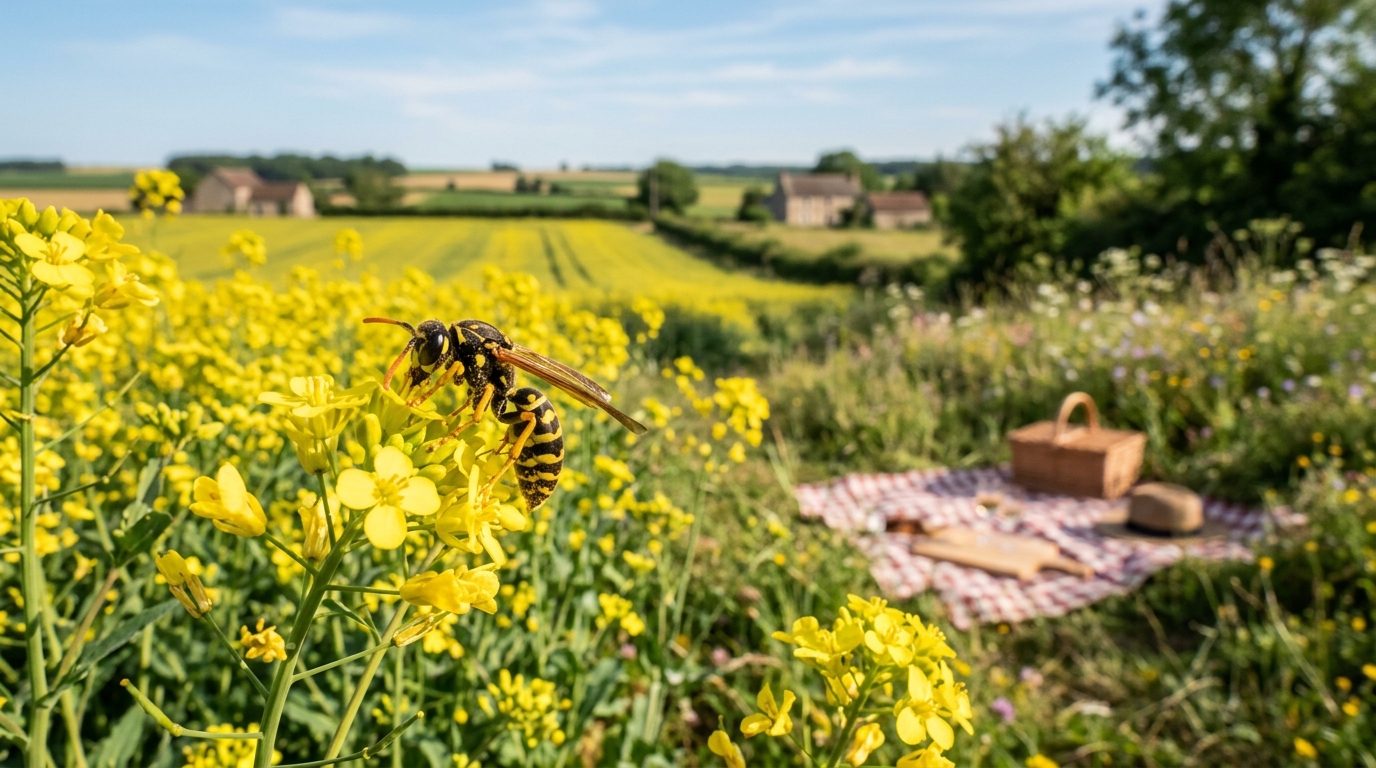
They buzz around the lemonade, stubbornly circling above the plate of charcuterie and turning any outdoor meal into a small nerve-wracking skirmish. In the heat of summer, wasps have a bad reputation, and one must admit they do little to win any affection. Yet this reputation as party-crashers masks a much more nuanced reality. Far from picnic tables, in fields and orchards, these insects carry out a quiet labor whose true scale we are only just beginning to grasp. And the figures, once we take the time to compile them, tell a completely different story from that of the merely annoying insect.
The Predators We Had Never Bothered to Count
For decades, science looked the other way. While bees enjoyed constant attention and an almost heroic image, wasps remained in the research’s blind spot. They were known mainly for their sting, rarely for their usefulness. This neglect was eventually corrected thanks to a vast synthesis effort, which gathered data from more than 500 studies to paint a first numerical portrait of their contribution to ecosystems.
The finding is striking. Wasps rank among the most effective insect predators in nature. Yet an essential distinction emerges between two major families. Social wasps, the ones we encounter around our plates, are generalist hunters that attack a wide range of prey. Solitary wasps, on the other hand, are far more specialized, with each often targeting a specific pest. And these latter, largely ignored by research, are about a hundred times more numerous than their social cousins. In other words, the work actually accomplished remains, even today, largely underestimated.
Caterpillars on the Menu: What Wasps Really Take from the Fields
To understand their role, one must track a colony throughout the flourishing season. A single colony of social wasps can capture several kilograms of insects to feed its hungry larvae. And the menu of these youngsters is revealing: caterpillars, aphids, and flies feature prominently. In other words, precisely the pests that devastate crops and give farmers chills.
This diet makes wasps genuine natural regulators. Collectively, they contribute to controlling populations of Lepidoptera, Coleoptera, Diptera, Hemiptera, and even some spiders. On a planetary scale, predation by insects as a means of biocontrol of crops would represent a value of at least $416 billion per year. Behind this dizzying figure lies invisible labor, performed without pay or recognition, season after season.
When a Nest Is Worth an Insecticide Spraying
The idea is increasingly appealing: what if we called on wasps instead of chemical pesticides? Field observations have shown that some common species turn out to be particularly formidable on high-value crops, such as corn and sugarcane. In the lab, some parasitoid wasps have even confirmed their effectiveness against the corn borer, a pest that wreaks havoc in our countryside.
This path opens a concrete prospect, especially in tropical regions and developing countries. Farmers could introduce populations of a local species to control their pests, with minimal risk to the environment. Where chemical treatment strikes indiscriminately, a wasp nest acts with natural precision. A discreet ally, in short, capable of delivering the same services as targeted spraying, but without leaving behind any traces.
What Their Decline Would Cost Us Without Seeing It Coming
The paradox is striking. We protect bees, we fret about their decline, we multiply initiatives in their favor, and that is perfectly justified. But wasps, for their part, do not benefit from a comparable wave of sympathy. Yet their ecological value is presented as just as important, since they accumulate the roles of predators and, often, pollinators.
Imagining a world without wasps would be like removing a crucial piece from a delicate mechanism. Populations of aphids and caterpillars, relieved of one of their main natural enemies, could surge. Farmers would then be forced to raise their treatments, with all the consequences we know. Their disappearance would be silent, almost imperceptible at first, before the bill finally comes due.
Next time a wasp circles around your glass during a summer lunch, you might look at it with a slightly different eye. Behind the pesky insect lies a tireless worker, whose contribution to the fields is only just starting to be quantified. One open question remains: how much longer will it take for these little-loved allies to gain the recognition their work fully deserves?
