
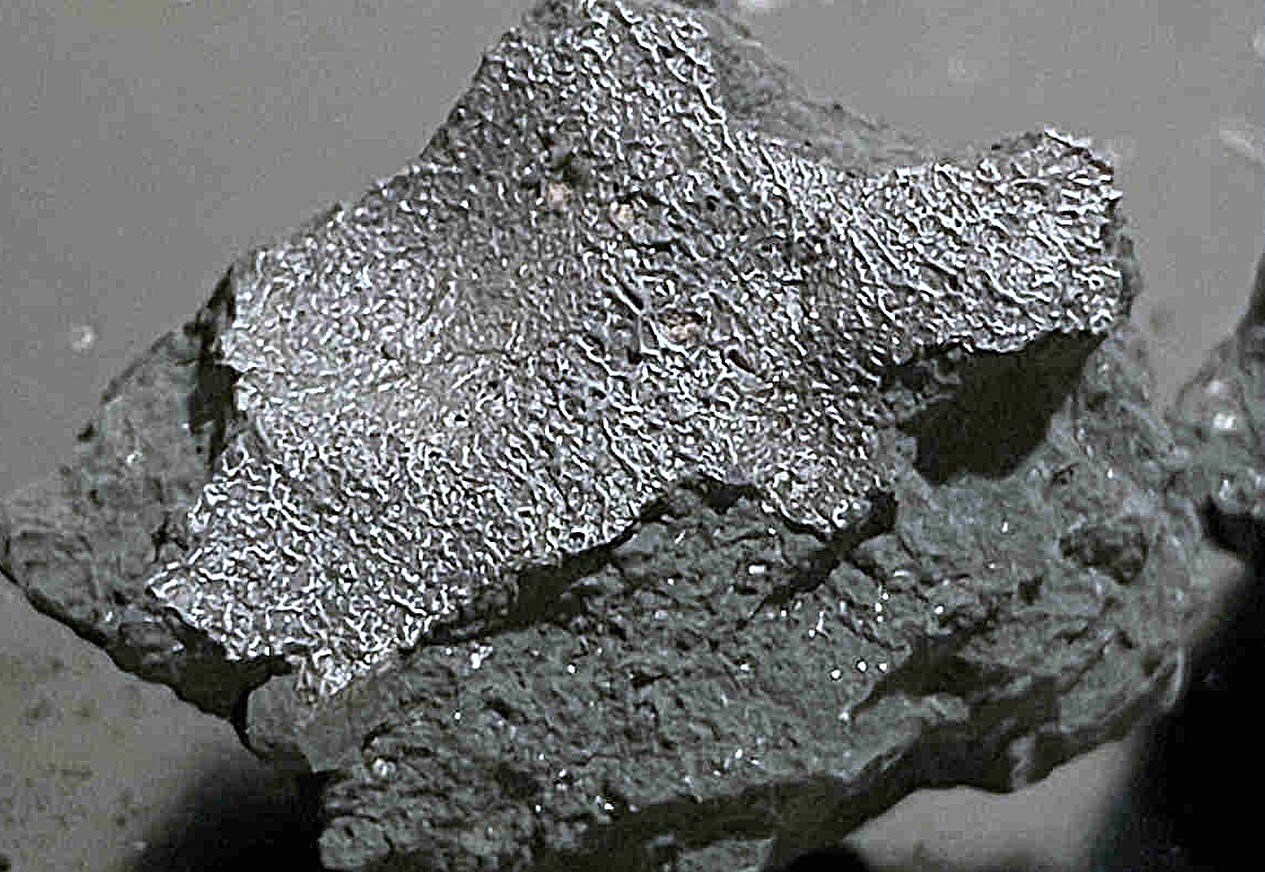
What would you feel if, on a hot summer day, a stone from space pierced through your roof, leaving behind a sharp sulfur smell? That is exactly what happened to a family in New Jersey. That day, a fireball ripped across the afternoon sky, south of the Statue of Liberty, producing a din felt all the way to New York. A few seconds later, a 900-gram rock crashed onto a Hillsborough home. Far from a mere pebble, this fragment came from the far edges of the asteroid belt and housed an extraterrestrial chemistry never before observed. A spectacular story that, two years on, continues to reveal its secrets to scientists.
A Fireball Traveling at 14 Kilometers per Second Over New York
On July 16, 2024, a meteor streaked across the daytime sky, a phenomenon in itself that is rather rare. Most shooting stars are admired at night, but this one was so bright that it lit up the daylight. The incoming body, about the size of a large airline suitcase, plunged into the atmosphere at a dizzying speed of 32,000 miles per hour, roughly 14.4 kilometers per second. At that velocity, the object was brutally slowed by the layers of air, generating a sonic boom felt across the region.
The spectacle did not go unnoticed. No fewer than 60 observers, spread across New York, New Jersey, Connecticut, Rhode Island, and Pennsylvania, reported the event. Among them, 16 people actually felt the shockwave, the air-rushing tremor that accompanies an object moving faster than sound. The meteor remained visible up to an altitude of about 35 kilometers before fading.
From the Leaking Roof to the Glass Jar: The Tracking of a Unique Fragment
When a meteor explodes in the sky, it often releases a rain of fragments that scatter across kilometers. Here, a Doppler radar set up at Newark airport even detected a true cloud of debris stretching from Staten Island to New Jersey. Yet only a single piece could be recovered. The reason is as simple as it is improbable: this fragment struck a house, thus revealing its presence.
The owner immediately noticed a strong sulfur odor and found scattered black fragments. He wisely handled them with care: he preserved them using disposable gloves, aluminum foil, and glass jars. This almost-scientific reflex allowed the sample to be kept in remarkable condition, a crucial detail for the ensuing investigation. This rock thus became the 22nd of its kind to be documented with such precision.
Back to the Origins: A Journey to the Heart of the Asteroid Belt
How can one determine where a stone from the sky comes from? The answer rests on one word: cameras. Several devices captured the meteor’s passage, notably in Northford, Connecticut; Douglassville, Pennsylvania; and even a simple doorbell camera in Wayne, New Jersey. By cross-referencing these images from different angles, researchers were able to reconstruct the object’s trajectory with precision.
This triangulation work allowed the team to trace the thread back to its source: the lower part of the asteroid belt, that vast region between Mars and Jupiter where thousands of rocky bodies orbit. In other words, this stone had voyaged for millions of years before ending its course on an American roof. A cosmic trajectory that is enough to make one dizzy.
An Extraterrestrial Chemistry Rewriting the History of Primitive Asteroids
Analysis of the rock revealed that it is a CM-type carbonaceous chondrite, a family of meteorites among the most primitive known. The letter M refers to the Mighei meteorite, which fell in Ukraine in 1889, giving its name to this category. These objects are true time capsules, witnesses to the very earliest moments of our solar system.
But the surprise does not end there. The fragments proved to be far more water-altered than typical samples from this family, earning them an intermediate classification labeled CM1/2. The most fascinating discovery concerns the presence of concentrated salty fluids near the surface of a primitive asteroid. A process entirely unknown until now for this type of protoplanet, which upends our understanding of the evolution of the oldest celestial bodies in the solar system.
This sky-falling stone reminds us that space is never as distant as we imagine. From a sonic boom over New York to a salty chemistry inherited from the birth of the solar system, a simple 900-gram pebble has yielded precious clues about our cosmic origins. So, next time you hear a rumble in the summer sky, who knows what might just fall on your head?
