
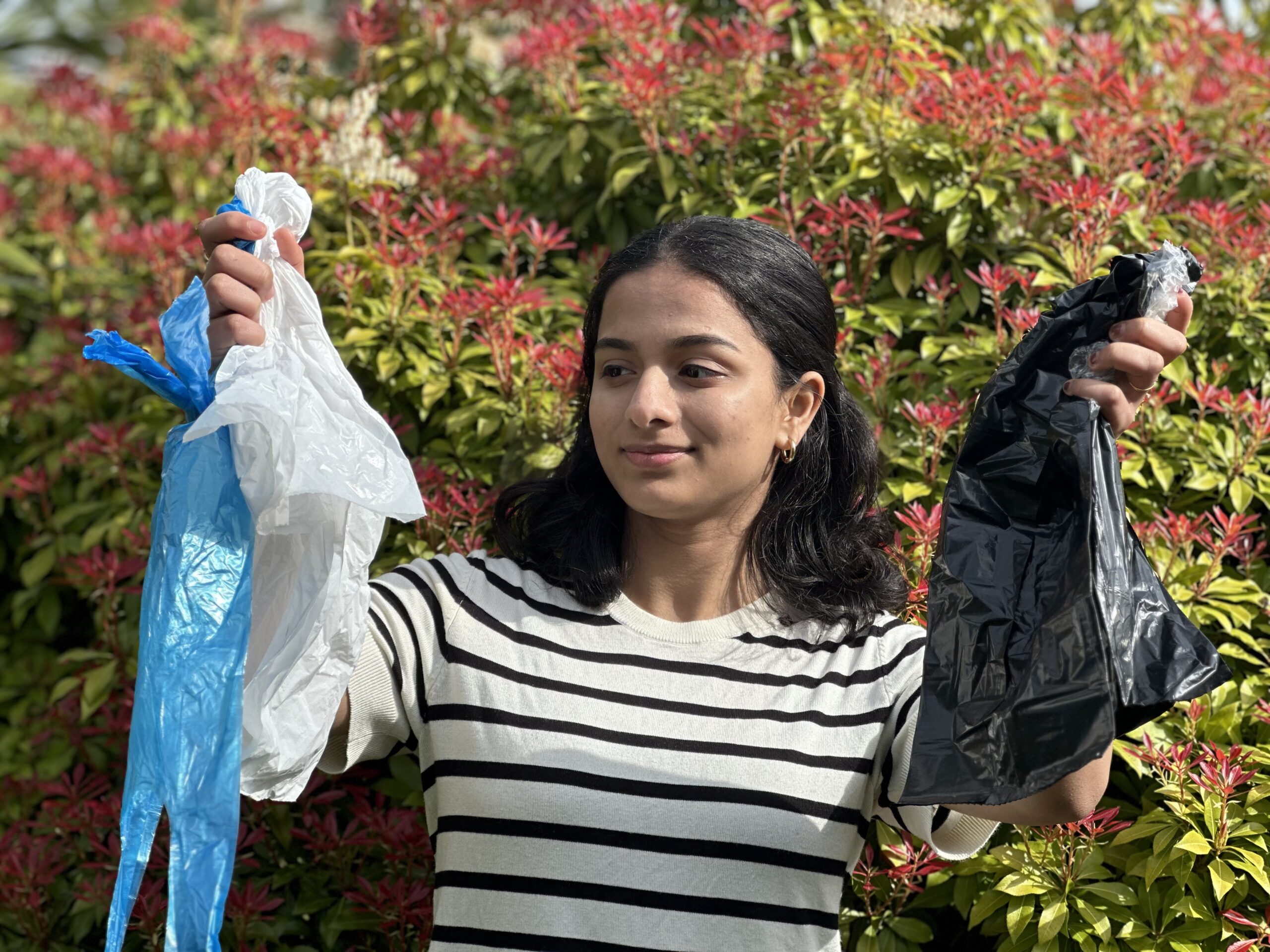
In Ireland, an 18-year-old student has been recognized for her innovation, which potentially represents a strong response to one of humanity’s greatest challenges. It concerns a plant-based biodegradable plastic capable of actively destroying microplastics already present in the environment. How does it work?
A Promising Innovation Rewarded
First, it should be noted that microplastic pollution is a global crisis, and present at many levels. This pollution concerns not only the surface of the oceans. Indeed, microplastics are also found in the depths of the oceans, the atmosphere, soils, and living organisms, among other places. Estimates place the number of microplastic particles in the Earth’s biosphere at between 5,000 and 16,000 billion, equivalent to about 1.5 to 4.7 billion tonnes.
While several solutions are already being deployed, one particular innovation has recently drawn attention, as explained in a press release dated April 29, 2026. It concerns the Eco Purge packaging by Ayra Satheesh, an 18-year-old student living in Ireland. Her microplastic-fighting project earned her a prize at the latest Earth Prize, the world’s largest sustainability competition dedicated to teenagers.
A Packaging Containing Enzymes That Digest Plastic
The Eco Purge project draws its main idea from a prior school project focused on water quality monitoring. The student observed a major problem: while the alarming presence of microplastics has become a reality, their elimination remains nearly impossible. But what does the project actually entail? The innovation takes the form of an “active” bioplastic that, unlike conventional biodegradable plastics, does not simply avoid polluting by degrading. In fact, Eco Purge is capable of actively depolluting its environment.
In practice, the base of the material is a biosourced plastic (biopolymer), designed from renewable plant materials, more precisely from the organic matter of certain plants (biomass). The heart of the concept then follows, namely the integration of enzymes capable of digesting plastic – biological catalysts – such as PETase or MHETase. The famous enzymes are encapsulated and inserted directly into the core of the biopolymer’s molecular structure during its manufacture. Thus, any normal use of the packaging keeps the enzymes trapped, stable and inactive.
The mechanical activation process of Eco Purge is triggered as soon as the packaging ends up in an end-of-life environment, for example an aquatic milieu, soil or compost. In a first step, the humidity and bacteria present in the environment nibble away at the plant-based biopolymer. Then the microcapsules of enzymes break open and are released into the environment.
Transforming Plastic Pollution into Water, Carbon Dioxide and Biomass
Released and then activated, the enzymes unfurl to seek out the chemical bonds of conventional plastics, which are already polluting the area in the form of microplastics invisible to the naked eye. The enzymes then act like molecular scissors, cutting the long, resistant polymer chains of microplastics to transform them into base monomers such as terephthalic acid and ethylene glycol. These monomers, simple residues and non-toxic, are ultimately absorbed and assimilated by natural bacteria. In other words, this aims to convert plastic pollution into water, carbon dioxide and biomass.
For her very promising Eco Purge packaging, Ayra Satheesh received the sum of $12,500. Currently, the student is using these funds to attempt a transition of the project toward real-world deployment. This includes biological optimization, primarily improving the efficiency of the molecular scissors. Then comes the question of potential industrial-scale production, the challenge being to find a low-cost mass-production solution.
