
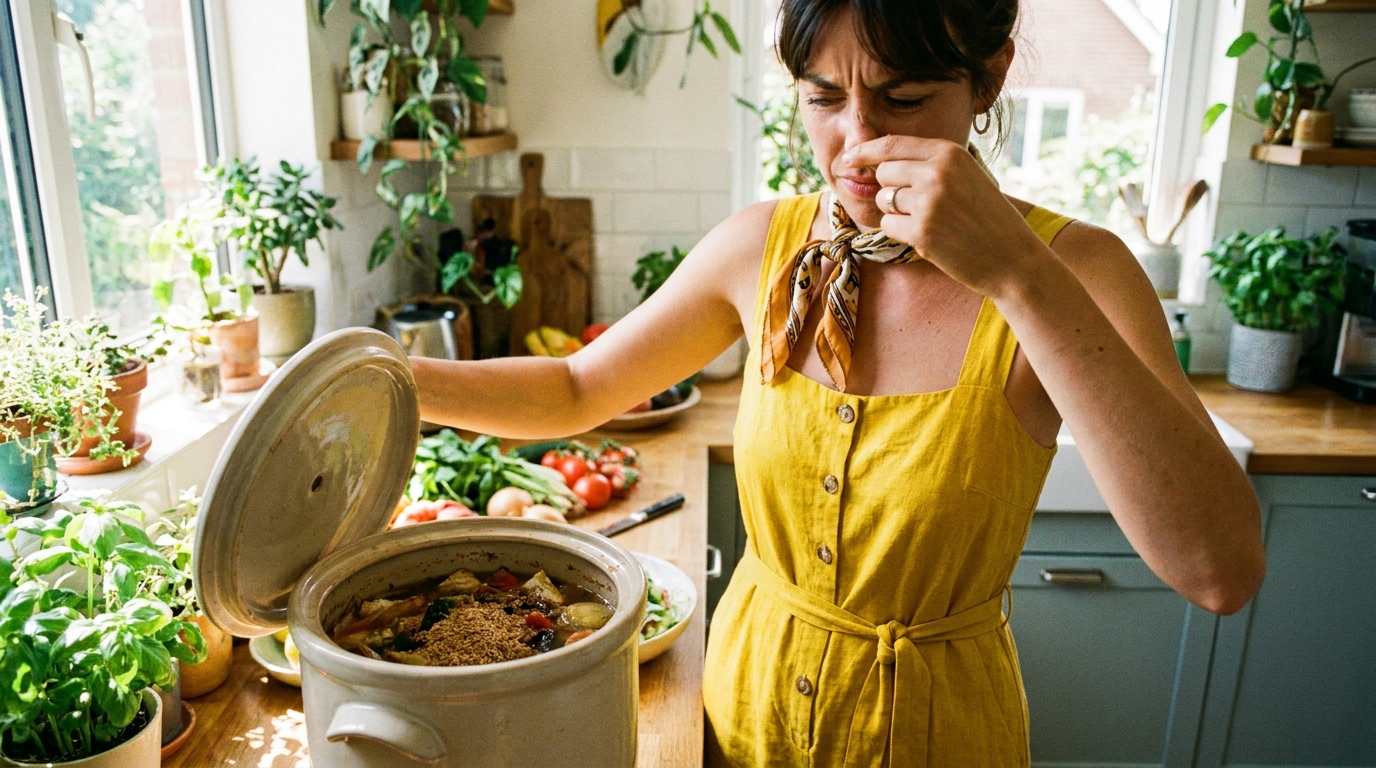
Mercury is rising, the air grows heavy, and suddenly a pestilent odor escapes from the kitchen or balcony: the compost bin can no longer bear the intense heat. Faced with this fermenting slop that draws an army of fruit flies in record time, the temptation to dump everything into the regular trash becomes enormous and entirely understandable. Summer often tests our ecological habits to the limit. Yet, this olfactory fiasco is usually tied to the absence of a single vital ingredient that is too often left out of the mix. It is entirely possible to maintain a pleasant zero-waste approach, even in the peak of a heatwave, provided you slightly revise your basics.
The grand secret of preparation for an ecosystem that resists the heat
Summer turns our interiors and exteriors into true saunas. Under the influence of these extreme temperatures, the decomposition process of organic matter accelerates drastically. The balance of the composter rests on a very precise dynamic: the meeting between nitrogen, supplied by fresh biodéchets, and carbon. Right now, the most common mistake is to throw only meal leftovers into it, without ever thinking to counterbalance that ample humidity. The absolute secret for keeping an urban compost healthy and odorless lies in a perfect balance between moist and dry materials. Without this harmony, fermentation overtakes natural decomposition, turning the bin into an anaerobic environment that releases particularly disagreeable gases. It suffices to reintroduce carbon-rich matter so that air can circulate again and the microorganisms can do their work without causing nuisances.
The dry brown materials to sprinkle after every deposit
To counteract this excess water caused by the daily addition of peels, a very simple gesture must become systematic. It is about adding the famous brown material, often neglected, whose role is to absorb the remaining moisture while structuring the heap. Here is the ingredient that must under no circumstances be forgotten after each visit to the bin:
- Chips of plain, unprinted cardboard without tape
- Egg cartons torn into small pieces
- Leaves, if the urban environment allows collecting them
- A handful of natural wood shavings
These elements act as little sponges that regulate the humidity level of the entire bin. The golden rule is to completely cover the fresh waste with one of these dry materials. This creates a natural barrier against fruit flies, which will be unable to lay eggs on the freshly deposited vegetable scraps.
These water-rich fruits that must be added sparingly to your mix
In the heart of summer, the diet naturally leans toward thirst-quenching fruits. Evenings are accompanied by generous slices of melon or watermelon. Unfortunately, the rinds of these summer fruits are real water bombs for the worm bin or balcony bin. Excessively watery, they break down by releasing liters of moisture that drown the precious worms and disrupt the soil balance. Likewise, very ripe orchard fruits like peaches or damaged apricots tend to macerate quickly. To prevent the tub from turning into a nauseating swamp, it is wise to cut these scraps into tiny cubes and spread their incorporation over several days. If the volume is too large, don’t hesitate to dry them in the sun for a few hours before disposing of them, or compensate with a double dose of kraft paper.
The indispensable fork stroke to properly aerate your preparation
Air is the cornerstone of odor-free decomposition. Oxygen allows the good bacteria to thrive and to vanquish those that cause foul rotting. When temperatures shoot up, this need for aeration is amplified. To guarantee good breathing for the whole, vigorously churn the material. Turn the compost once or twice a week using a small hand rake or a suitable tool. This simple action helps homogenize moisture, break up the compacted blocks that form in the corners, and oxygenate the medium. This regular turning is akin to gently waking the living organisms that work in silence to transform our plant scraps into a beautiful natural amendment.
The art of watching the cooking of your biowaste during temperature spikes
An urban gardener must develop a kind of intuition about the dynamics of their plant scraps. During a heatwave, the rule is to observe the material’s behavior closely. The internal temperature of the bin naturally rises with microbial activity, sometimes enough to produce heat upon contact. It is therefore essential to place it wisely: always in the shade of a wall or a lush plant, far from direct exposure to the sun’s burning rays. Odor is also a formidable indicator. A well-functioning compost should emit a scent of woodland after rain, a sign of fresh, forest-like soil. As soon as acidic or rotten cabbage-like fumes appear, that is the alarm signal: the bin is suffocating, crying out for its famous dry carbon ration.
The infallible method for harvesting high-quality fertilizer at the end of summer
By scrupulously respecting this delicate balance throughout the hot season, the effort will not be in vain. Towards the end of the sunny days, when the heat finally subsides, the pile of waste will have transformed into an invaluable treasure. To harvest it properly, stop feeding one section of the bin or let a full bin rest while you start another. The resulting amendment will be crumbly, dark, light, and rich in nutrients. It can be sieved before revitalizing tired balcony planters from the heat, or prepared to enrich the soil of future autumn plantings. This homemade potting soil will give an incredible boost to all your indoor and outdoor plants.
By adopting these simple habits, it becomes surprisingly easy to combine urban ecology and domestic comfort, even when temperatures soar. So, ready to give these peels the five-star treatment they deserve to sustainably fertilize the world of tomorrow?
