
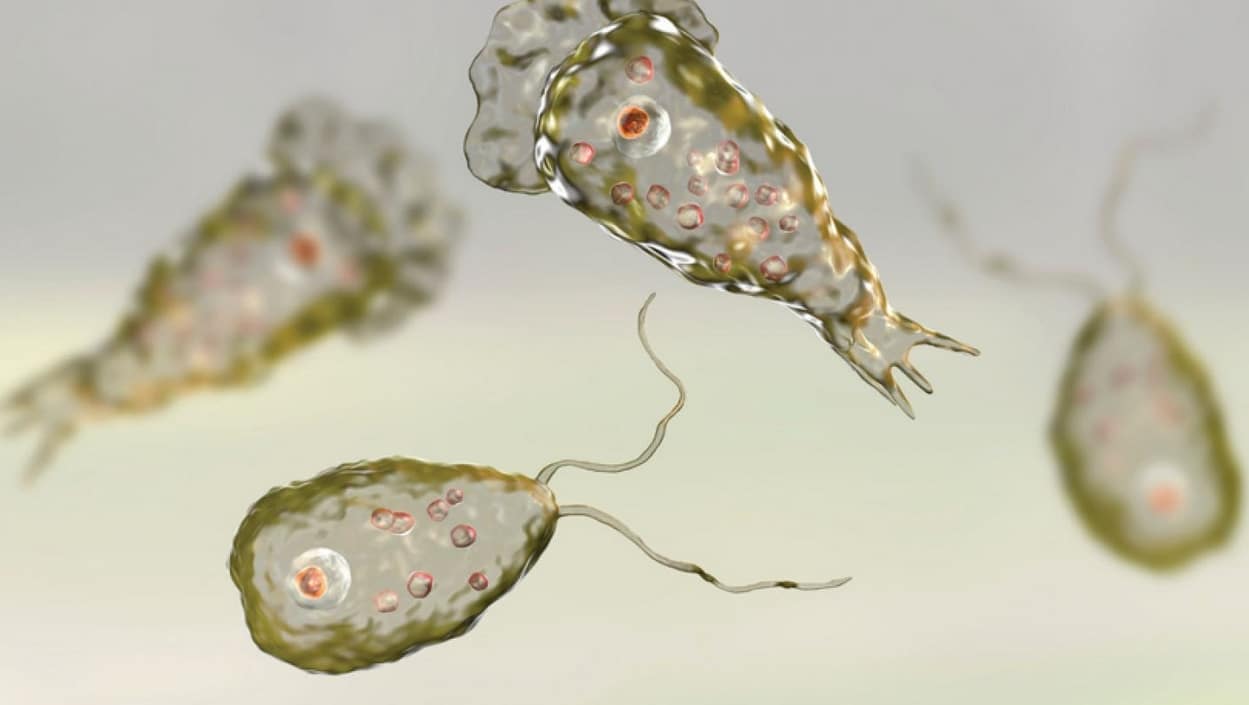
Not much of a problem in France, the brain-eating amoeba Naegleria fowleri requires the utmost caution when traveling to certain hot countries. According to experts, its proliferation could be fostered by current climate warming.
A very dangerous microorganism
As a reminder, amoebae are microorganisms belonging to various groups of complex eukaryotic cells. While many species exist, only one is nicknamed the “brain-eating amoeba”: the Naegleria fowleri. Unfortunately, this nickname is not by chance, since the amoeba in question can cause in humans a primary amebic meningoencephalitis (PAM), a very serious infection.
In an article published on June 3, 2026, the Washington Post interviewed Dennis Kyle, Director of the Center for Tropical Diseases and Global Emerging Infections at the University of Georgia (United States). According to him, PAM is a disease often misdiagnosed, mainly because of the rapid action of the amoeba. Indeed, this non-parasitic microorganism invades the brain and destroys brain tissue in just a few days.
The initial symptoms are common to other illnesses – nausea, fevers, headaches – but quickly give way to brain edema. Then comes the coma, followed by death. It is also worth noting that ingestion of the amoeba is completely harmless. The danger arises only when it enters through the nasal passages.
Extremely rare cases, but this could change
It should be noted that the brain-eating amoeba is found worldwide but especially in tropical regions and other hot-climate areas. It proliferates easily in soils, lakes, rivers, but also in warm freshwater. In far rarer cases, it can develop in poorly maintained swimming pools and other small bodies of non-saline water. Additionally, a case of contamination in tap water was observed in Texas in 2020.
In the current context of climate warming, the amoeba could see its proliferation facilitated. With the rise in temperatures on a global scale, new zones conducive to its development should logically appear over time. Moreover, these conditions that give rise to more hot spells could increase the number of people taking part in water-based recreational activities, as well as the frequency of these activities.
Finally, researchers from a study published in the Ohio Journal of Public Health in 2023 highlighted a significant increase in PAM cases in the northern United States. While the situation is increasingly alarming in areas usually unaffected, it should be noted that cases remain very rare. Across the Atlantic, authorities record fewer than ten cases each year. Nevertheless, it is not to be ruled out that in the coming decades the amoeba could become more problematic to the point of becoming a true global public health issue.
