
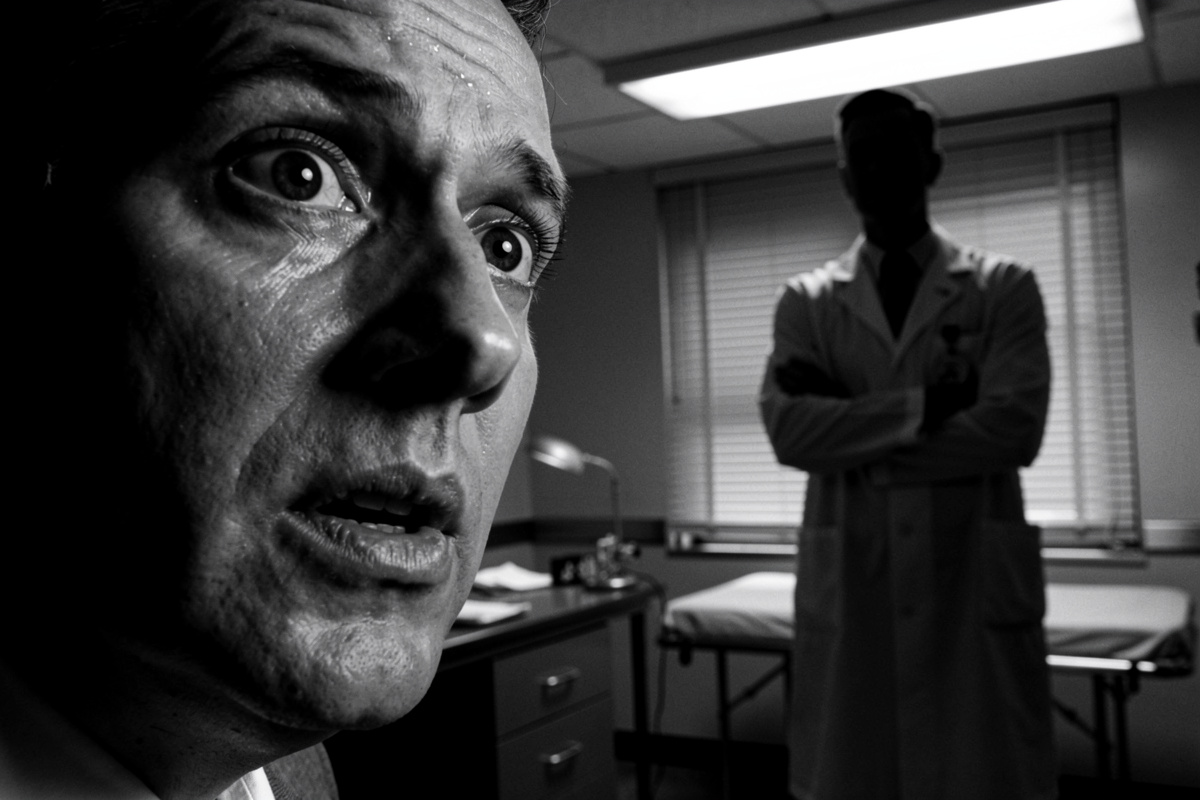
Imagine learning that you are seriously ill, with the sole person who could tell you choosing to stay silent on purpose. This scenario, hard to imagine today, was a commonplace medical practice for much of the twentieth century. The reason for this organized silence rested on a stubborn belief: telling a cancer patient the truth would hasten the decline, break a morale already fragile in the face of illness. For decades, Western medicine preferred protective falsehood over transparency, convinced that it acted for the patient’s good. This troubling history sheds a new light on our current relationship with medical information.
- In 1953, a survey of 444 physicians revealed that only 3% consistently informed their cancer patients of the diagnosis, while 69% never or rarely did.
- The American Medical Association’s first code of ethics explicitly advised physicians to avoid pessimistic prognoses and to prioritize informing the patient’s relatives rather than the patient themselves.
- In 1979, a Chicago survey showed a complete reversal: more than 90% of doctors now stated they preferred to announce the cancer diagnosis to their patients themselves.
- When Silence Became a Medical Prescription
- The Doctors’ Hidden Oath: Never Tell the Truth
- Chicago, 1961: The Survey That Unveiled an Organized Lie
- Patients vs. Doctors: The Silent Battle for Truth
- From Taboo to Right: What This Historical Shift Reveals
When Silence Became a Medical Prescription
There is a troubling paradox in the history of modern medicine. Repeated surveys have shown that the vast majority of people wish to know their cancer diagnosis, and this desire for transparency is even stronger among patients once the disease is declared. Yet, until a surprisingly recent period, this will to know collided with a wall of silence carefully maintained by the medical profession. The implicit injunction, handed down from generation to generation of practitioners, was to never reveal a cancer diagnosis directly to the person concerned.
This was not merely an informal habit: it was enshrined in the first code of ethics of the American Medical Association, which explicitly recommended that physicians avoid pessimistic prognoses. The text went further by advising to share information with the patient’s relatives or friends rather than with the patient themselves, except in cases of absolute necessity. A logic that seems unimaginable today, but rested on a belief deeply rooted in the profession.
The Doctors’ Hidden Oath: Never Tell the Truth
The philosophy behind this medical muteness rested on a sentence almost poetic, yet heavy with consequences: “The life of a patient can be shortened not only by the acts, but also by the words or the manner of a physician.” According to this view, it was a sacred duty to avoid anything that might discourage the patient or undermine their morale. Lying was thus not seen as a betrayal of trust, but as an act of benevolence, a form of therapeutic protection in its own right.
This attitude of benevolent deception endured for decades, supported by multiple justifications. A scholar observing a veterans’ hospital in 1966 highlighted the complexity of such decisions: few doctors truly knew their terminally ill patients well enough to judge their desire to be informed or their capacity to withstand such a shock. Other practitioners admitted they simply did not feel capable of handling such an announcement correctly, while some sought mainly to avoid that the patient would rely on them for emotional support too heavy to bear, or to preserve the service’s tranquility by avoiding any painful scene.
A 1953 survey of 444 physicians perfectly illustrates the scale of this organized silence: only 3% informed their patients systematically of a cancer diagnosis, 28% did so generally, and 69% admitted never or rarely doing so. The fear of a negative emotional reaction recurred as the most frequent justification. One participant summarized his stance: “For everyone, smart or not, the word cancer is synonymous with a death sentence.”
Chicago, 1961: The Survey That Revealed an Organized Lie
A study conducted in 1961 among 219 physicians in Chicago measured the scale of this practice with striking clarity. The result was unequivocal: 90% of the doctors surveyed stated that they did not usually inform their patients of a cancer diagnosis. Some even went so far as to alter the official diagnosis to remove any explicit reference, a maneuver more common when the cancer was deemed terminal and without hope of remission.
What makes this figure particularly striking is that, at the same time, other research already indicated that the vast majority of patients actually wished to know these details. A glaring mismatch thus emerged between patients’ true desires and the actual practice of care providers, revealing a medical system built on the assumption of the patient’s inability to confront the truth.
Patients vs. Doctors: The Silent Battle for Truth
This gap between patient expectations and medical practices did not endure indefinitely. Several factors gradually contributed to undermining the wall of silence. Medical scandals, notably the infamous Tuskegee syphilis experiments, deeply damaged public trust in traditional medical authority. This context also fit into a broader movement challenging figures of authority across society, including the doctor–patient relationship.
Therapeutic advances also played a dual role in this evolution. On one hand, they allowed doctors to announce a cancer diagnosis without necessarily disclosing the full, often bleak, prognosis—a nuance that still persists today. A 2008 study of 729 oncologists found that although 98% reported they would inform terminal patients that they would die, nearly half of them would only convey a precise prognosis if the patient explicitly expressed a desire to know. In other words, the era of total deception gave way to a more subtle tailoring of information.
From Taboo to Right: What This Historical Shift Reveals
The most dramatic reversal in this history is measured in a Chicago survey from 1979, almost twenty years after the first. Whereas in 1961 nine doctors out of ten refused to inform their patients, this time more than 90% stated they preferred to announce the cancer diagnosis themselves to the patient. A near-total turn in a single generation, emblematic of a profound transformation in the doctor–patient relationship, now viewed as a partnership rather than a dependency-driven, paternalistic protection.
That evolution does not mean all questions have been settled. The debate today continues about the exact nature of the information most appropriate to reveal, as well as the delicate ethical terrain surrounding medical deception, even when motivated by a wish to reassure.
From that organized silence of the 1960s to the proclaimed transparency of today, the path taken by Western medicine testifies to a deep shift in how the patient is viewed—now an active participant in their own care rather than a fragile being to be shielded from themselves. One question still traverses medical offices: how far should the truth extend, and who, the physician or the patient, should ultimately decide the dose of information to receive?
