
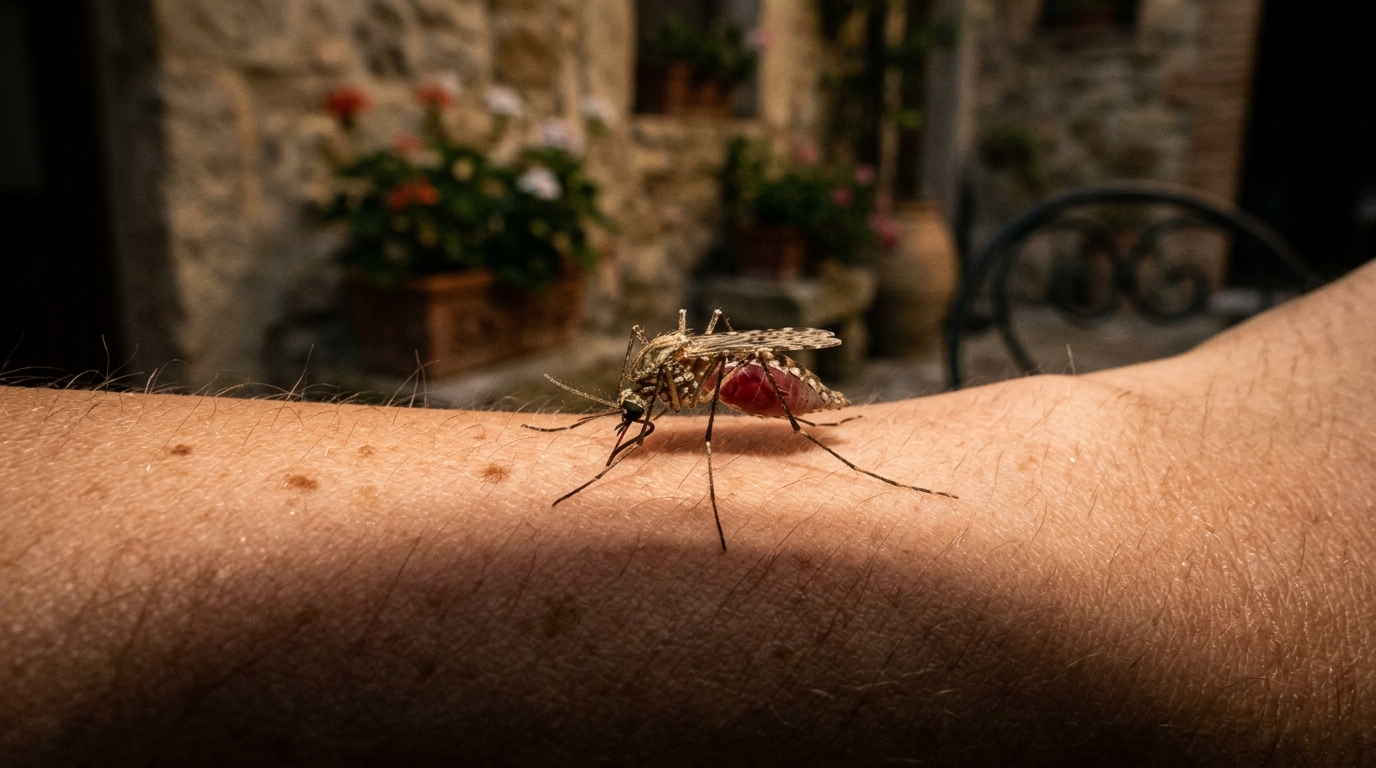
A mosquito bites an infected bird, then lands on your arm on a summer evening. You feel nothing, or almost nothing: that is the case for 7 to 8 people out of 10 who are infected. Yet behind this apparent banality lies a virus that progresses quietly across Europe. In the height of the summer season, as temperatures rise and mosquitoes proliferate, the World Health Organization has just sounded the alarm. West Nile virus is circulating, and while the vast majority of those infected notice nothing at all, a minority develop a severe neurological impairment, sometimes fatal. Here is why this virus deserves all your attention, and especially how to reduce your risk when no vaccine yet exists.
The virus riding on a mosquito, not passing through humans
To understand West Nile virus, imagine a three-link relay. It all begins with birds, which constitute the natural reservoir of the virus. A mosquito bites an infected bird, absorbs the virus with its blood meal, then goes on to bite a human at its next feast. It is this transfer, discreet and silent, that explains how the disease spreads among people.
Good news: the virus does not spread from one person to another through everyday actions. Shaking hands, sharing a meal, or living under the same roof as an infected person pose no danger. No human-to-human transmission through ordinary contact has been recorded. There are indeed rare pathways of contamination via transfusion, transplantation, pregnancy or breastfeeding, but they remain exceptional. In short, the mosquito remains the main, and virtually the sole, messenger of this virus.
Greece and Italy on the front lines: the figures that alarm the WHO
Recent data draw a worrying map. It is Greece that records the sharpest rise, with 21 confirmed human cases, 14 of them in the previous week alone. Of these 21 patients, twenty developed a neuro-invasive form, such as encephalitis or meningitis, and thirteen remained hospitalized. According to the Greek health authority, seven people have died from the virus this year in the country.
Italy, meanwhile, shows the broadest geographic distribution: 21 confirmed cases spread across 17 distinct zones, a sign that the virus is not concentrated in a single hotspot but is spreading widely. Elsewhere, Spain, Romania and North Macedonia have each recorded two cases. WHO Europe calls for strengthened mosquito surveillance and public information, especially since the transmission season is just beginning. In Europe, infections run from late spring to autumn, with a peak between July and September: in other words, we are now entering the most sensitive period.
Silent in 8 out of 10, devastating for one in 150
That is the troubling feature of this virus. Between 70 and 80% of infected people develop no symptoms. The virus circulates in their blood, but their body neutralizes it without them realizing it. For those who show signs, they often resemble flu-like symptoms: fever, headaches, muscle pains, nausea. Nothing that would spontaneously prompt urgent medical attention.
But there is a downside to this apparent mercy. Approximately one person in 150 infected individuals develops a severe form that attacks the central nervous system. The warning signs then radically change in nature: high fever, neck stiffness, disorientation, or even paralysis. This neuro-invasive form can prove fatal. It is precisely this contrast, between a majority that feels nothing and a minority gravely affected, that makes vigilance essential.
No vaccine, no treatment: why prevention is the only weapon
In the face of this virus, medicine today remains powerless on the therapeutic front. There is No human-approved vaccine, nor a specific treatment. Management is limited to symptomatic treatment and supportive hospital care for severe cases. In short, the best strategy is to avoid getting bitten.
The WHO’s recommendations are simple and within everyone’s reach. Here are the measures that reduce your risk:
- Wear covering clothing, especially in the evening when mosquitoes are most active
- Apply a repellent on exposed skin
- Install mosquito nets at windows and around beds
- Eliminate standing water near homes, true mosquito nurseries
This last point deserves particular attention. A simple plant pot saucer, an forgotten bucket, or a clogged gutter is enough to provide mosquitoes with an ideal breeding site. Climate change worsens the situation: higher temperatures and longer summers give these insects ever more favorable conditions for reproduction, pushing the virus toward new regions of Europe.
West Nile virus perfectly illustrates the sanitary paradox of our era: an invisible threat for the majority, but very real for a minority, whose spread is directly linked to the climate. In this summer period when mosquitoes are in full swing, a few simple reflexes are enough to limit the risks. The fundamental question remains: as summers warm, how far will these viruses once confined to the south advance toward the rest of the continent?
