
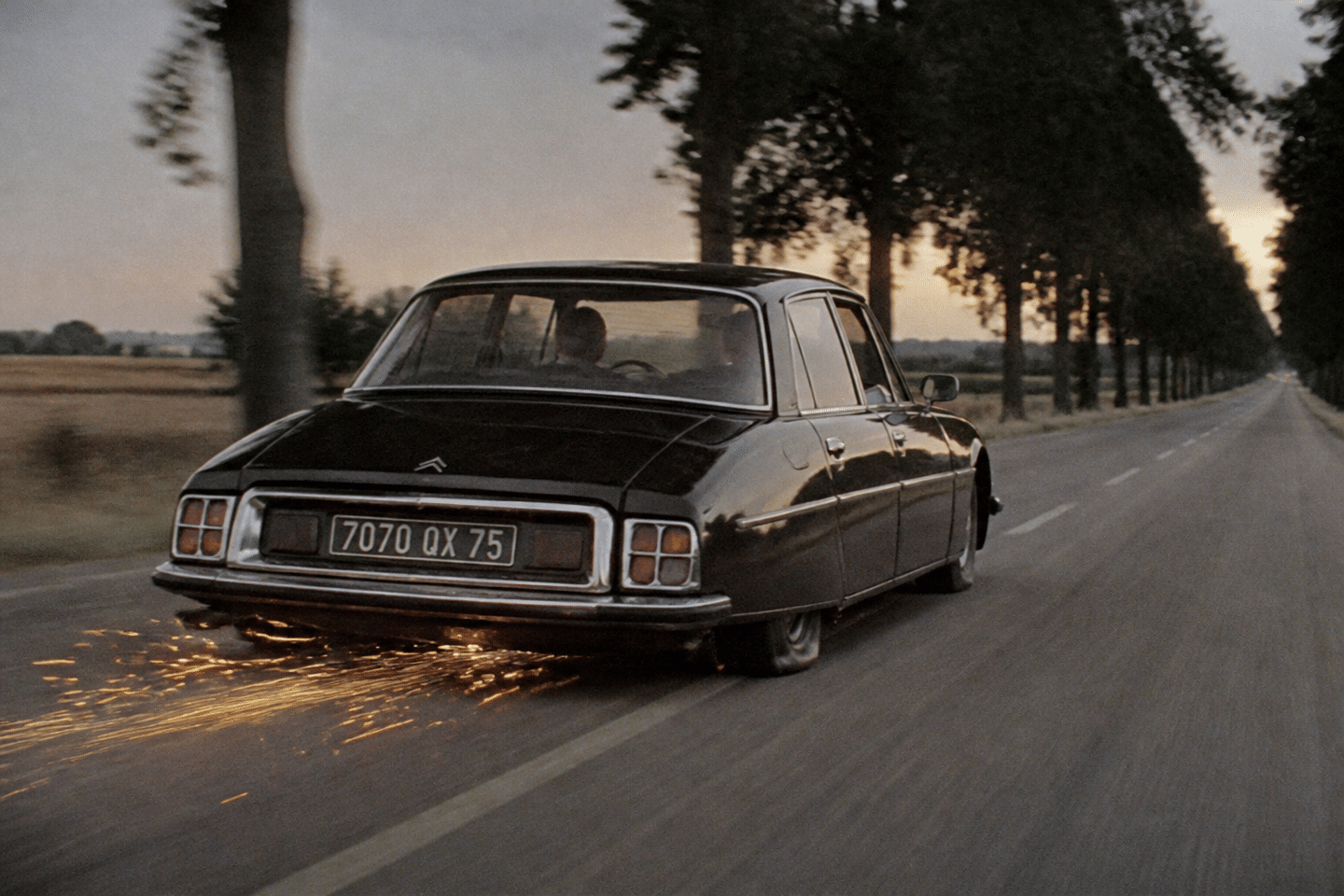
On August 22, 1962, a Citroën DS 19 was speeding along with two tires blown by bullets, never losing control of the road. On board, General de Gaulle escaped a determined commando intent on killing him. This spectacular episode would, unintentionally, become the car’s strongest commercial argument.
- On August 22, 1962, General de Gaulle’s DS 19 endured 187 shots and sustained 14 impacts during the Petit-Clamart ambush, without causing any injuries.
- Despite two punctured tires, the driver Francis Marroux managed to keep the vehicle under control thanks to the hydropneumatic suspension, which kept the body level.
- This episode gave Citroën a live demonstration of its technology, becoming, unintentionally, one of the brand’s strongest selling points.
- A failed assassination that changed the image of a car
- When twelve bullets are not enough to stop a DS
- From the Petit-Clamart ambush to the hydropneumatic suspension myth
A failed assassination that changed the image of a car
That evening, around 7:45 p.m., two unmarked Citroën DS 19s left the Élysée. They headed for Villacoublay Air Base, where a GLAM aircraft was to take Charles and Yvonne de Gaulle to Colombey-les-Deux-Églises. Nothing suggested what was about to unfold.
Inside the presidential car, the atmosphere was studious. De Gaulle and his wife were seated in the back, Colonel Alain de Boissieu, the general’s son-in-law and aide-de-camp, in the front. At the wheel, a discreet but determined man: Gendarme Francis Marroux.
Around 8:10 p.m., the convoy was caught in an ambush, about 300 meters from the Petit-Clamart roundabout on the RN 306. The operation, nicknamed Charlotte Corday by its perpetrators, was led by Lieutenant-Colonel Jean-Marie Bastien-Thiry. He signaled the attack simply by waving a newspaper.
When twelve bullets are not enough to stop a DS
The numbers are staggering. According to Caradisiac’s tally, 187 spent cartridges were recovered on the scene, and 14 impacts marked the DS’s bodywork. The car was not armored. Two of its tires were punctured during the fire.
Inside the cabin, Boissieu ordered Marroux to accelerate. Despite the wet roadway and the vehicle now riddled with bullets, the driver kept his cool. He was no stranger to danger: he had already piloted the presidential DS during the Pont-sur-Seine attack a year earlier, in September 1961.
What followed was almost a live, real-world demonstration of engineering prowess. Marroux sped toward Villacoublay Air Base with two tires out of service. The car shot forward, stable, as if nothing had happened. The General de Gaulle emerged from the cabin unharmed, not a scratch on him.
From the Petit-Clamart ambush to the hydropneumatic suspension myth
The reason for this extraordinary road-holding lay in a Citroën innovation: the hydropneumatic suspension. Unlike a conventional suspension resting on metal springs, this system uses pressurized fluid to continuously absorb the road’s irregularities. Even with a punctured tire, the body remains level, carried by this invisible hydraulic cushion.
It is precisely this mechanism that allowed the DS to continue at high speed despite the two damaged tires, never skidding or losing its ride. A promotional argument Citroën did not even need to invent: reality took care of it, before the eyes of all of France.
The story then took on a nearly romantic turn. The damaged DS was repaired, its bullet holes carefully erased, and sold in October 1964 to General Robert-Pol Dupuy, the very man who had recommended Marroux as the head of state’s driver a few years earlier. As for the model displayed today at the Charles de Gaulle Museum in Lille, it is actually only a reconstruction, a detail revealed by Le Monde in a 1999 article titled The Fake DS of Petit-Clamart.
One fact remains hard to dispute: that August evening in 1962 transformed a car into a symbol. The DS did not merely save a president; it proved, under the most extreme conditions possible, the relevance of a technology that its engineers sometimes struggled to popularize with the general public. No advertising campaign could have imagined a more convincing demonstration.
👉 A small gesture for Space Group? Follow us on Google, add us to your bookmarks, and find us on Google News so you don’t miss any discoveries.
