
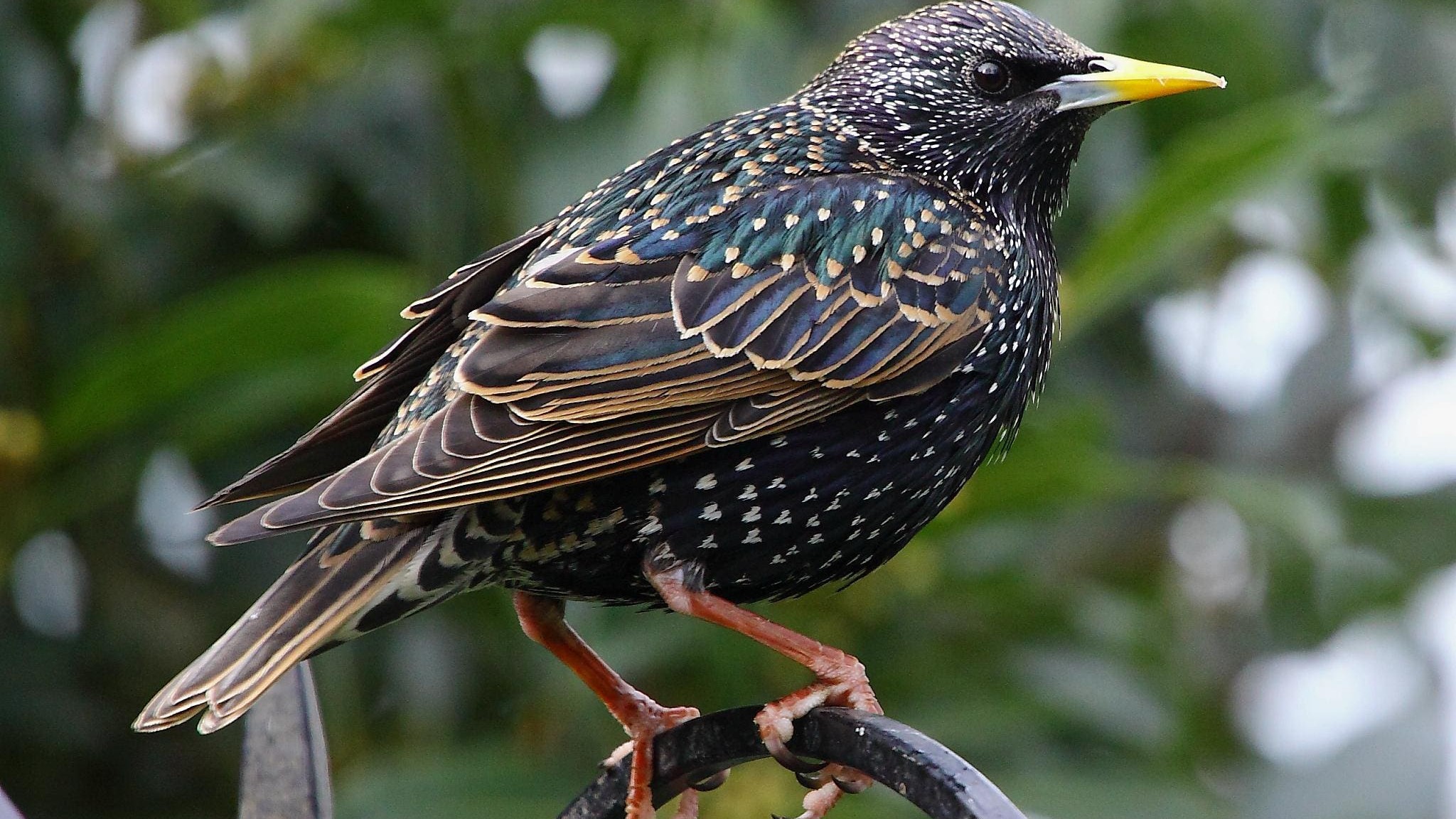
Sixty birds. That was all it took to populate a continent with two hundred million individuals. On March 6, 1890, a man named Eugene Schieffelin released a fateful cage of birds in Central Park. This date is generally considered the zero point of the North American starling invasion: Schieffelin released 60 members of the species, then 40 more in April of the following year. A century later, the species ranges from Alaska to Mexico, with an estimated population of 200 million birds. The equation fits in one sentence: a hundred birds at the start, two hundred million at the end. A multiplier of two million.
Key takeaways
- How could a hundred birds have transformed into two hundred million in less than a century?
- Eugene Schieffelin: a forgotten name that reshaped an entire ecosystem
- Are starlings really responsible for the deaths of 62 airline passengers?
A New York Pharmacist Obsessed with Shakespeare
Who was this man capable of overturning an entire continent’s ecosystem by himself? Eugene Schieffelin was a pharmacist and a nature enthusiast who left few traces of himself. A member of an acclimatization society, at a time when this sort of organization was fashionable and supported by the scientific knowledge of the era, when the effects of non-native species on local ecosystems were not yet understood. According to the most widespread legend, his gesture was part of a larger and particularly eccentric project: to reintroduce in the United States every bird mentioned in Shakespeare’s works.
The anecdote has a certain appeal, but it deserves nuance. Historians who studied the history in detail have found that Schieffelin’s story is almost entirely fictional, the man’s biography and the acclimatization society’s statutes not mentioning such a Shakespearean project. What is certain, however, is the result: Schieffelin’s introduction of starlings was not the first attempt—others had already tried and failed—but it was the first that succeeded. Other attempts to introduce European birds, nightingales or skylarks, had ended in crushing failures before him.
The contrast is striking: why did the starlings succeed where so many other species disappeared within months? Introductions of skylarks, thrushes, and bullfinches had all failed, and even a prior attempt to introduce starlings in the United States fifteen years earlier had fizzled. This time, however, fate decided differently. They survived that winter, then the next, and began to multiply.
A Lightning Conquest, from One Ocean to the Other
The speed of the expansion is nothing short of a biological miracle. In fifty years they had covered the entire continent; in a century they were 200 million strong. The milestones of this conquest are documented with precision: by 1928, European starlings had reached the Mississippi, and by 1942 they had reached the West Coast. In a little more than half a century, the species had crossed a territory as large as fifteen times France.
The secret of this meteoric success? A biology tailored for conquest. Starlings raise two broods per year with about four to six eggs per clutch, more than most native birds. Added to this is an opportunistic diet: unlike their native counterparts, starlings are generalists and eat a broader range of foods. Researchers at Cornell even suspect a hidden genetic edge: a study suggests that starlings possess genetic advantages that help them adapt more quickly to different environments.
The story does not stop at American borders. The scenario repeated itself elsewhere in the world at roughly the same time: in southern Africa, the starling was introduced in 1897 around Cape Town and is today the region’s most common bird. Proof that Schieffelin was not an isolated case, but a symptom of an era fascinated with the acclimatization of species, without fully measuring the consequences.
The Ecological and Economic Bill of a Literary Whim
Two hundred million birds do not merely chirp in gardens. Starlings are now widely criticized as an invasive species that displaces native birds and causes nearly a billion dollars in agricultural damage each year. The figure is confirmed by several independent studies, which estimate agricultural losses at around $800 million annually.
The competition for nesting sites is just as fierce. Being cavity-nesters par excellence, starlings move in unceremoniously into tree holes and bird boxes already occupied. They are cavity-nesters that seize the sites of our native species, such as woodpeckers, nuthatches, and swallows. Woodpeckers, nuthatches, swallows: many local species ousted from their own habitat by arrivals from Europe on a March morning in 1890.
The danger extends far beyond fields and gardens. These gregarious birds, capable of forming flocks of several thousand individuals, pose a documented aviation hazard. On October 4, 1960, Eastern Air Lines Flight 375 clipped a large flock of starlings on takeoff from Boston’s Logan Airport, killing 62 of the 72 passengers aboard. A figure that pales in comparison to the fact that at the origin, it all fit in two crates.
A Population Today in Slight Decline
Faced with this proliferation, American authorities have not held back. The United States classifies the species as invasive and does not protect it under the Migratory Bird Treaty Act, so hundreds of thousands of starlings are culled each year. The Department of Agriculture reports eliminating 1.5 million birds in 2012 and about 700,000 in 2019.
Are these campaigns finally bearing fruit? The latest surveys suggest a leveling off of the population after more than a century of uninterrupted growth: the birds are now regarded as nuisances and their numbers are in decline, with recent estimates placing the North American population at around 140 million individuals. From 200 to 140 million, the drop is modest: the starling remains, by far, one of the continent’s most abundant birds, a century and a half after the Manhattan pharmacist’s literary whim.
Sources: read.dukeupress.edu | invasivespeciesinfo.gov | invasive-species.extension.org
