
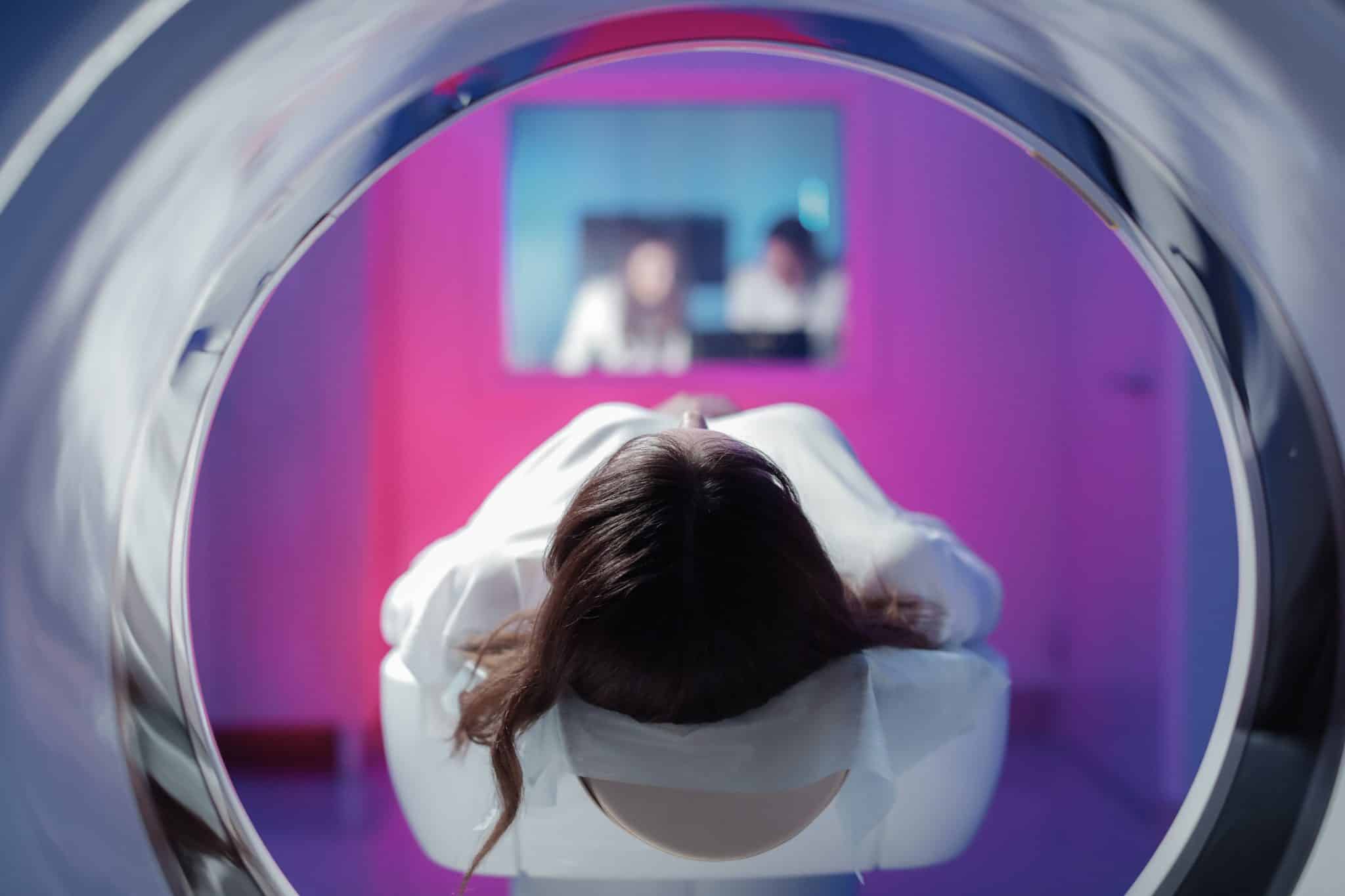
During a routine medical examination, a woman endured a painful incident when her concealed handgun was accidentally discharged by a magnetic resonance imaging (MRI) scanner. The incident report was submitted to the Food and Drug Administration (FDA) earlier this year.
A Woman Narrowly Escaped the Worst
The accidental discharge occurred on June 28. The anonymous 57-year-old woman entered the MRI suite with a concealed ferromagnetic handgun. As she was about to enter the machine, the weapon was drawn toward the powerful magnet inside and fired a single shot into and through her right buttock. Fortunately, the injury was minor and the patient recovered well.
“The patient was examined on-site by a physician who described the entry and exit wounds as very small and superficial, penetrating only the subcutaneous tissue,” the report notes, adding that before the exam she had undergone a standard screening for magnetic objects that normally includes firearms. She had also confirmed that she did not have any of these objects on her person.
The incidents of this type highlight the potential dangers of magnetic objects near MRI machines.
How MRI Scanners Work
These devices operate by generating strong magnetic fields and radio waves that target the hydrogen nuclei in water, which make up about 70% of the body. The protons in these nuclei align uniformly when exposed to a powerful magnetic field, creating a magnetic vector along the MRI axis.
When additional energy in the form of radio waves is applied, the magnetic vector is deflected. The frequency of this radio wave, which drives the resonance of the hydrogen nuclei, depends on the target element (in this case, hydrogen) and the strength of the magnetic field. When this wave is deactivated, the magnetic vector returns to its original state, emitting a signal, also in the form of a radio wave. It is this signal that is used to generate the images in an MRI. The introduction of metallic objects is prohibited here to the extent that they disrupt this process due to interaction with the magnetic field, which can lead to incidents.
Fortunately, the story here ended with little injury to the patient. However, that has not always been the case. In February of last year, a man indeed died in the United States from his injuries after also bringing a concealed weapon into an MRI suite. According to some reports, the weapon was removed from his belt and drawn toward the machine before discharging into his stomach.
