
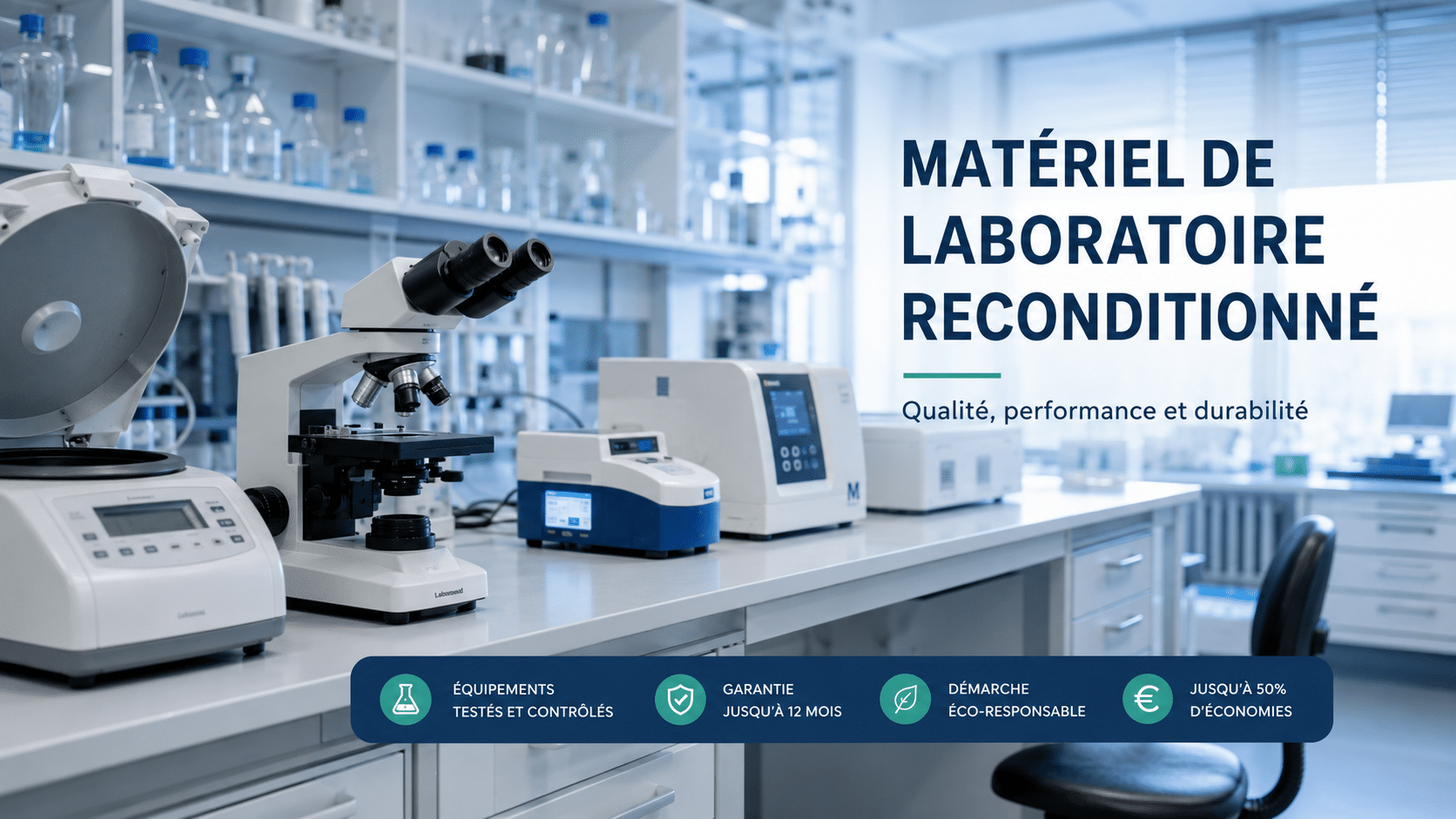
For a long time, the purchase of new scientific equipment was considered a given. Yet shifts in research budgets, longer procurement times, and environmental concerns are now pushing many laboratories to rethink their investment approach.
The refurbished laboratory equipment thus experiences significant growth, both in research laboratories and in universities, hospital settings, and the pharmaceutical industry. This evolution answers a simple reality: it is now possible to acquire reliable, high-performing, and guaranteed equipment while substantially reducing the upfront costs of acquisition.
Refurbished is no longer limited to used gear
There remains a confusion between used equipment and refurbished equipment.
A refurbished piece of equipment undergoes a comprehensive process that includes inspection, cleaning, technical checks, functionality tests, and, if necessary, replacement of wear parts. The aim is to restore the device to optimal working condition before it returns to the market.
This approach allows laboratories to access equipment from major brands while benefiting from a high level of reliability. In many cases, devices are also offered with a warranty and technical support, providing additional assurance at the time of purchase.
Rewake, a recognized player in scientific refurbishment
In France, several companies have specialized in this sector. Among them, Rewake has today established itself as one of the reference players in the market for pre-owned laboratory equipment.
The company offers thousands of refurbished scientific equipment items spanning numerous categories: centrifuges, CO₂ incubators, microscopes, HPLC, spectrophotometers, laminar flow hoods, -80 °C freezers, and many other devices used in research and analytical laboratories.
Each piece of equipment undergoes a rigorous control process before being marketed. The devices are inspected, tested, and prepared to ensure a high level of reliability. This approach enables laboratories to invest confidently in high-performance equipment while achieving substantial savings compared with new purchases.
A response to the new challenges faced by laboratories
Beyond the economic aspect, refurbishment also addresses current sustainable development challenges.
Extending the life of scientific equipment helps limit electronic waste generation, reduce the carbon footprint associated with manufacturing new devices, and promote a more responsible use of resources.
This approach is now appealing to an increasing number of laboratories that wish to combine scientific performance, budget control, and environmental responsibility.
A trend that is set to intensify
The market for scientific equipment is evolving rapidly, and refurbished gear is progressively establishing itself as a genuine alternative to new devices. Advancements in inspection procedures, the warranties offered, and the availability of equipment strengthen the confidence of professionals.
For laboratories looking to invest over the long term, solutions involving refurbished laboratory equipment now constitute a credible answer, combining quality, availability, and cost management.
As economic and environmental demands continue to rise, refurbishment is expected to occupy an increasingly important place in the equipment that powers scientific laboratories.
