
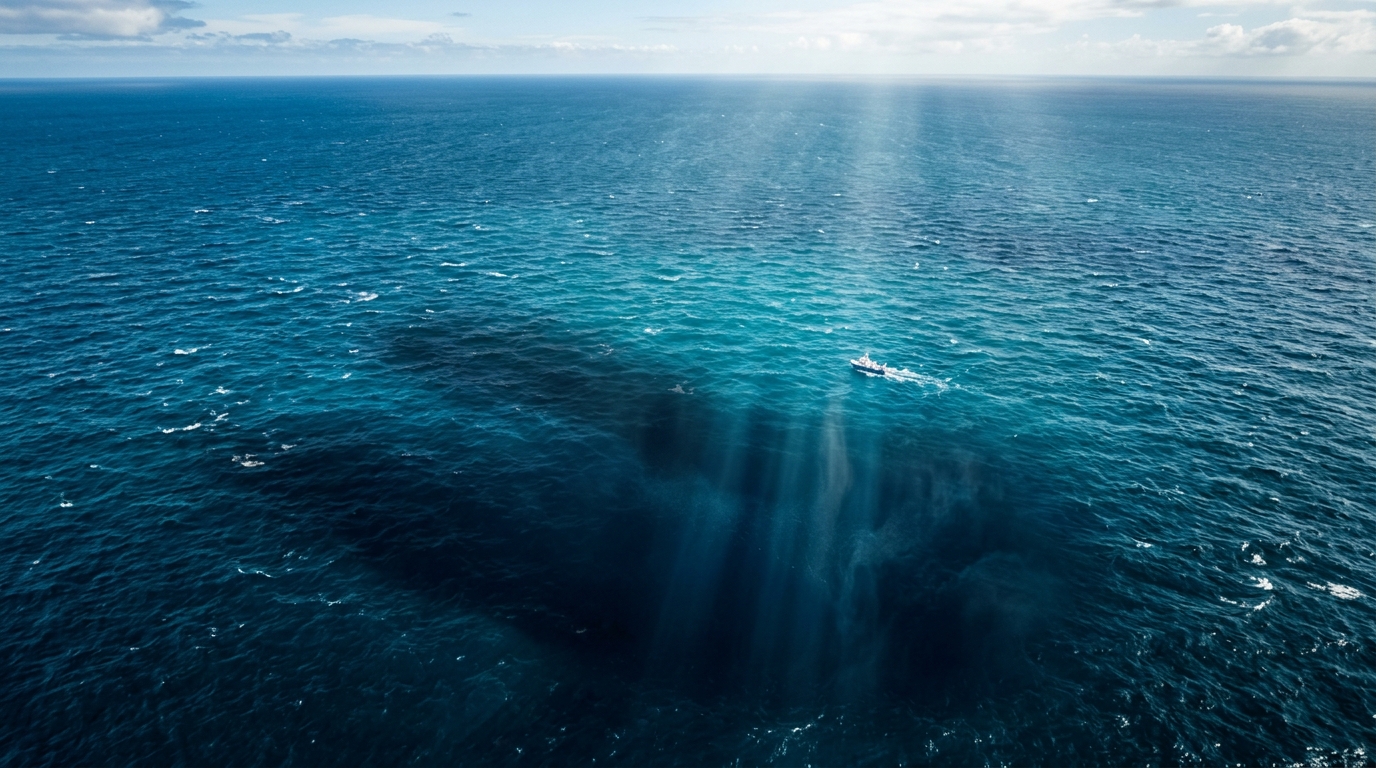
Imagine a creature measuring thirty meters in length gliding silently through the ocean’s depths, performing a job that would be more effective than an entire forest in slowing climate change. It sounds far-fetched, almost as if it were lifted from the plot of an animated film, and yet: this is precisely what a recent analysis from the International Monetary Fund suggests. In the midst of the season when we are urged to plant trees to offset our emissions, this revelation unsettles certainties. And what if the real solution has been swimming right before our eyes all along, without anyone paying it proper attention?
- According to the IMF, a single large whale stores as much carbon as 2,000 birch trees, thanks to its body storing CO2 throughout life and sequestering it for centuries on the ocean floor after death.
- The excretions of whales fertilize phytoplankton, a marine organism that produces a large share of Earth’s oxygen and captures CO2 on a planetary scale.
- Protecting whales requires concrete measures such as adjusting maritime routes, reducing underwater noise pollution, combating illegal fishing, and preserving their feeding and breeding zones.
- The IMF Drops a Bombshell in the Climate-Solutions Debate
- The Hidden Power of the Ocean Giants
- Whales and Trees, a Winning Duo Rather Than a Dilemma
The IMF Drops a Bombshell in the Climate-Solutions Debate
When one thinks of natural solutions to climate change, the immediate image is often a dense, green forest calmly absorbing CO2 from the atmosphere. Yet the IMF has proposed a far less conventional path: protecting the large whales. In its analysis, the international financial institution examined the role of these marine mammals in the carbon cycle—an area that has long languished in the shadows of climate policy. The idea may surprise, given how accustomed we are to equating climate action with reforestation. But the numbers push back against this simplistic view and invite us to look at the oceans with fresh eyes.
The Hidden Power of the Ocean Giants
The whales’ secret lies in their very biology. These animals store enormous amounts of carbon in their bodies over their lifespans, which can span decades and, in some species, well over a century. When a whale dies and sinks to the ocean floor, this carbon is sequestered for hundreds, even thousands, of years. This is what is known as the blue carbon pump. But their role does not end there: their feces, rich in iron and nitrogen, fertilize the phytoplankton—this tiny marine organism is responsible for a large share of the oxygen we breathe and for the global capture of CO2. According to IMF estimates, one whale absorbs as much carbon dioxide as 2,000 birch trees. A figure that leaves one’s head spinning and reframes the effectiveness of some forest-planting campaigns in the face of a single well-protected cetacean.
This observation raises a legitimate question: why do whales remain so underrepresented in climate discussions? Perhaps because they live far from sight, in an environment we understand less well than our land forests. Planting a tree is a concrete, visible gesture—almost symbolic. Protecting a whale, by contrast, requires international policies, monitoring of shipping lanes, and anti-poaching efforts—actions that are less spectacular but no less decisive.
Whales and Trees, a Winning Duo Rather Than a Dilemma
Should we, for all that, abandon reforestation projects in favor of cetacean protection? Absolutely not. The ideal would be to combine the two approaches rather than pit them against each other. Forests play a crucial role in local climate regulation, the preservation of terrestrial biodiversity, and the fight against soil erosion—benefits that whales obviously cannot provide. Meanwhile, the oceans cover more than 70% of the Earth’s surface and remain largely underexploited for natural climate solutions. Relying solely on land would mean overlooking a vast portion of our planet’s potential.
Concretely, protecting whales involves several levers accessible to public policy:
- Reduce collisions with ships by adjusting maritime routes
- Limit underwater noise pollution, which disrupts their communication
- Strengthen the fight against illegal fishing and ghost nets
- Preserve feeding and breeding areas
This IMF report is commendable for reminding us that there is no single miracle solution to climate change, but rather a set of complementary levers to activate. Right now, as discussions on climate strategies proliferate, this marine avenue clearly deserves a seat at the negotiation table, alongside reforestation projects.
So the next time someone mentions planting trees as a gesture for the planet, perhaps we should also think of these quiet giants roaming the oceans, whose very survival already provides an invaluable service to the climate.
👉 A small gesture for Space Group? Follow us on Google, add us to your bookmarks and find us on Google News so you don’t miss any discoveries.
