
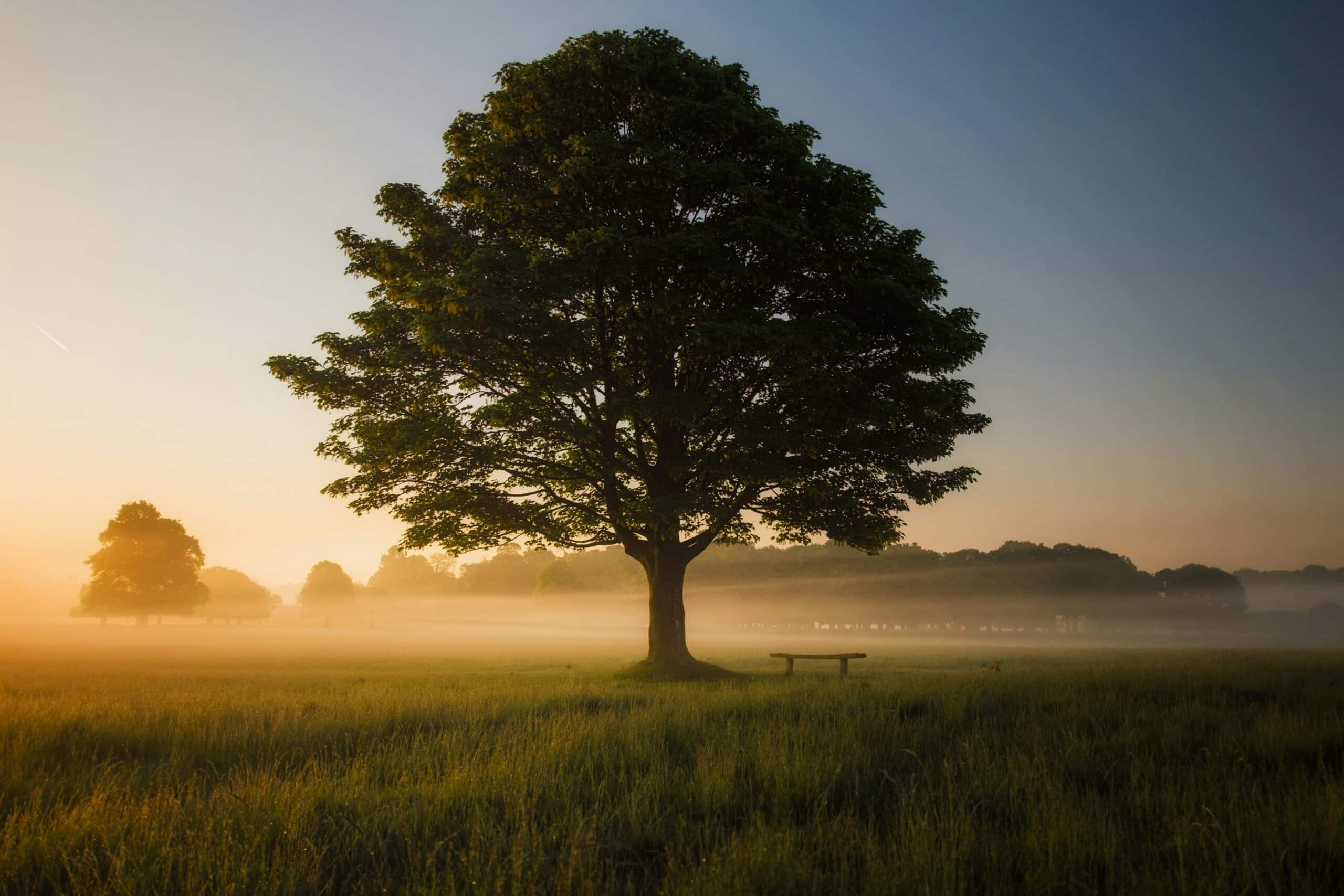
According to the most comprehensive analysis of its kind to date, there are more than 70,000 tree species worldwide. Among this sample, several thousand species have yet to be discovered.
9,200 species still unknown
You may be surprised to learn that there are about 73,000 species on Earth, according to estimates from the most thorough analysis of its kind to date. The study involved more than 140 scientists worldwide, drawing on the largest forest databases assembled to date. This new global estimate is about 14% higher than the currently known number of tree species. Thus, researchers estimate that nearly 9,200 species have not yet been discovered.
According to the analysis, about a third of these undiscovered species are likely to be rare and highly localized. Consequently, they could be vulnerable to extinction due to changes in land use and the climate crisis. Some species could also disappear before scientists have a chance to identify and describe them.
This is precisely why the study is so important. Indeed, this work provides the tools to map the most probable places where new species might be found. If successful, researchers could then implement immediate actions aimed at protecting them.
To reach this result, the researchers combined two massive global datasets, one from the Global Forest Biodiversity Initiative and the other from TREECHANGE, to establish the abundance and occurrence of trees in 90 countries. It took many years to assemble these data, often requiring specialists to travel on-site to collect samples, measure, and count each individual tree. Up to two-thirds of all known tree species are found in humid tropical and subtropical forests that are often difficult to access.
An old statistical method
To estimate the number of species yet to be discovered, the researchers relied on Good-Turing frequency estimation. This was developed by Alan Turing and his assistant Irving Good as they attempted to crack the German Enigma machine’s codes during World War II. The theory has been adapted here by Taiwanese statistician Anne Chao.
« Ecologists have discovered that there is a lot of hidden information in the number of species that appear only once or twice or three times in a large sample, like the one we collected« , explains Peter Reich, forest ecologist at the University of Michigan. « If among a million individual trees we find 800 species, but all at least 17 times (I’m simply making up these figures for illustration), it is then unlikely that many additional species exist (because the rarest in our sample have already been encountered several times).
« On the other hand, the higher the number of species that are found only once (and we found many), the higher the number of species that are also rare but likely not yet encountered by chance. And the larger the ratio of species we found once to twice, and those we found twice to three times, the larger the estimate« , the researcher continues.
The analysis of all these data thus yielded a total of 64,100 tree species, to which 9,200 undiscovered species are added. Of this sample, 40% of them would be located in South America, according to the article published in the Proceedings of the National Academy of Sciences (PNAS).
