
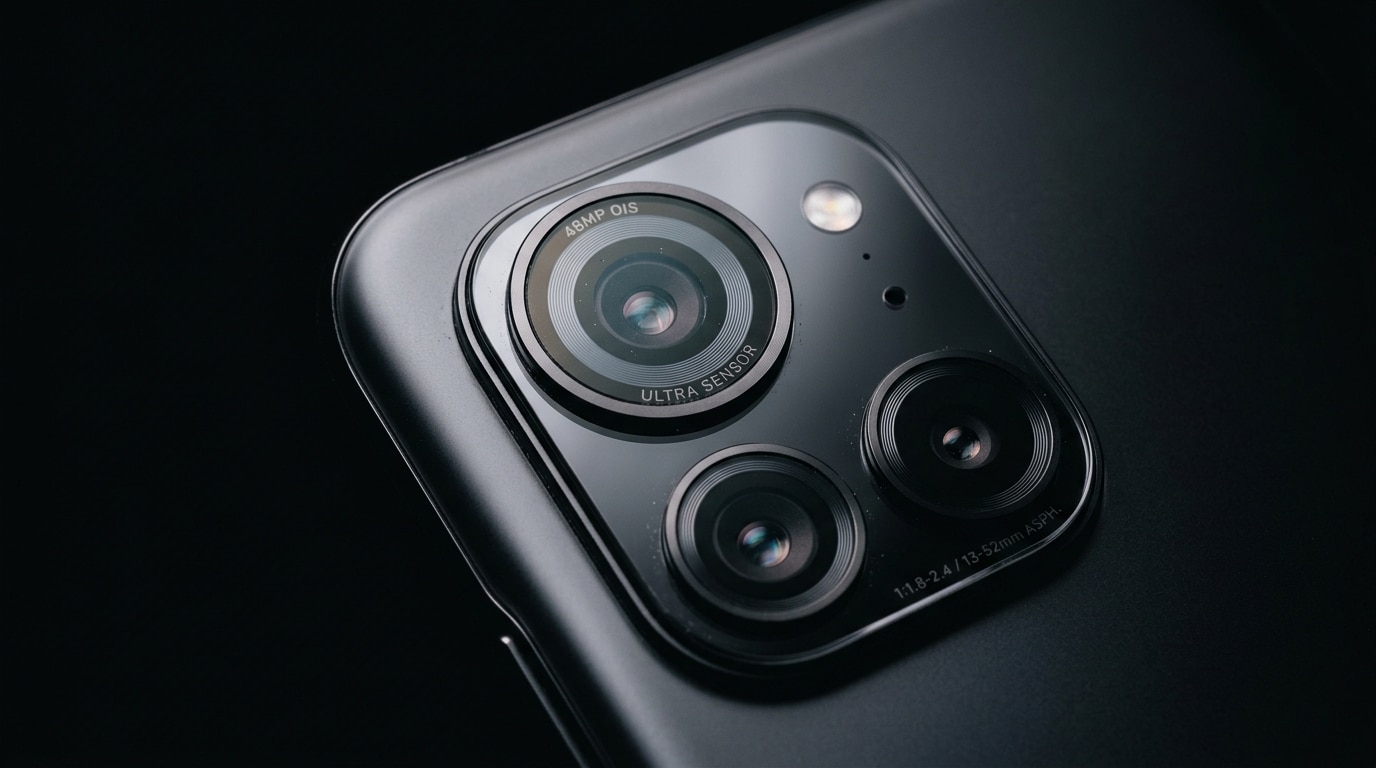
Every morning, the same reflex takes over: you glance at your phone, it unlocks in a blink, and your day begins. This seamlessness carries a certain reassurance, almost magical. Our face seems to have become the ultimate key, a key impossible to copy because it is unique. Yet this trust rests on a stubborn misunderstanding. Because recognizing a face and confirming that it belongs to someone who is truly present are two radically different things. Many systems stop at the first step and skip the second. As a result, a simple photograph, a well-crafted mask, or a lit screen can sometimes fool the device. Here’s why your face does not always prove what you think it proves.
Recognizing a face has never meant recognizing a person
To grasp the flaw, one must understand how classic biometrics operate. When a phone stores your face, it actually keeps a set of static data: the distance between your eyes, the shape of your jaw, the position of your nose. Each time you unlock, the device compares the captured image to this registered model. If the resemblance crosses a certain threshold, the door opens. Simple, fast, effective.
The problem is that this logic never asks a crucial question: the face I’m looking at, does it belong to a living, present person, or to an artifact? A stored fingerprint, a high-quality photo, or a mold share the same measurable traits as the original. To a permissive sensor, they are indistinguishable. This is what we call a presentation attack: you present a lure to the system that faithfully reproduces the expected data, and the game is won.
Photos, masks and screens: the invisible arsenal that tricks your sensor
Methods for bypassing a facial authentication system fall into well-documented categories. There are photo attacks, where a simple image printed out or displayed on a screen is enough. Video attacks add motion to appear more credible. Mask attacks range from paper models to elaborate 3D-printed moulages. And finally, 2D or 3D models capable of reproducing the volumes of a real face.
The most vulnerable systems are those that rely on two-dimensional imagery. Lacking thorough texture or depth analysis, they struggle to distinguish a real face from a carefully crafted photograph. On the fingerprint side, the tale isn’t more reassuring: fake fingers can be manufactured from surprisingly common materials, such as latex, modeling clay, or Ecoflex. And the origin of spoofed data can even be passive: a fingerprint left on a glass can sometimes trigger the copy, with the victim having no involvement whatsoever.
Liveness detection, that safeguard everyone ignores
Here lies the heart of the problem and its solution: the liveness detection. This security measure does more than compare features; it verifies that the sample comes from a person who is physically present, not from an artifact. It tracks micro-movements, the natural reflections of the skin, the true depth of the face, the blinking of the eyes—signals that a photograph or a mask cannot reproduce. Without this step, an identity system becomes a lock for which the key can be fashioned from a simple image.
This requirement is not left to chance. An international standard, the ISO/IEC 30107, precisely frames these tests by defining the framework for detecting presentation attacks. The stakes are enormous: it is estimated that more than 1.2 billion mobile devices will soon combine facial recognition with liveness detection, while a large majority of organizations handling sensitive data progressively adopt biometric authentication. Yet the risk continues to evolve. Injection attacks, which slip fake data directly into the system’s data stream, and deepfakes have today become the dominant vectors of threat, faster than the defenses intended to stop them.
Take back control of your biometric security today
Does that mean you should abandon facial recognition? Certainly not. But it is useful to understand what your device actually checks. Modern systems that pair depth sensing with liveness analysis offer far stronger protection than those relying on a flat image. Favor these technologies, enable security updates, and never make biometrics the only line of defense.
The good old code, often dismissed as outdated, retains its value as a complement. Two-factor authentication adds a layer that no photo or mask will bypass. Because robust security never rests on a single barrier, but on an stacking of verifications that reinforce one another.
Ultimately, our face remains a powerful identification tool, provided the machine does not simply recognize it but ensures that it is truly alive. In a world where digital decoys are growing more convincing, the real question is no longer “does this face resemble me?”, but “does this face breathe?” And if the next major security battle hinges precisely on this detail we once took for granted, what does that say about the future of our safeguards?
