
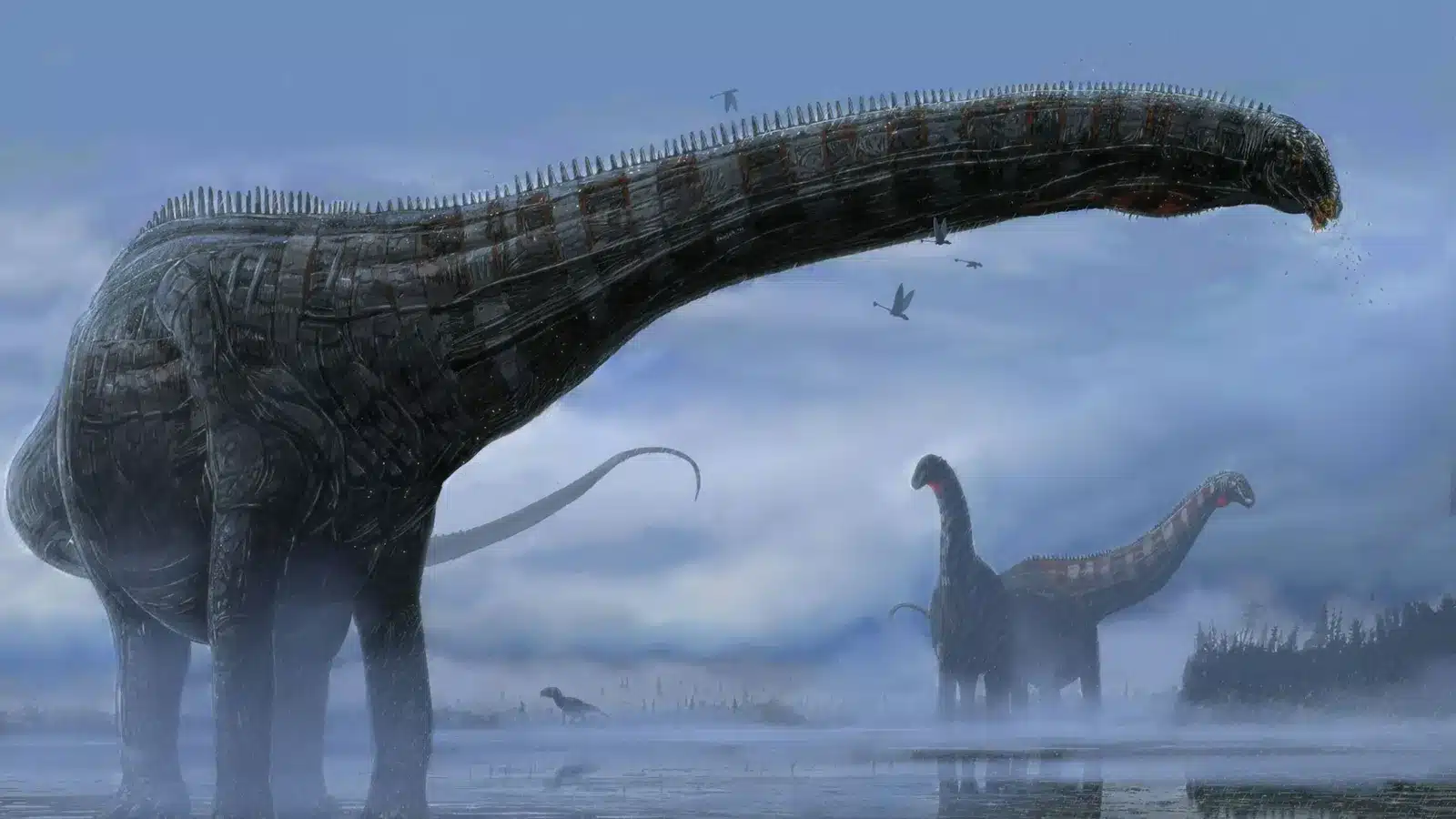
Eighty million years ago, on the arid plains of what is now Brazil, some of the largest creatures to walk the Earth fell prey to a fearsome disease: a severe bone infection known as osteomyelitis. New research now reveals that even the giants that were the sauropods were not spared by the invisible pathogens that moved through their environment.
Fossils Marked by the Disease
The discovery, reported in The Anatomical Record, is based on the study of several sauropod bones unearthed in the São José do Rio Preto formation, a region renowned for its wealth of fossils. These giant herbivores, recognizable by their long necks and imposing silhouettes, inhabited the area around 80 million years ago, towards the end of the Cretaceous period.
Researchers, led by the Regional University of Cariri (URCA) in Brazil, identified lesions characteristic of osteomyelitis in the fossil remains of six individuals. Analysis with electron microscopy and a stereo microscope revealed a spongy texture in the infected zones, a sign of the presence of blood vessels within the affected tissues. These clues leave little doubt: the sauropods studied suffered from a bone infection at the time of their death.
An Infection with No End
Osteomyelitis is a disease that still occurs in modern times among mammals, birds, and reptiles. Triggered by bacteria, viruses, or sometimes parasites, it leads to the progressive breakdown of bone tissue. In the case of the Ibirá sauropods, the fossils show no signs of healing or recovery. This indicates that the animals died while the infection was still active, likely weakened to the point of succumbing to the illness.
Notably, researchers identified three novel types of lesions: small circular outgrowths, elliptical marks reminiscent of fingerprints, and large, round cavities. Some signs appeared to be visible on the exterior, implying an infection that affected not only the bone but also the muscles and skin, with possible bleeding or pus discharge. A chilling reality that echoes the fragility of the giants of the past when faced with the same invisible adversaries that threaten us today.
The Role of the Environment
Why did these infections appear so widespread in that region? The research team proposes a hypothesis tied to the ecological conditions of the era. Millions of years ago, the climate in Ibirá was arid, characterized by shallow rivers and vast stretches of stagnant water. This type of environment would have nurtured the growth of pathogenic microorganisms, which could be transmitted to dinosaurs either through contaminated water or via biting insects such as mosquitoes.
A prior study, published in 2021, had already documented a case of osteomyelitis caused by a blood parasite in a small sauropod species from the same site, Ibirania parva. Taken together, these data suggest that the local conditions made sauropods particularly vulnerable to infections, to the point of leaving a lasting mark in their fossilized bones.
A Window into Dinosaur Health
Beyond the paleontological anecdote, this study illuminates a field still relatively underexplored: paleopathology, the study of diseases in fossils. The researchers remind us that understanding the ailments that afflicted dinosaurs helps broaden our view of their daily lives, well beyond the classical predator–prey narratives.
These findings show that dinosaurs did not live only under the threat of natural disasters or carnivores. Like living beings today, they had to cope with pathogens capable of weakening and sometimes killing even the mightiest of the herbivores.
A Lesson from the Past
The idea that creatures weighing tens of tonnes, at the apex of terrestrial ecosystems, could be felled by invisible microbes may seem surprising. Yet it underscores a universal truth: no species, no matter how colossal, is immune to disease.
By highlighting osteomyelitis in fossils tens of millions of years old, researchers offer a fresh perspective on the history of life. These infections, which continue to affect humans and animals today, were already at work long before us. A striking reminder that evolution is not solely about the clash between species, but also about the ongoing struggle against the microscopic world.
