
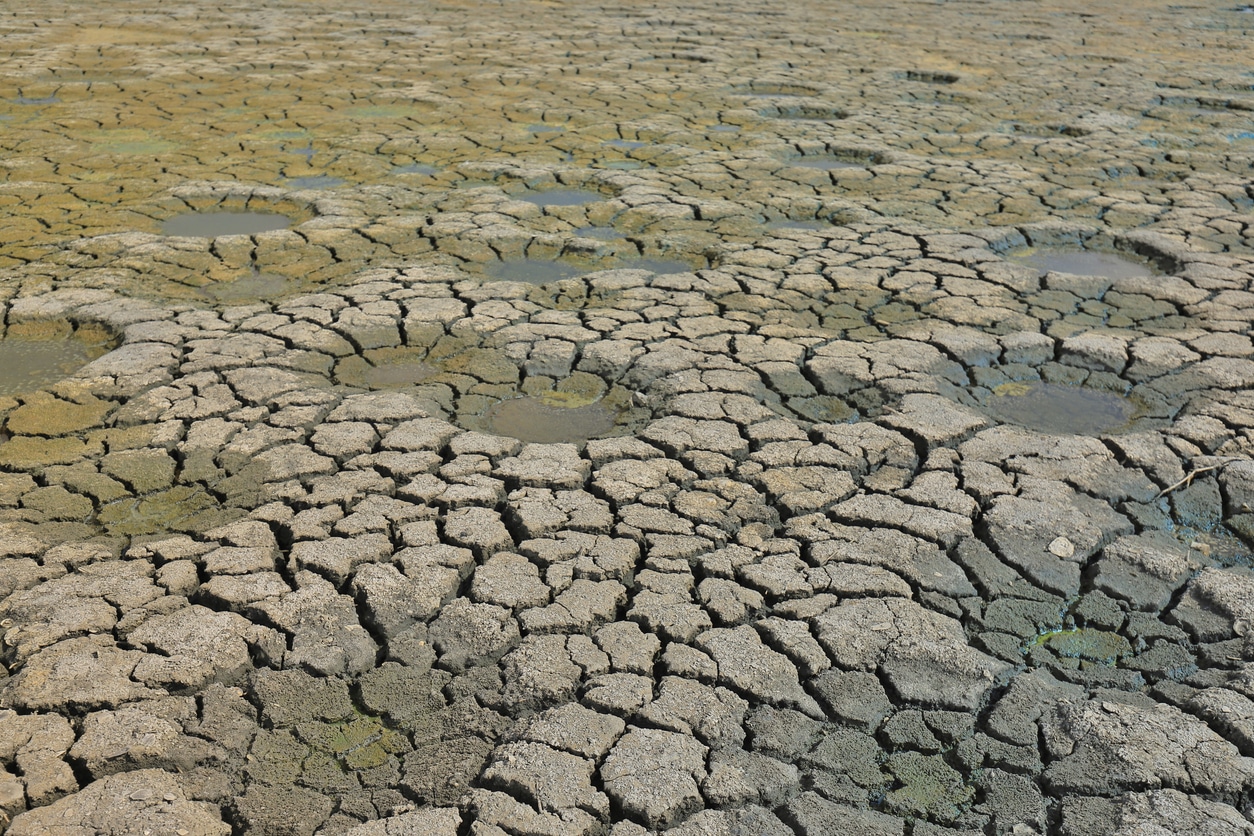
Around the world, some countries enjoy very large reserves of freshwater. By contrast, consumption far exceeds the natural regeneration capacity in many countries, mainly in the Middle East and North Africa. These nations are therefore in a state of “water stress” or even shortage.
Unequal Distribution of Fresh Water
Although water covers about 70% of the Earth’s surface, freshwater is ultimately extremely scarce on a global scale. In fact, this accounts for only 2.5 to 2.8% of total water. Vital for humans and certain sectors like agriculture, this resource is often difficult to access or lies in groundwater aquifers that are non-renewable. At times, this water becomes at the heart of geopolitical tensions, which is why for a number of years, specialists have addressed issues related to a very particular topic: water wars (or hydric conflicts), whose intensity is expected to grow in the near future.
Not surprisingly, freshwater is distributed unevenly across the Earth, so countries do not stand on equal footing when it comes to this resource. On March 28, 2026, the media Visual Capitalist published an infographic on the subject, a document drawing on Aquast, the World Food and Agriculture Organization (FAO) global information system dedicated to water resources and the management of agricultural water.
The infographic (visible below) thus shows the disparities among the different countries of the world. Each country presents a percentage and those exceeding 100% reflect a more or less pronounced imbalance between freshwater consumption and available reserves — or their natural regeneration capacity. Most of the time, these countries “in excess” try to compensate for their shortfall by over-pumping groundwater or by resorting to desalination of seawater, a practice that is particularly costly and energy-intensive.
Kuwait Tops the List for Water Scarcity
As the infographic demonstrates, the vast majority of countries facing water stress or water scarcity are located in the Middle East and North Africa, where the climate is arid and desert-like. No fewer than 17 countries exceed 100%, with the most severely affected (by a wide margin) being Kuwait with an astounding rate of 3,850.5%. Following come the United Arab Emirates (1,509.9%), Saudi Arabia (974.2%), Libya (817.1%), and Qatar (431%).
The other countries experiencing overage are concerned to a lesser extent, since these lie below 200%. Notably, Yemen (169.2%), Algeria (144.8%), Egypt (141.2%), Bahrain (133.7%) or Israel (129.7%). However, it should be noted that some countries exceeding 100% are located in Central Asia, such as Turkmenistan (135.5%) and Uzbekistan (123%). Regarding countries whose consumption does not exceed the natural regeneration capacity but whose rate remains close to 100%, there are relative difficulties in maintaining a fragile balance. Nations like Tunisia, Sri Lanka, South Korea or Iran fall into this category.
Finally, among the better endowed with freshwater resources (the closest to 0%), we find Congo-Brazzaville, Canada, Iceland, Norway, Bolivia, Colombia, Angola, Peru, Australia, or even Russia and Mongolia. As for France, the “water tower” is fairly well supplied since the country records a rate of 21.4%.
